
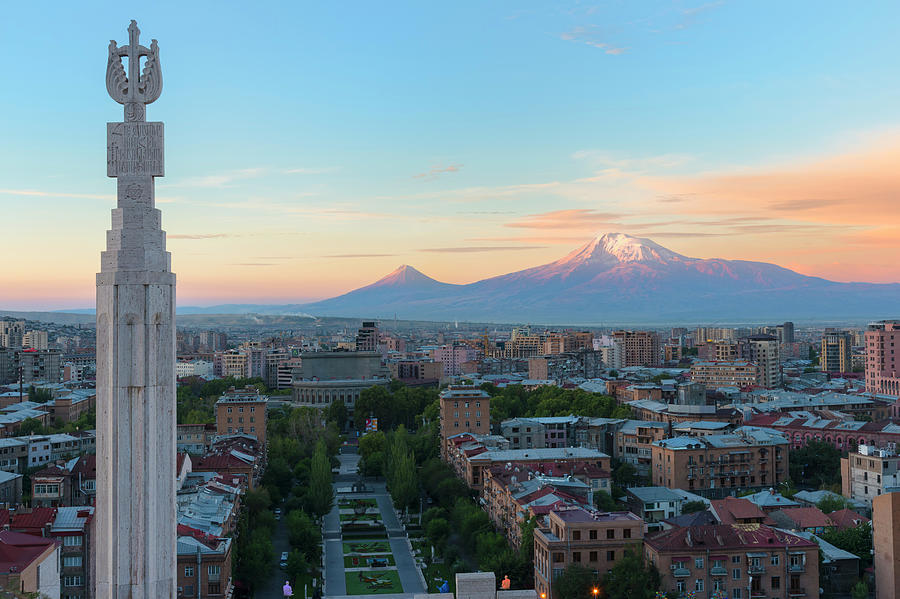

Armenia welcomed 172,705 tourists in April 2026, a 39.6 percent increase compared to April 2025, when 123,705 visitors arrived in the country, according to Armenia’s Tourism Committee.
In April alone, the top three source countries were Russia (36%), Georgia (14%), and Iran (7%), mirroring the year-to-date composition.
The strong April performance brings the four-month total to 625,843 arrivals between January and April 2026, a 22.6 percent jump over the 510,446 recorded during the same period in 2025 and the highest first-four-month figure on record in Armenia’s tourism history.
April’s surge follows a record-setting opening to the year. January 2026 closed with 179,409 arrivals, the strongest January ever recorded and a 28.6 percent increase over January 2025. February brought in 121,285 visitors, March added 152,444, and April’s 172,705 marked the second-highest April figure in Armenia’s history, trailing only the 179,639 recorded during the 2023 record year. Speaking on May 7, Prime Minister Nikol Pashinyan publicly characterized the April figures as a tourism boom, citing the 39 percent year-over-year growth.
The highest number of tourist arrivals during the January-April period came from Russia (245,178 individuals or 36%), followed by Georgia (93,123 individuals, 14%) and Iran (48,450 individuals, 7%). The top ten source countries also included Ukraine (9,229; 1.35%), Germany (9,012; 1.31%), China (8,017; 1.17%), the United States (7,649; 1.11%), France (7,460; 1%), Italy (6,528; 1%), and India (6,153; 1%), with other countries collectively accounting for 35 percent of total arrivals. Russia’s share of 36 percent represents a continued decline from the 41 percent recorded across the first nine months of 2025 and the 52 to 53 percent levels seen in earlier years, reflecting the diversification trajectory that Economy Minister Gevorg Papoyan has identified as a strategic priority through 2030.
By border entry, Zvartnots International Airport remained the primary gateway for visitors, accounting for 57 percent of total arrivals, though its share continued to decline from 64 percent during the same period in 2025. It was followed by Bagratashen (16%), Bavra (10%), Meghri (6%), Gyumri Airport (2%), Gogavan (2%), and Ayrum (1%). The shift away from Zvartnots toward overland crossings continues a multi-year trend reflecting greater regional mobility and increased overland tourism from neighboring countries.
By gender, men made up approximately 62 percent of arrivals during the January-April period, while women accounted for 38 percent. In terms of age distribution, the largest groups were working-age adults, with 24 percent aged 35–44, 22 percent aged 25–34, and 17 percent aged 45–54, followed by 14 percent aged 55–64 and 8 percent aged 65 and older. Visitors under 25 collectively accounted for 15 percent of arrivals.
The 2026 figures build on a steady expansion trajectory. Armenia recorded 1.89 million arrivals in 2019, which fell sharply to 375,000 in 2020 due to the pandemic. The sector rebounded with 870,000 in 2021, 1.67 million in 2022, a record 2.33 million in 2023, 2.21 million in 2024, and 2.26 million in 2025. Tourism Committee head Lusine Gevorgyan has projected that Armenia could host at least three million visitors annually within the next five years and as many as five million per year within a decade. The current pace, with 625,843 arrivals already booked in the first four months alone, places Armenia firmly on track toward another record-breaking year and underscores the country’s emergence as a tourist crossroads of the South Caucasus.


