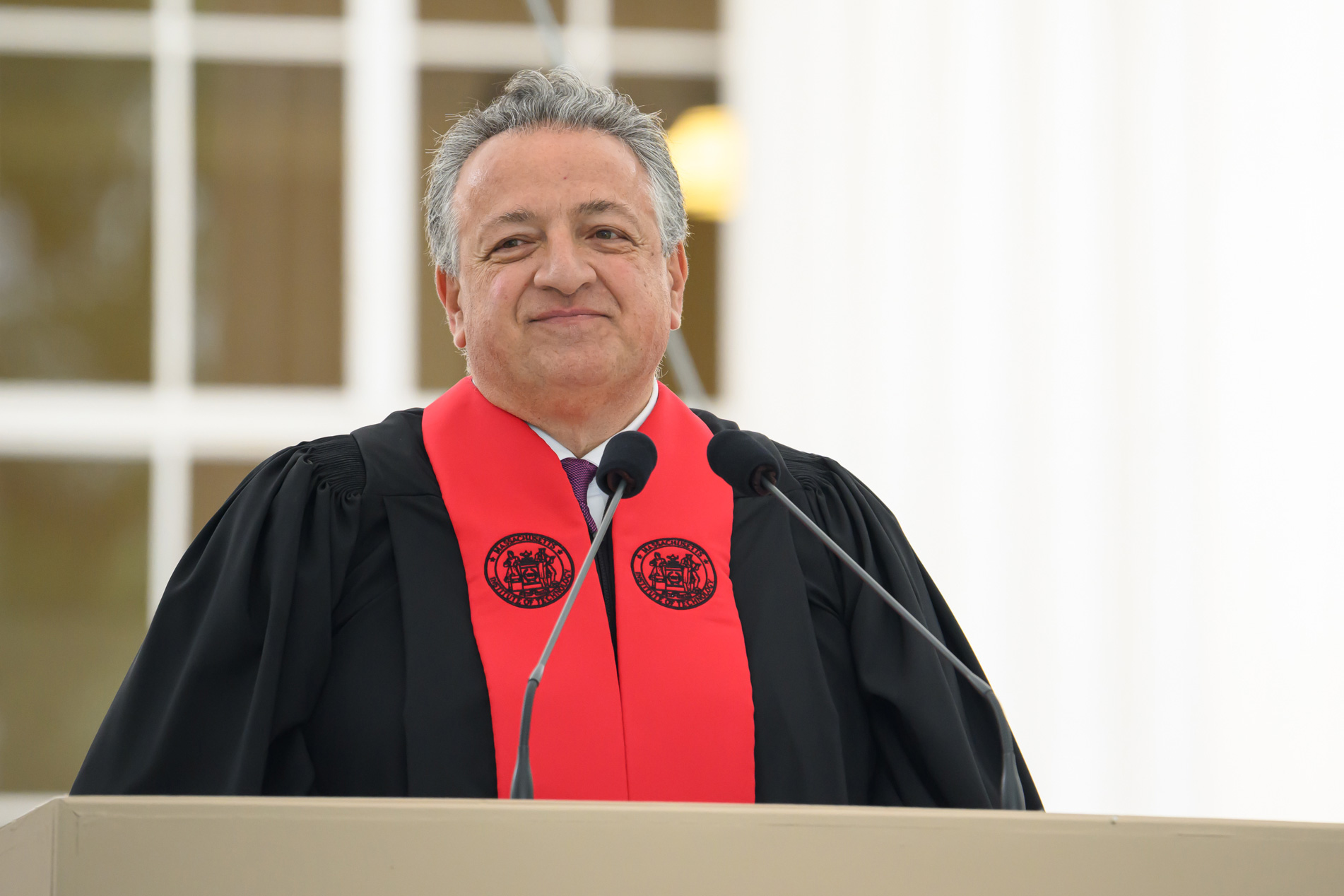

Moderna, the biotech company co-founded and chaired by Armenian-American entrepreneur Noubar Afeyan, has announced the first-ever Phase 3 success for an mRNA-based cancer vaccine.
On Wednesday, Moderna and its partner Merck said their personalized vaccine, intismeran autogene, met its goals in a late-stage trial for high-risk melanoma, the deadliest form of skin cancer. In the study of 1,137 patients whose tumors had been surgically removed, the vaccine paired with Merck’s immunotherapy Keytruda significantly cut the risk of the cancer returning or spreading, compared with Keytruda alone, with no new safety concerns.
What makes the vaccine different is that it is built for one person at a time. Doctors take a sample of the patient’s tumor, read its genetic profile, and design an mRNA vaccine that teaches the immune system to recognize the specific mutations in that individual’s cancer and attack them. It is the first time this kind of personalized approach has succeeded in a Phase 3 trial.
Moderna’s stock closed up roughly 177 percent on the day, one of the largest single-day gains in the company’s history. CEO Stéphane Bancel called the findings a pivotal moment for cancer research and compared the day to November 2020, when the company first showed its COVID-19 vaccine worked.
Doctors outside the companies shared the optimism. Dr. Janice Mehnert of NYU Langone Health, who was not involved in the study, said she was thrilled to “see science win on this one,” calling the result beyond what she had hoped for after years of work and more than 1,000 patients.
Afeyan was born in Beirut in 1962 to Armenian parents and is the grandson of Genocide survivors. He built Moderna through his venture firm Flagship Pioneering and has spent decades investing in Armenia’s future, co-founding the Foundation for Armenian Science and Technology and the Aurora Prize. In January 2025, he accepted the U.S. National Medal of Technology and Innovation on Moderna’s behalf.
What Happens Next:
Moderna and Merck say they will present the full trial data at an upcoming medical meeting and begin talks with regulators within the next few months to seek approval. Company leaders have said the treatment could reach patients as early as 2027 if regulators agree, and one oncologist told ABC News he expects approval and availability by early that year.
Beyond melanoma, Moderna and Merck are already testing the same personalized approach in nine additional trials across lung, bladder, kidney, pancreatic, and stomach cancers, with more results expected over the next few years.