
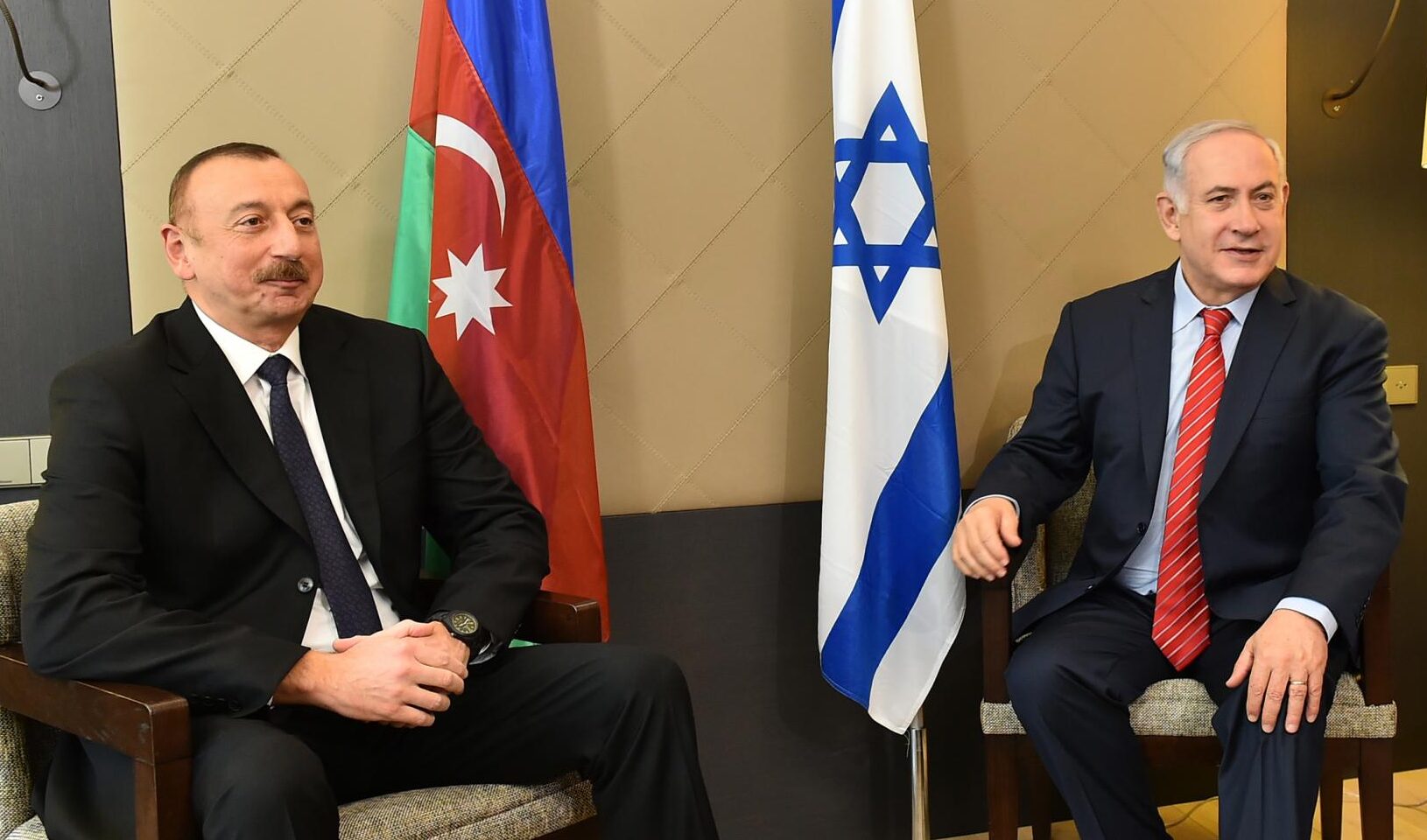

Israel secretly deployed elite military and intelligence units to southern Azerbaijan during its war with Iran, according to an exclusive CNN report published Friday that cites four sources familiar with the operation. The forward positions along Azerbaijan’s border with Iran extended Israel’s military reach hundreds of miles into Iranian territory, the sources told the network, helping sustain repeated waves of strikes across the country.
CNN reports that the forces operated out of several locations in southern Azerbaijan, at the closest point roughly 60 miles from Tabriz, a major Iranian city Israel struck during the war. Special commando units carried out intelligence-gathering missions and drone operations from the sites, two sources said. The operation, according to one source, involved several dozen troops from Israel’s special operations forces, its elite heliborne combat and rescue unit, and the Mossad.
The deployment was not isolated. CNN describes a covert network of Israeli positions across multiple countries, including Iraq, the United Arab Emirates, and the breakaway republic of Somaliland, placing Israeli forces along Iran’s southern, western, and northern periphery. The Somaliland site gave Israeli aircraft a stopping point on long-range flights toward Iran, months after Israel in December became the first country to formally recognize its independence. The two facilities in Iraq, first reported by the Wall Street Journal and the New York Times, served as forward bases for logistics and search-and-rescue; Iraq’s military said in early March that there were no unauthorized forces on its territory. Israel had also quietly deployed an Iron Dome battery and its crews to the UAE, first reported by Axios.
According to CNN, the groundwork in Azerbaijan was laid in mid-January, as Iranian security forces crushed nationwide protests with the mass killing of demonstrators. Israel installed listening devices and intelligence equipment along the border, two sources said. The mission was to be carried out under cover of the war’s opening strikes, but President Donald Trump called those strikes off at the last minute after Iran agreed to halt the killings. Israel proceeded alone, using stealth jets and special forces, convinced that US-Iran negotiations would fail. The site tracked Iranian military movements and provided early warning of missile launches.
The positions also served as launch points for direct operations. According to one source, the March 4 killing of Rahman Moghaddam, head of the IRGC intelligence division and accused by Israel of planning a 2024 assassination attempt against Trump, was among them. One day later, drones struck an airport in Azerbaijan’s enclave of Nakhchivan, wounding several people; Aliyev blamed Iran, which denied launching them. On March 6, Azerbaijan announced it had broken up an alleged IRGC plot against critical infrastructure and Israeli and Jewish targets, an operation Israel later acknowledged as joint work involving the Mossad, its military, and the Shin Bet.
Baku flatly rejected the account and demanded a correction. Azerbaijan’s Foreign Ministry called the allegations entirely baseless and asked CNN to retract the report, with spokesperson Aykhan Hajizada saying Azerbaijan had conveyed its denial to the network before publication. He maintained that Azerbaijan has never allowed, and will never allow, its territory to be used by any third country against another state. CNN said it had reached out to the office of Israeli Prime Minister Benjamin Netanyahu and the Israel Defense Forces for comment.
The denial follows a familiar pattern. During the Twelve-Day War in June 2025, Iranian President Masoud Pezeshkian urged Aliyev to investigate reports that Israeli drones had crossed into Iranian airspace through Azerbaijan. Aliyev denied it then too, though Tehran has remained skeptical. The unease is rooted in a deepening defense partnership: Baku supplies Israel with a large share of its oil and, in return, has bought advanced Israeli weaponry, becoming in 2016 the first foreign buyer of the Iron Dome. According to the Stockholm International Peace Research Institute, Israeli arms made up roughly 69 percent of Azerbaijan’s major conventional weapons imports between 2016 and 2020.
For Armenia, the report lands on familiar terrain. CNN notes that the Israeli weaponry sold to Azerbaijan was used against Armenia in the Nagorno-Karabakh conflicts of 2016 and 2020, the same arsenal Azerbaijan turned on Armenian forces in the lead-up to the September 2023 offensive that emptied occupied Artsakh (Nagorno-Karabakh) of its Armenian population.


