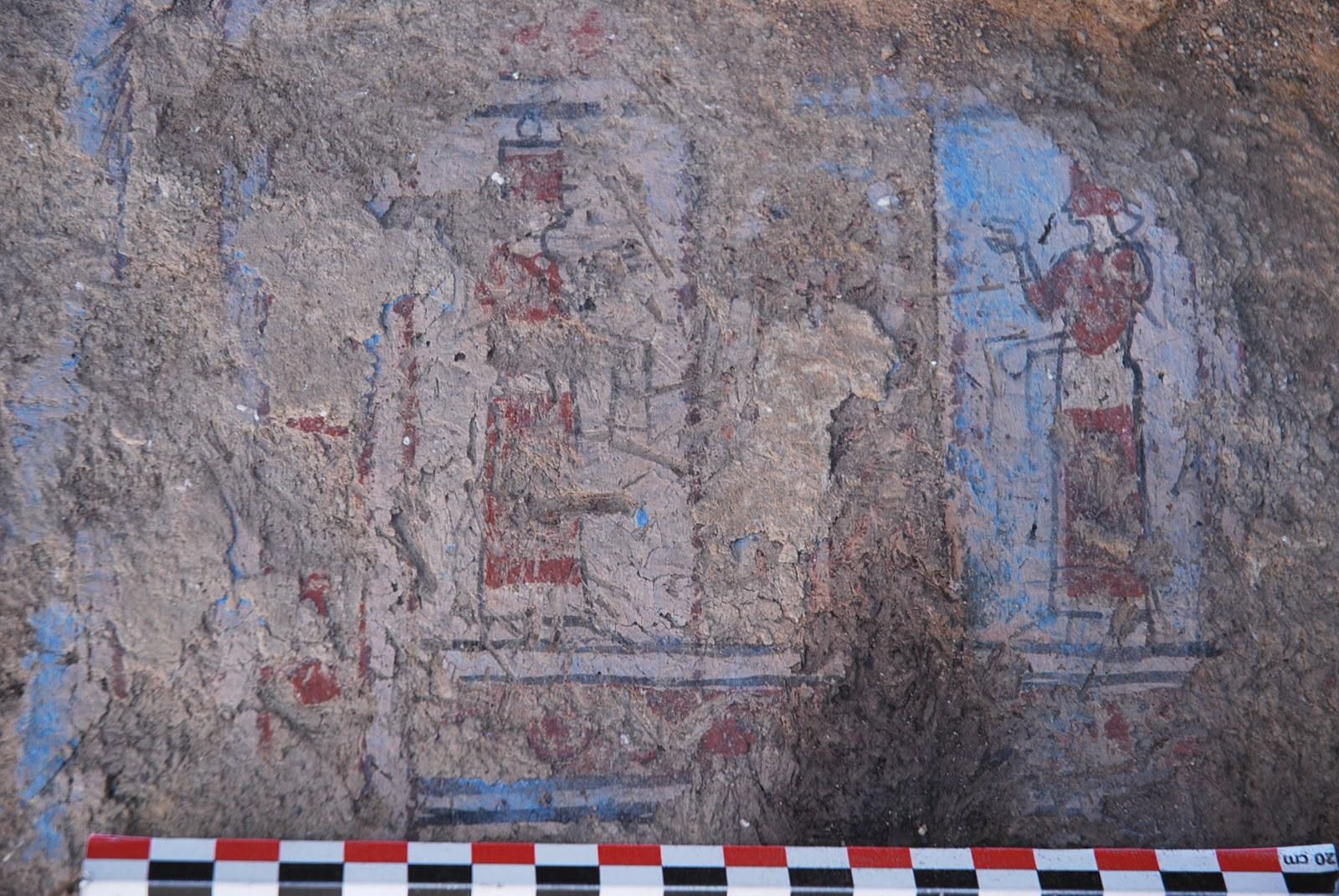

A remarkably well-preserved fragment of an ancient painted mural, dating to the late 7th or early 6th century BC, has been uncovered at the Erebuni archaeological site in Armenia by a French-Armenian archaeological mission, the Embassy of France in Armenia announced.
The embassy called the discovery unprecedented and described the painted mural’s colors as almost perfectly preserved. The fragment is believed to date back to the second half of the 7th century BC or the beginning of the 6th century BC, though the dating remains preliminary.
The discovery stands as an exemplary case of scientific cooperation between France and Armenia. The joint French-Armenian mission has been studying Erebuni since 2008, a partnership in archaeological research that the embassy said continues to bear fruit.
The announcement followed a visit by France’s Ambassador to Armenia to the Erebuni site, where he met with the French and Armenian archaeologists working there. “Armenia’s heritage is a treasure for humanity,” the embassy said.
Erebuni was founded in 782 BC by the Urartian King Argishti I and stands as one of Armenia’s most significant archaeological sites, serving as a key source of knowledge on the ancient Kingdom of Urartu.