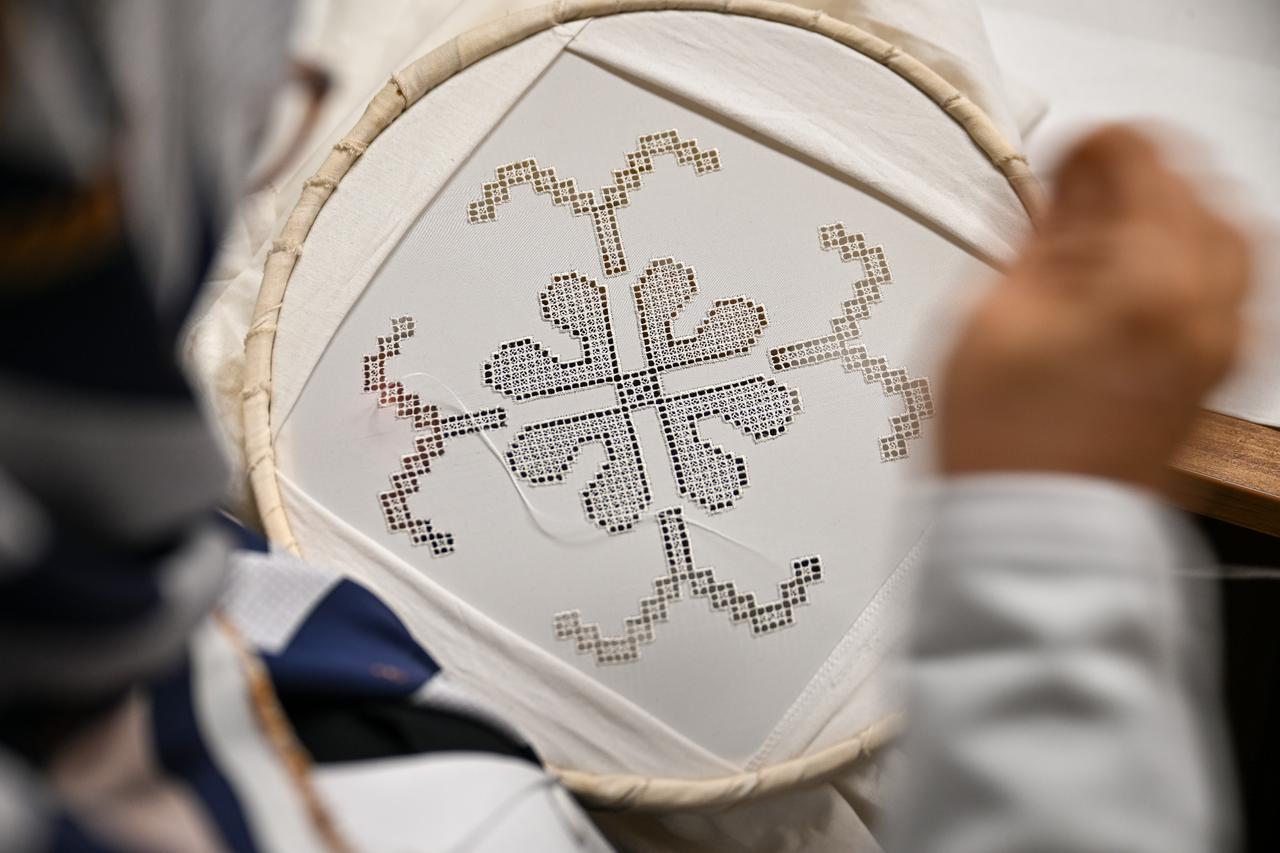

Aintab Embroidery has been officially inscribed on the UNESCO Representative List of the Intangible Cultural Heritage of Humanity. The announcement was made during the 20th Session of the UNESCO Intergovernmental Committee for the Safeguarding of Intangible Cultural Heritage, held in New Delhi from December 8 to 13, 2025.
The Armenian style of embroidery consists of a combination of cutwork, drawn thread work, satin stitch, and needlelace. It has long been associated with the Ottoman Armenians of Aintab, in part due to the Aintab Cottage Industry established by missionary Fanny Andrews Shepard to provide income to widows and orphans following the Hamidian Massacres of 1895–1896.
Aintab Embroidery is traditionally created using white thread on white fabric and is produced by pulling and cutting threads to form intricate patterns. The technique is described as deep-rooted in the region and has been passed down from generation to generation for centuries, particularly within the Armenian cultural sphere. The craft is labor-intensive and requires a high level of skill, with Armenian women historically serving as its primary practitioners and transmitters.
The embroidered textiles have traditionally been used in daily life, including for household items such as table coverings, linens, and decorative fabrics, reflecting the integration of the craft into Armenian domestic and cultural life.
While certain elements of Aintab embroidery are not exclusive to Aintab or to Armenians alone, Armenians of the region have adopted, preserved, and transmitted the practice as an integral part of their cultural heritage.
For additional resources on Aintab needlework and embroidery, “Armenian Needlelace and Embroidery” by Alice Odian Kasparian, “Ayntab Needlework” by Hrazdan Tokmajian, “Armenian Embroidery, Echoes from the Past” published by the Armenian Relief Cross of Lebanon, and Armenian Treasury serve as encyclopedias, introductions, and digital repositories dedicated to Armenian needlework and other relics of Armenian cultural heritage.