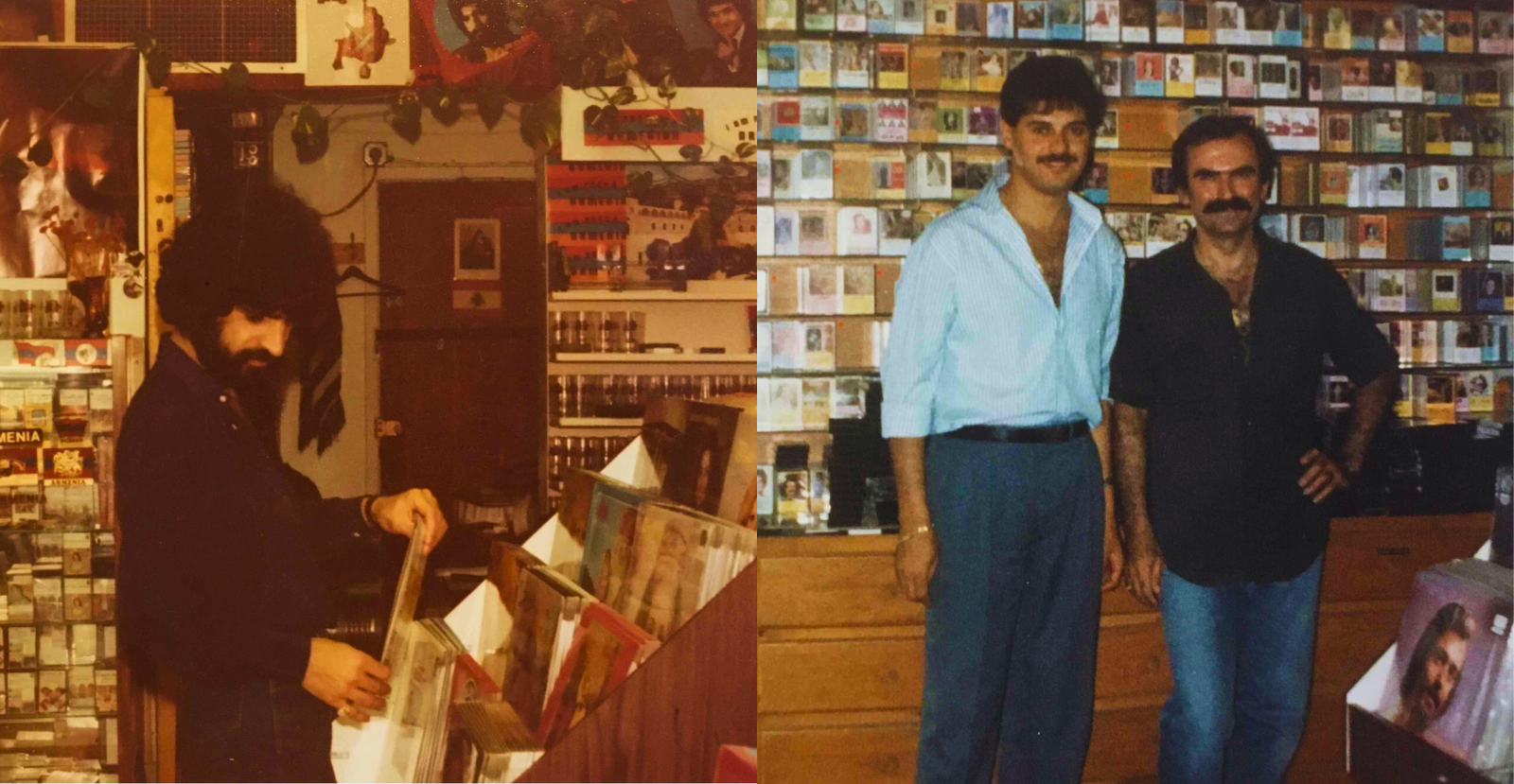

PEKO Records, the Montreal-founded Armenian music institution created by Krikor “Koko” Bahlawanian and now run by his son Peter Bahlawanian, has returned to vinyl with newly remastered reissues from Harout Pamboukjian, Paul Baghdadlian, Karnig Sarkissian, and Adiss Harmandian, as part of a wider effort to preserve Armenian spirit and cultural memory at a moment when vinyl is surging in popularity and PEKO’s historic catalog is being digitized.
Why Vinyl, Why Now
As vinyl experiences a global resurgence, PEKO Records has returned to the format that defined its early years, not as a trend, but as an act of preservation. Vinyl is physical and intentional. It slows the listener down. It can be held, stored, and passed down. In many ways, it mirrors the Armenian experience itself: enduring, tangible, and rooted in continuity.
PEKO has now released remastered vinyl editions of three iconic albums from its catalog, with another classic currently in production for late spring 2026:
- Harout Pamboukjian – Dariner Antsan (original release date 1982, 2023 Remastered Double Vinyl)
- Paul Baghdadlian – Sev Atcher (original release date 1983, 2024 Remastered)
- Karnig Sarkissian – Lisbon Five (original release date 1989, 2025 Remastered)
- Adiss Harmandian – Kaghdni Ser (original release date 1983, Spring 2026 remastered)
These are not random reissues. These albums are pillars of Armenian diaspora music. They soundtracked weddings, long drives, family gatherings, and moments of longing. They carry emotion, memory, and identity in every note.
Alongside digitizing its catalog, PEKO’s selective return to vinyl helps ensure Armenian music continues to exist not only online, but also in the real world, where it can be rediscovered by younger generations and cherished by those who grew up with it.
A Corner Store That Became a Cultural Landmark
PEKO Records was founded in the early 1970s in Montreal by Krikor “Koko” Bahlawanian, an Armenian producer, promoter, and cultural steward whose life’s work would quietly shape Armenian music in North America and beyond.
Located on a quiet residential street, PEKO may have appeared modest from the outside. For Armenians across generations, it became a destination. Families planned visits around it. Artists passed through it. Listeners discovered music there that would follow them for the rest of their lives.
More than a record store, PEKO became a cultural hub, a place where Armenian, Arabic, Greek, French, and English blended freely. Elders flipped through vinyl alongside teenagers. Musicians exchanged ideas. Stories were shared. Identity was reinforced.
This was not accidental. Koko understood that music does more than entertain. It preserves language. It carries memory. It keeps a people connected, even when geography pulls them apart.
More Than a Label, An Ecosystem
Over time, PEKO Records grew far beyond a retail space.
Under Koko’s leadership, PEKO became a record label, distributor, and cultural archive, producing and distributing music across multiple formats: vinyl, 8-track, cassette, CD, and later digital. The catalog spanned Armenian, Arabic, and Greek releases, reflecting the multicultural reality of diaspora life while keeping Armenian music at its core.
Koko was deeply involved in every layer of the process. He knew the artists and the sessions, and often heard recordings before they were released. He connected musicians with audiences and retailers across continents, building an ecosystem that allowed Armenian music to circulate through homes, events, radio, television, and community spaces.
By the early 1980s, PEKO’s reach extended beyond Montreal, expanding into Los Angeles, further anchoring the label within Armenian-American life.
What Koko built was rare. Even rarer was its longevity.
A Family Name, A Family Mission
The name PEKO itself reflects the heart of the brand. It represents the bond between father and son, Peter and Koko, a quiet tribute to continuity, family, and generational responsibility, values deeply rooted in Armenian life.
Peter grew up inside this world, surrounded by the music, the artists, and the community his father nurtured. Inheriting PEKO was never about ownership. It was about stewardship.
Peter has made a deliberate choice not to reposition PEKO as a modern brand detached from its origins. His focus has been on protecting the soul of what his father built, keeping the mission intact while ensuring it remains relevant.
Honoring Koko, Centering the Legacy
Peter has also chosen not to place himself at the center of this chapter. The focus remains where it belongs: on Koko Bahlawanian, the PEKO name, and the music itself.
Koko’s story is inseparable from the Armenian story of survival and rebuilding. The son of genocide survivors, he understood what is lost when culture is not actively preserved. PEKO Records was his answer: a living archive built not through institutions, but through care, persistence, and community trust.
More than five decades later, that archive is still alive.
In the Armenian diaspora, some legacies are loud. Others are quiet, steady, and enduring. PEKO Records belongs to the second kind.
Long before streaming platforms, social media, or digital archives, Armenian music traveled through more personal channels: record stores, community gatherings, and word of mouth. For decades, one small corner store in Montreal became one of the most important gateways for Armenian sound, memory, and identity.
That store was PEKO Records.
A Living Record of Armenian Identity
PEKO Records is not a museum piece. It is a living continuation of a mission that began in a small Montreal store and reached across continents.
In an age of disposable content and fleeting trends, PEKO’s return to vinyl sends a clear message: Armenian music deserves permanence. It deserves to be protected, respected, and passed on.
Because when a community preserves its music, it preserves its memory. And when that music spins again, so does the story. PEKO Records continues, just as Koko intended, one record at a time.