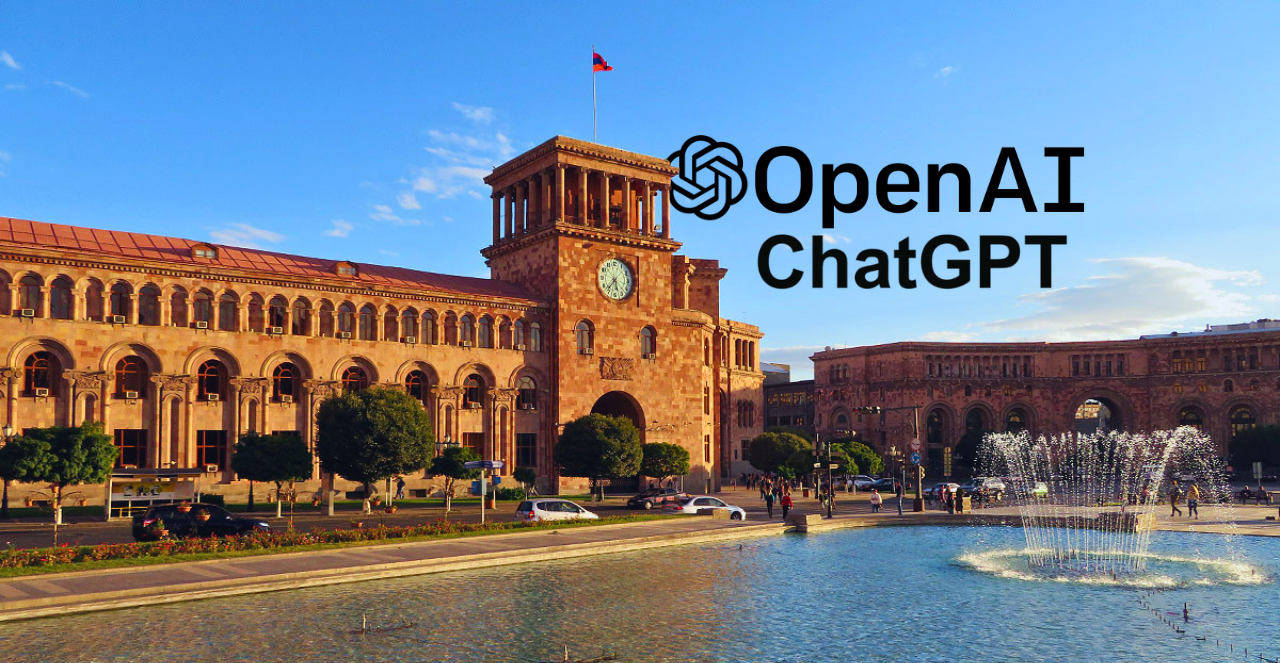

Armenia and OpenAI have launched a new partnership that will give students and teachers across the country’s high schools and universities, along with its engineering and research communities, access to OpenAI’s artificial intelligence tools, including ChatGPT Edu and Codex, at the start of the new academic year. The initiative, developed in cooperation with Firebird, will provide around 50,000 free subscriptions.
The partnership, formalized between Armenia’s Ministry of Education, Science, Culture and Sport, OpenAI, and Firebird, requires preparatory work and training courses to be completed by September to ensure the launch for the new academic year.
As Zartonk reported in May, the initiative was first announced by Firebird, the US and Armenian AI infrastructure company that operates one of Europe’s largest GPU clusters and is financing the program’s first year. OpenAI is supporting the rollout through technology access, team support, and API credits.
Minister of Education, Science, Culture and Sport Zhanna Andreasyan on Tuesday met with an OpenAI delegation visiting Armenia to present the ChatGPT Edu platform and discuss the implementation of the initiative.
The meeting was attended by Harutyun Sargsyan, Deputy Chairman of the Higher Education and Science Committee, Alina Leon-Kozenko, OpenAI’s liaison responsible for cooperation with the ministry, and other members of the delegation.
Andreasyan said Armenia has been consistently developing initiatives aimed at artificial intelligence education and AI literacy in recent years, creating a foundation for the introduction of advanced technologies into the education system.
She highlighted programs such as “Generation AI” and “STEP.ai,” which are already being implemented in general education schools and aim to develop students’ AI knowledge, creative thinking, and technological skills while promoting the safe and responsible use of artificial intelligence.
According to the minister, the “Generation AI” program, implemented with the support of the FAST Foundation, has already produced tangible results and gained international recognition, with several participants achieving success in international competitions.
AI-related educational initiatives are also expanding at the vocational and university levels. Starting in September 2026, Yerevan State University will introduce a new bachelor’s program in artificial intelligence.
Andreasyan noted that major AI initiatives in Armenia are creating new opportunities to deepen cooperation between education, science, and the economy, contributing to the country’s engagement in international technological processes. In her view, these developments significantly expand the capabilities of the education system and create favorable conditions for strengthening international ties.
ChatGPT Edu, designed specifically for educational institutions, will provide universities and schools with access to AI tools while maintaining standards of data protection, information security, and responsible use. The platform will be available to university lecturers and students, as well as teachers and senior high school students.
The program will be implemented through cooperation between the Ministry of Education, the National Center for Educational Technologies, the National Center for Education Development and Innovation, and partner organizations. During discussions, officials reviewed the implementation roadmap for the first year of the “Education for Countries” program, including governance mechanisms, evaluation criteria, and long-term cooperation plans. Officials also addressed the technical readiness of schools, noting that the ministry has been consistently investing in digital infrastructure in recent years, expanding internet connectivity, establishing computer laboratories, and creating the conditions necessary for STEM education.
The sides discussed the importance of developing teachers’ and researchers’ capacities through practical training sessions, train-the-trainer programs, and localized research workshops.
Artashes Torosyan, Adviser to the Minister of Education, stressed the importance of simultaneously engaging all key groups within the education system, including school principals, teachers, and students. He said the use of artificial intelligence should contribute to improving the quality of education and student learning outcomes.
Andreasyan stressed that introducing AI tools requires not only technological solutions but also a broader policy framework, including regulations, risk management mechanisms, and principles for safe and effective use.
Alina Leon-Kozenko emphasized that cooperation with Armenia will focus on promoting the responsible and safe adoption of artificial intelligence in education and strengthening the ability of teachers and students to use technological tools effectively.
During the initial phase of the initiative, covering the 2026-2027 academic year, access to ChatGPT Edu will be financed by Firebird. After evaluating the program’s effectiveness and its impact on educational outcomes, the possibility of state funding will be considered, with the aim of integrating the platform into the national education system as a stable, long-term component.
The OpenAI delegation will continue its visit by meeting with university representatives and students and visiting educational institutions, including the TUMO Center for Creative Technologies, the National Center for Educational Technologies, and the National Center for Education Development and Innovation.