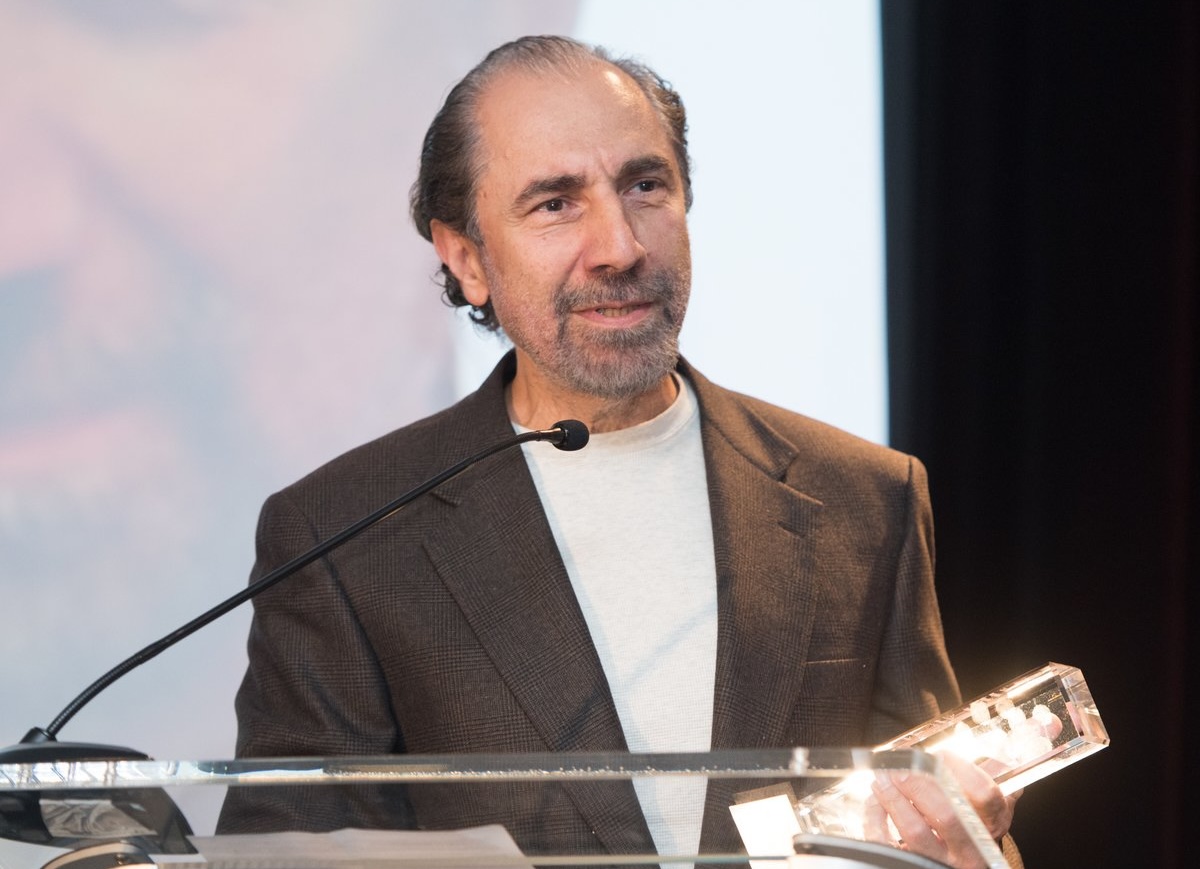
Armenia has become the first country in the world to approve the cancer immunotherapy combination developed by Agenus, the Nasdaq-listed American biotechnology company co-founded and run by Garo Armen, who also founded the Children of Armenia Fund (COAF).
Armenia’s Ministry of Health granted marketing authorizations for Botvymo, the brand name for botensilimab, and Evamplix, the brand name for balstilimab. Each is approved only for use with the other. The authorizations took effect on October 2 and Agenus announced them on October 8.
Neither drug has been approved for sale anywhere else in the world.
“Armenia is the first country in the world to grant marketing approval for BOT+BAL,” Armen said, using the company’s shorthand for the combination. “We thank Armenia’s health authorities for the depth and care of their review.”
The Approval Covers Patients Who Have Exhausted Standard Treatment
The combination is authorized for adults with microsatellite stable metastatic colorectal cancer who have no active liver metastases and who have already received the available standard therapies.
Botensilimab is an antibody engineered to act on CTLA-4, and balstilimab acts on PD-1. Both work on the immune system rather than on the tumor directly.
Under the approved product information, Botvymo is given intravenously at 75 milligrams every 6 weeks for up to 4 doses, and Evamplix at 240 milligrams every 2 weeks for up to 2 years, or until the disease progresses or the side effects become unacceptable.
Each authorization is conditional and valid for 1 year, renewable on the basis of the clinical updates Agenus submits to the Armenian regulator every year.
The registration dossiers were filed in Common Technical Document format under Eurasian Economic Union rules. According to Agenus, the review covered manufacturing quality, nonclinical data, clinical efficacy and safety, and pharmacovigilance.
The Combination Kept 41 Percent of Patients Alive at 2 Years
The approval rests on a Phase 1b study, C-800-01, and a randomized Phase 2 study, C-800-25, with results published in Nature Medicine and Clinical Cancer Research and presented at the ASCO Gastrointestinal Cancers Symposium.
In the Phase 1b study, 148 patients received the combination and 101 could be evaluated for response. The objective response rate was 17 percent and median overall survival was 20.9 months.
With longer follow-up in the 123 patients without active liver metastases, the group the Armenian approval covers, the confirmed response rate was 21 percent and median overall survival was 21.2 months. Of those patients, 41 percent were alive at 24 months and 33 percent at 36 months.
Treatment-related side effects of any grade occurred in 92 percent of patients and were severe in 41 percent, most often diarrhea. No patient died from the treatment, and 17 percent stopped both drugs because of side effects.
Botensilimab has been studied in more than 1,500 patients across more than 9 tumor types, and balstilimab in more than 900.
The FDA Granted Fast Track, Then Advised Against Accelerated Approval
The FDA granted the combination Fast Track designation for metastatic colorectal cancer in April 2023.
After an end-of-Phase-2 meeting the following year, the agency advised Agenus against submitting those results in support of accelerated approval, taking the position that objective response rates may not translate into a survival benefit. It suggested the company add a botensilimab-only arm to its Phase 3 trial and left that decision to Agenus, which disclosed the outcome on July 18, 2024.
No trial has yet shown that the combination extends survival compared with standard treatment.
Garo Armen Co-Founded the Company in 1994 and Has Funded Rural Armenia Since 2003
Armen was born in Istanbul in 1953 and moved to New York in 1970. He earned a doctorate in physical chemistry from the City University of New York in 1979 and worked in finance before co-founding the company in 1994, when it was named Antigenics.
Armenia is the second country to clear a drug from a company Armen leads before any Western regulator did. Russia’s Ministry of Public Health registered Antigenics’ kidney cancer vaccine Oncophage in 2008, at a time when the drug was approved nowhere else.
He founded COAF in 2003 and chairs it. The organization works in rural Armenian villages on education, health and community infrastructure, and built its first SMART Center in Debet, in Lori Province.
Armen also founded the healthcare investment firm Armen Partners, chairs Mink Therapeutics and is executive chairman of Protagenic Therapeutics.
Patients Outside Armenia Can Reach the Drugs Only Through Compassionate Access
Agenus expects the approval to serve patients in Armenia as well as patients who travel to Armenia for treatment under the care of Armenian oncologists.
In France, the combination has been available since September 2025 through the national compassionate access program for the same group of colorectal cancer patients, with national health insurance covering the cost. France widened that program in January 2026 to cover certain ovarian cancers and soft tissue sarcomas, and BAP Pharma is Agenus’s partner for the French pathway.
Everywhere else the drugs remain investigational and can be obtained only through named-patient programs where local rules allow.
Agenus said it will evaluate seeking marketing authorizations in other Eurasian Economic Union member states. Its Phase 3 ROBBIN trial is testing the combination before surgery in patients with earlier-stage colon cancer.