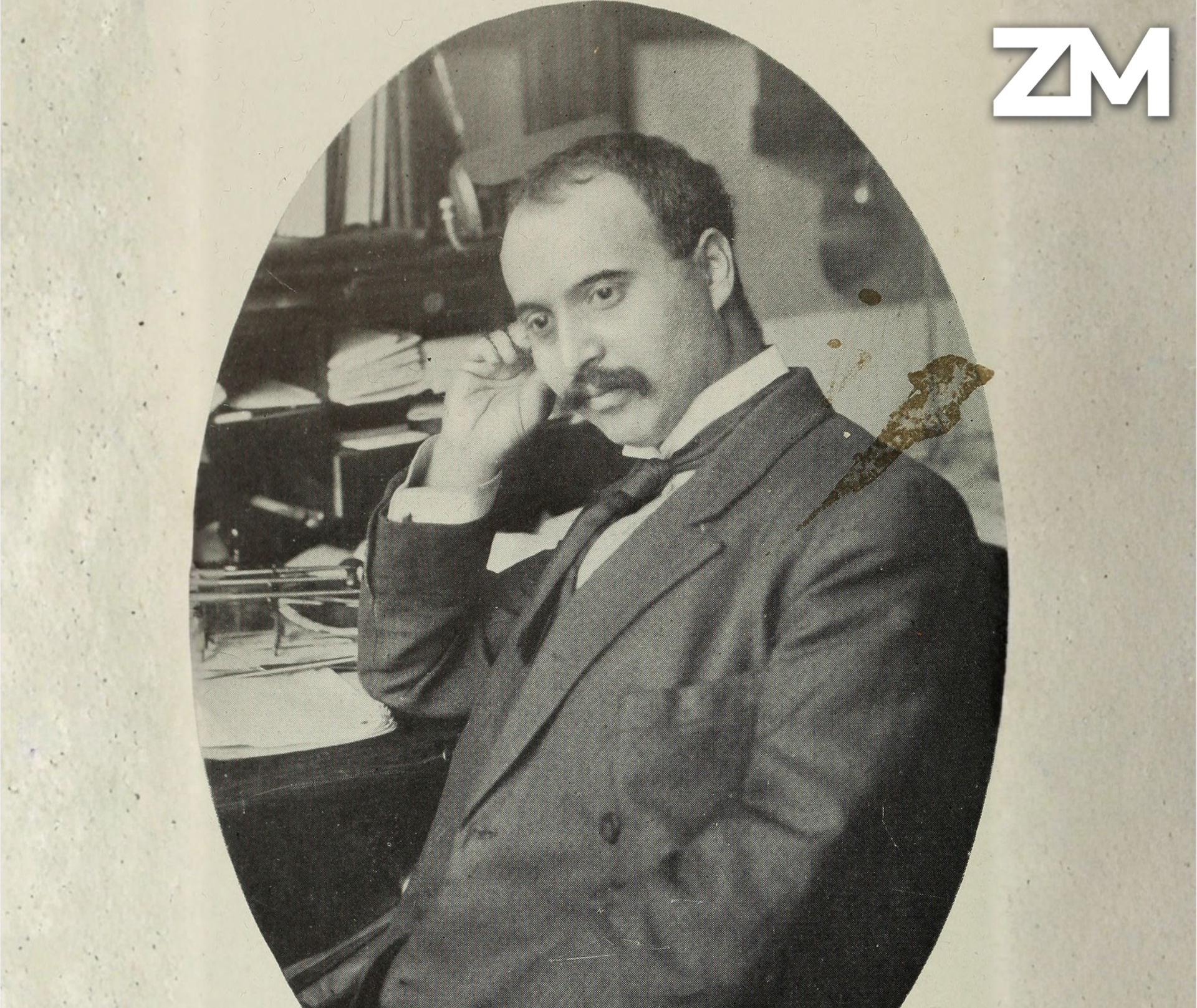

Mihran Krikor Kassabian was one of the founding figures of American radiology. He was an early investigator into the medical uses of X-rays, the author of one of the first radiology textbooks, and the director of the Roentgen Ray Laboratory at Philadelphia General Hospital. He died at 39 from the radiation exposure of his own research, one of the first American physicians to be named a martyr to radiology.
He was born 156 years ago today, on August 25, 1870, in Kayseri (Caesarea or Gesaria), in central Anatolia, then part of the Ottoman Empire.
His three brothers were jewelers in Smyrna, one of the major Armenian communities of the Ottoman Empire. Between 1884 and 1896, the Ottoman government and Kurdish irregulars killed more than 300,000 Armenians in what became known as the Hamidian Massacres. His biographer Percy Brown later wrote that Kassabian grew up “with almost constant danger of earthquake or massacre.” He attended the American Missionary Institute in Kayseri and later became an instructor there.
In 1893, at 22, he traveled to London with the initial goal of studying theology and becoming a missionary. In London he developed a deeper interest in medicine and photography, and in January 1894, aboard the SS Kaiser Wilhelm II, he crossed the Atlantic to Philadelphia. He enrolled at the Medico-Chirurgical College of Philadelphia. When the Spanish-American War broke out in 1898, he interrupted his studies to serve in the US Army hospital corps. He graduated from medical school the same year and was immediately appointed instructor in electro-therapeutics and X-ray treatment at his alma mater. He became a naturalized American citizen in 1900.
He became director of the Roentgen Ray Laboratory at Philadelphia General Hospital, vice president of the American Roentgen Ray Society, and vice president of the American Electro-Therapeutic Association. In 1907 he published “Roentgen Rays and Electrotherapeutics,” a 545-page textbook that became a standard reference for the first generation of radiologists worldwide. He invented positioning devices that improved the quality of medical X-ray images and helped establish their use as evidence in the American legal system.
He had been suffering from radiation-induced skin lesions for years. The chronic exposure to unshielded X-rays had burned his hands. Between 1899 and 1900 alone, he had examined more than 3,000 medical and surgical cases and produced more than 800 radiographs, working almost always without radiation shielding. In April 1908, some of his fingers were amputated. When the procedure failed to stop the cancer, his axillary glands were surgically removed as well. He photographed the progression of his own lesions and contributed the data to the medical literature on radiation dermatitis. He refused to stop working. He later said, “I would have stopped the use of the fluoroscope then, but they would not let me.”
Mihran Kassabian passed away on July 12, 1910, at Jefferson Hospital in Philadelphia, at the age of 39. Dr. Wilmer Krusen, head of the Philadelphia Department of Public Health, later called him “the most picturesque hero of American medicine.”
His death, and the deaths of the other early radiologists who followed him, led directly to the development of the lead aprons, distance protocols, and shielding standards that still protect radiologists and their patients today. He is buried in Philadelphia.
#MihranKassabian #ArmenianAmerican #Radiology #ArmenianHeritage #Philadelphia
Follow @ZartonkMedia, your home for all things Armenian. ??