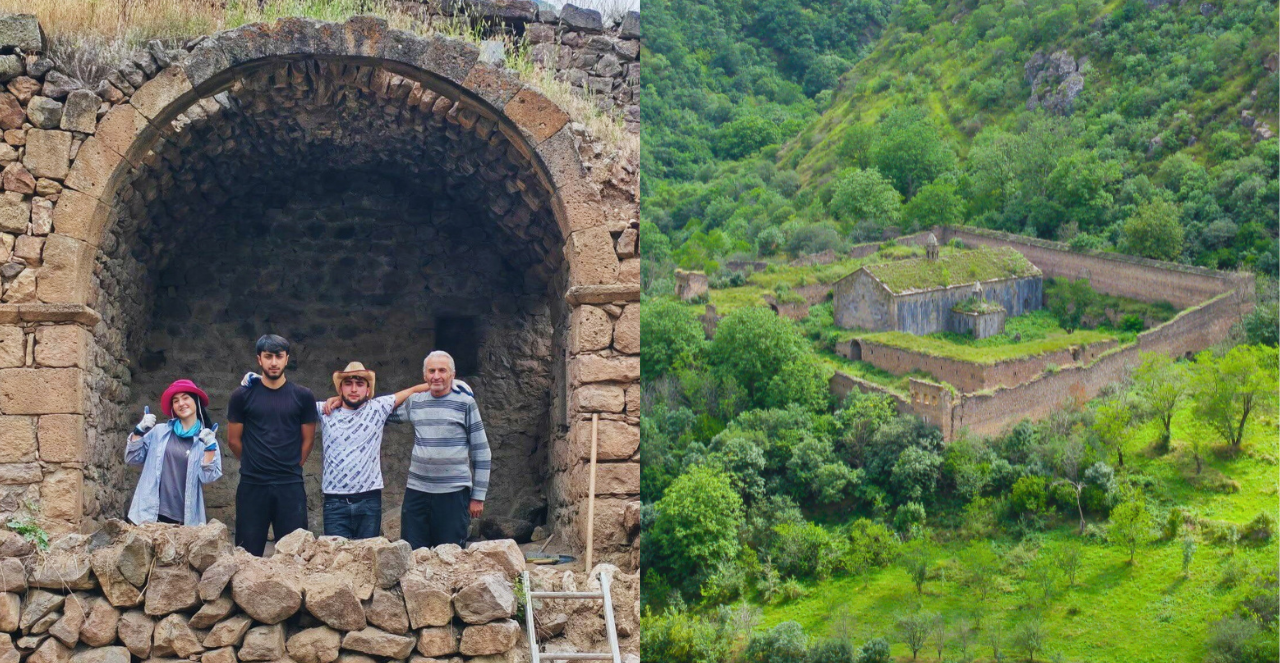

Archaeologists have uncovered a medieval spring at the Great Hermitage of Tatev, a 17th-century Armenian monastery whose exact location within the complex had been unknown for more than a century. The find was reported by the Scientific Research Center for Historical and Cultural Heritage, which operates under Armenia’s Ministry of Education, Science, Culture and Sports.
The spring was mentioned by 19th-century authors, among them the ethnographer Yervand Lalayan, but its precise location stayed uncertain because most of the complex lay buried under a thick layer of soil. Working from descriptions left by architect Murad Hasratyan, an expedition led by archaeologist Arman Nalbandyan located and fully excavated it during digs in 2026. The center described the spring as notable for both its engineering and its artistic design.
The ongoing, large-scale excavations have also revealed residential cells, utility structures, entrances, and other parts of the complex. Archaeologists recovered artifacts from the 17th and 18th centuries as well, including objects made of metal and wood that document the daily life of the monastery’s inhabitants.
The spring has now been fully cleared and is open to visitors. The Great Hermitage of Tatev, known in Armenian as Tatevi Mets Anapat, is a monastery built in the 1660s in the Vorotan river valley in Syunik Province. It is a separate site from the better-known 9th-century Tatev Monastery on the plateau above, which draws visitors on the Wings of Tatev cableway, and both sit together on Armenia’s UNESCO World Heritage Tentative List.
Local tradition holds that the spring first appeared as a miracle. According to legend, a monk fasted and prayed for a sign that the site was worthy of a monastery, and when he finished, water burst from the ground, forming the spring that sustained the hermitage for centuries. Locals long regarded its waters as holy.