
On March 31, 2026, Armenia rejected Azerbaijan’s latest fabricated claims that so-called “Armenian groups” committed “genocide” against Azerbaijanis in 1918, after Azerbaijan’s Foreign Ministry issued a statement repeating the false accusation. The statement was accompanied by a call from Azerbaijan’s Ombudsman, Sabina Aliyeva, urging international organizations and the United Nations to recognize what she termed “ethnic cleansings committed by Armenians against Azerbaijanis” as genocide.
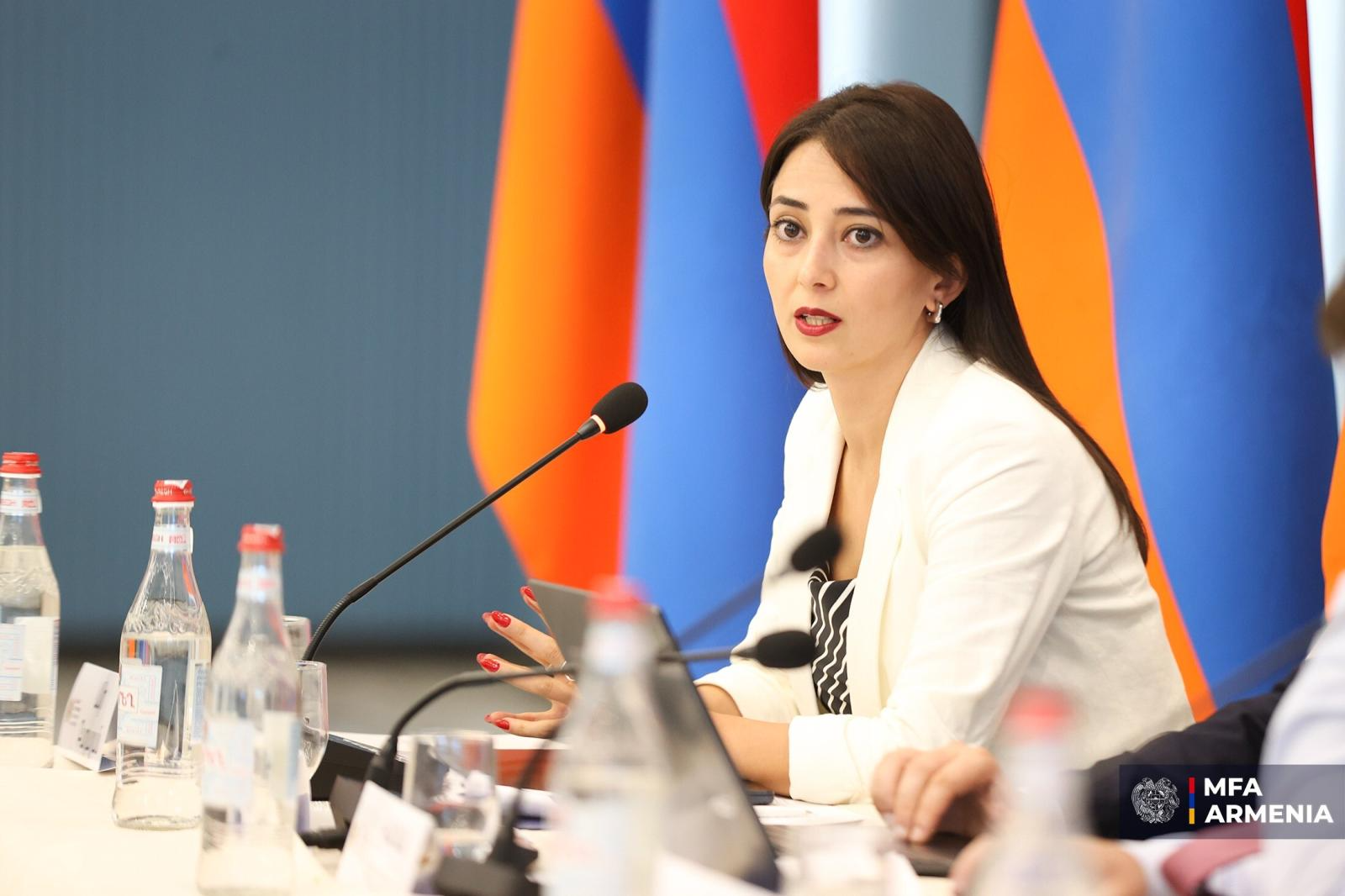
Responding to the accusations, Armenian Foreign Ministry spokesperson Ani Badalyan dismissed the claims and told Armenpress that such statements are rooted in long-standing hostile and unfounded narratives that continue to be used in Azerbaijan, even at the state level.
“During the decades-long conflict, a number of hostile and unfounded narratives had taken shape, which, unfortunately, continue to be used in Azerbaijan, even at the state level,” Badalyan said.
She added, “We hope that the peace being pursued between Armenia and Azerbaijan will not only contribute to stable, peaceful coexistence and good-neighborly relations between the two states and societies, but will also put an end to fabricated claims and rule out hate speech.”
Badalyan also recalled that the leaders of Armenia and Azerbaijan reached an agreement in Washington last August, where the declaration signed on August 8, 2025, explicitly stated in its fifth point the intention to close the chapter of hostility between the two peoples and to begin building good-neighborly relations following a conflict that caused immense human suffering.
Despite that commitment and ongoing efforts toward reconciliation, hostile narratives have continued to surface.
Last week, Armenian Prime Minister Nikol Pashinyan also addressed Armenia’s broader position on historical grievances, stressing the need to move beyond what he described as a “competition of genocides.”
“I completely reject the agenda of restoring so-called historical justice,” Pashinyan said. “I believe we should pursue a just reality, not the restoration of historical justice. The more we pursue historical justice, the more we will face new historical injustices. Enough feeding our people with data about genocides.
This competition of genocides must be stopped. In our region, everyone accuses everyone of genocide. Talks about genocides create new talks about genocides,” Pashinyan said last week.