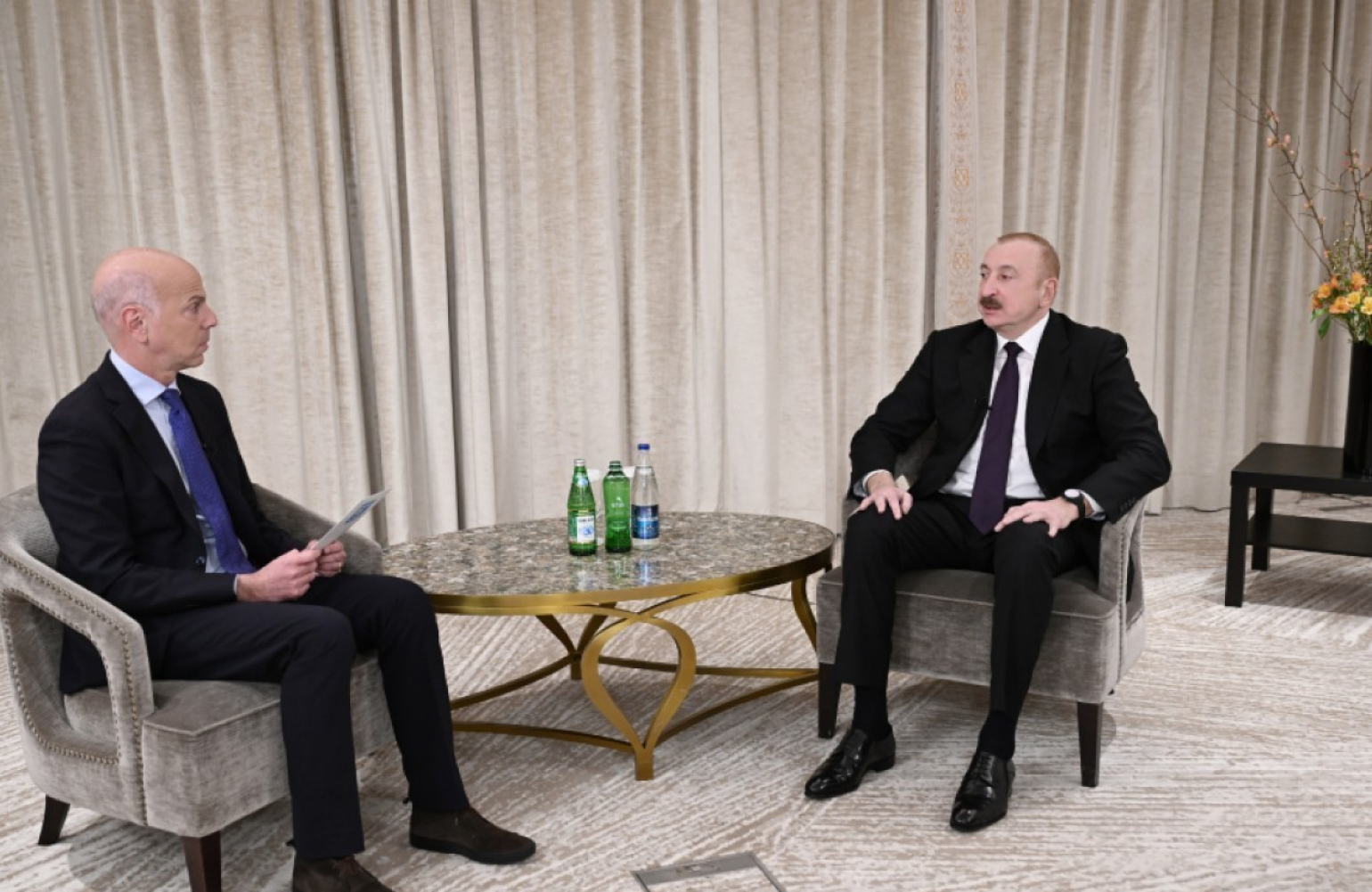

Azerbaijani President Ilham Aliyev has ruled out granting clemency to former Artsakh leaders imprisoned in Baku, despite declaring that “peace is achieved” with Armenia. In an interview with France 24 aired on Friday during the Munich Security Conference, Azerbaijani President Ilham Aliyev firmly rejected the possibility of releasing the detained officials, who face serious charges, including alleged war crimes.
Aliyev claimed that the trials were “absolutely transparent” and that the detainees’ crimes had been proven. However, proceedings were conducted without independent lawyers, human rights observers, or international journalists present, and were covered exclusively by Azerbaijani state media.
When asked whether he could pardon the detainees and “turn the page,” Aliyev refused, comparing the imprisoned Artsakh officials to Nazi leaders prosecuted after World War II.
“These people committed serious crimes against humanity,” he said. “Imagine that two months after the Nuremberg trials someone came and said: please release the Nazi leaders sentenced to death. It is the same thing, even worse. Their crimes are heavier than what the Nazis committed during World War II.”
Aliyev also confirmed that U.S. Vice President JD Vance raised the issue of Armenian detainees during a meeting this week in Azerbaijan.
“I presented Azerbaijan’s position. That was the conversation,” Aliyev said.
Despite his hardline stance on detainees, Aliyev declared that peace between Armenia and Azerbaijan has effectively been achieved following an August summit at the White House.
“For me, it is done,” he stated.
Armenian National Assembly Speaker Reacts: “All Of Them Will Return”
Reacting today to Aliyev’s remarks, Armenian National Assembly Speaker Alen Simonyan said Armenia’s efforts to secure the return of detainees will continue until all Armenians are brought home.
“The work carried out by Armenia will not stop until the last Armenian returns to the Republic of Armenia,” Simonyan told reporters during a briefing.
He said he had not watched the full interview and declined to comment on isolated excerpts.
“I have not seen the interview and cannot comment based on one sentence or citation. Especially on such an important interview, I am not ready to comment without an overall assessment,” he said.
At the same time, Simonyan stressed that negotiations with Azerbaijan remain difficult but necessary.
“The process, the work, and the style with which we and Azerbaijan are working is complex and difficult, but it creates an opportunity to move forward. We should not abandon it,” he stated.
“All of them will return. Not today, not tomorrow, but all of them will return,” Simonyan added.
At least 19 Armenian prisoners in Baku remain in Azerbaijani custody and have been sentenced to long-term imprisonment, in some cases to life sentences.