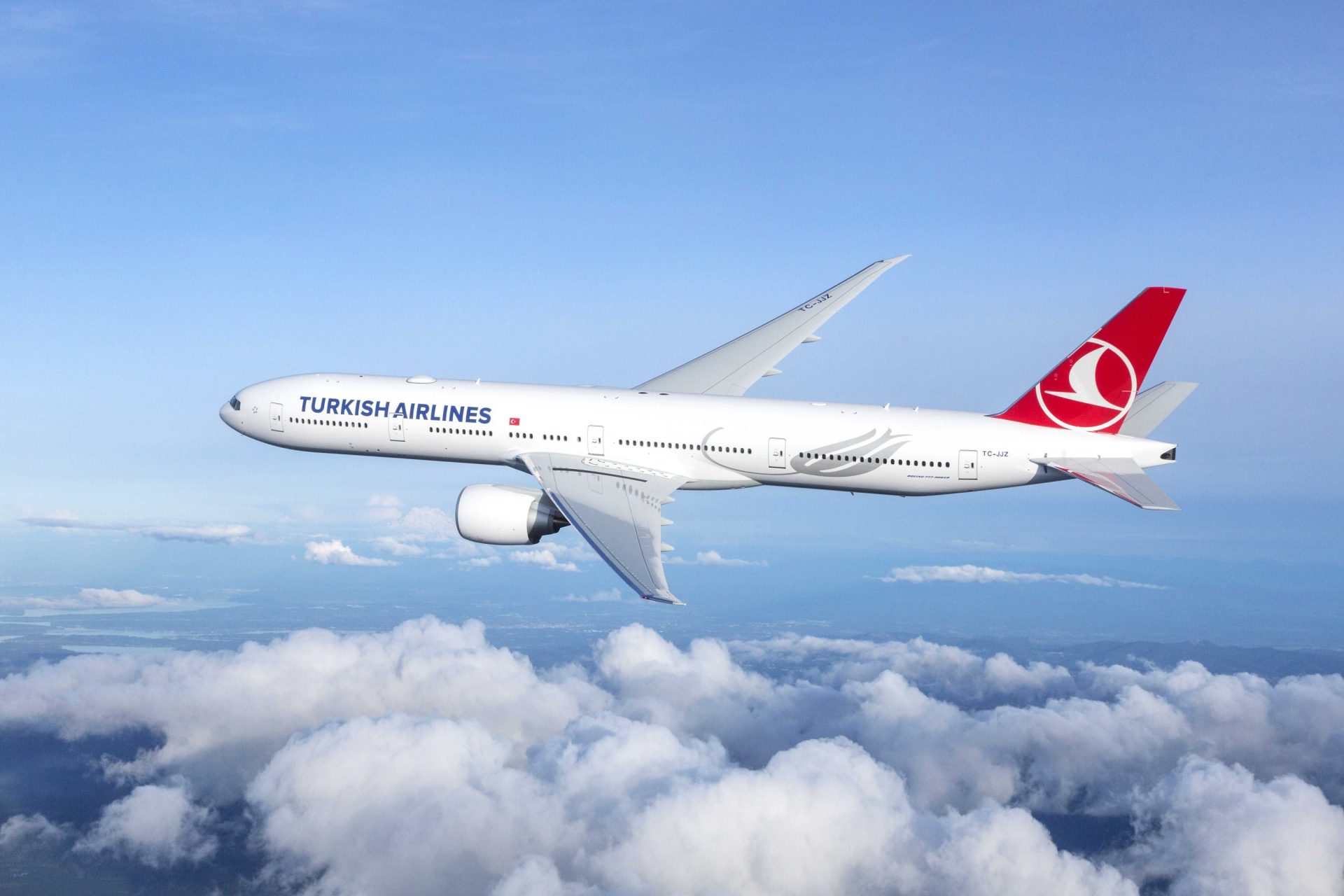

Turkey’s flagship national carrier, Turkish Airlines, will launch direct roundtrip flights between Istanbul and Yerevan on March 11, 2026, beginning with daily service and gradually increasing to 14 flights per week by June, according to Serdar K?l?ç, Turkey’s special envoy for Armenian-Turkish relations, who announced the development on X and described it as another step toward normalizing ties between the two countries.
Turkish Airlines will operate 7 flights per week starting March 11, with daily service planned throughout March and April 2026. Flight frequency will increase to 10 flights per week beginning May 14, 2026, and expand further to 14 flights per week starting June 15, 2026.
Air service between Istanbul and Yerevan is currently operated by Turkish carrier Pegasus Airlines. Unlike Pegasus Airlines, which operates flights from Sabiha Gökçen International Airport, Turkish Airlines will operate its flights from Istanbul Airport.
As previously reported in September, Turkish Airlines announced plans to launch direct scheduled flights to Armenia. The majority state-owned airline said in a filing on September 30 that it intended to begin scheduled service to Yerevan, the Armenian capital, subject to demand. At the time, Turkish Airlines stated that no specific start date had been set for the Yerevan route, noting that the launch remained contingent on market conditions.
This move comes as Ankara and Yerevan push for renewed efforts to improve ties after decades of hostility, despite Turkey continuing to deny the 1915 Armenian Genocide and aiding Azerbaijan in its wars of aggression in 2020 and 2023. Turkey provided Azerbaijan with F-16 fighter jets, Bayraktar drones, and military advisors during the 2020 war, directly enabling Baku’s battlefield advances that killed thousands and displaced tens of thousands of Armenians. Three years later, Ankara stood firmly behind Azerbaijan’s final assault on Artsakh (Nagorno-Karabakh) in September 2023, which resulted in the ethnic cleansing and forced displacement of over 100,000 indigenous Armenians from their ancestral homeland.
Armenia continues to face the devastating aftermath of these attacks. Between December 2022 and September 2023, Azerbaijan imposed a nine-month blockade of the Lachin Corridor, Artsakh’s only humanitarian lifeline, defying an International Court of Justice order and depriving the Armenian population of food, medicine, and essential supplies. When the final assault came, it was accompanied by mass arrests: Azerbaijani authorities illegally detained Artsakh’s top political and military leaders and transported them to Baku. Among those held are former Presidents Arkadi Ghukasyan, Bako Sahakyan, and Arayik Harutyunyan; former State Minister Ruben Vardanyan; Parliament Speaker Davit Ishkhanyan; former Foreign Minister Davit Babayan; former Defense Minister Levon Mnatsakanyan; and former Deputy Commander Davit Manukyan. All face fabricated charges that could carry life sentences.
Their sham trials began in January 2024 following months of pre-trial detention. Today, at least 23 confirmed Armenian prisoners of war and civilian detainees remain unlawfully imprisoned in Azerbaijan, including 16 captured during the September 2023 forced exodus. These men and women have now spent nearly a year in Baku prisons as hostages of Azerbaijan’s ongoing campaign of military aggression and ethnic cleansing. Independent reports further document the systematic destruction of Armenian cultural and religious heritage in territories seized by Azerbaijan.
The history of Armenian-Turkish relations only deepens this sense of mistrust. Turkey closed its border with Armenia in 1993 in solidarity with Azerbaijan and has never reopened it, using the blockade as leverage for three decades while refusing to recognize the Armenian Genocide. Attempts at normalization, such as the Zurich Protocols of 2009, collapsed under Turkish preconditions tied to Artsakh.
Against this backdrop, Turkish Airlines’ announcement of flights to Yerevan is not viewed simply as a neutral expansion of routes. For many Armenians, it is seen as another move wrapped in the shadow of Ankara’s long hostility, its decisive role in supporting Azerbaijan’s wars, and the ongoing suffering of Armenian prisoners and displaced families.