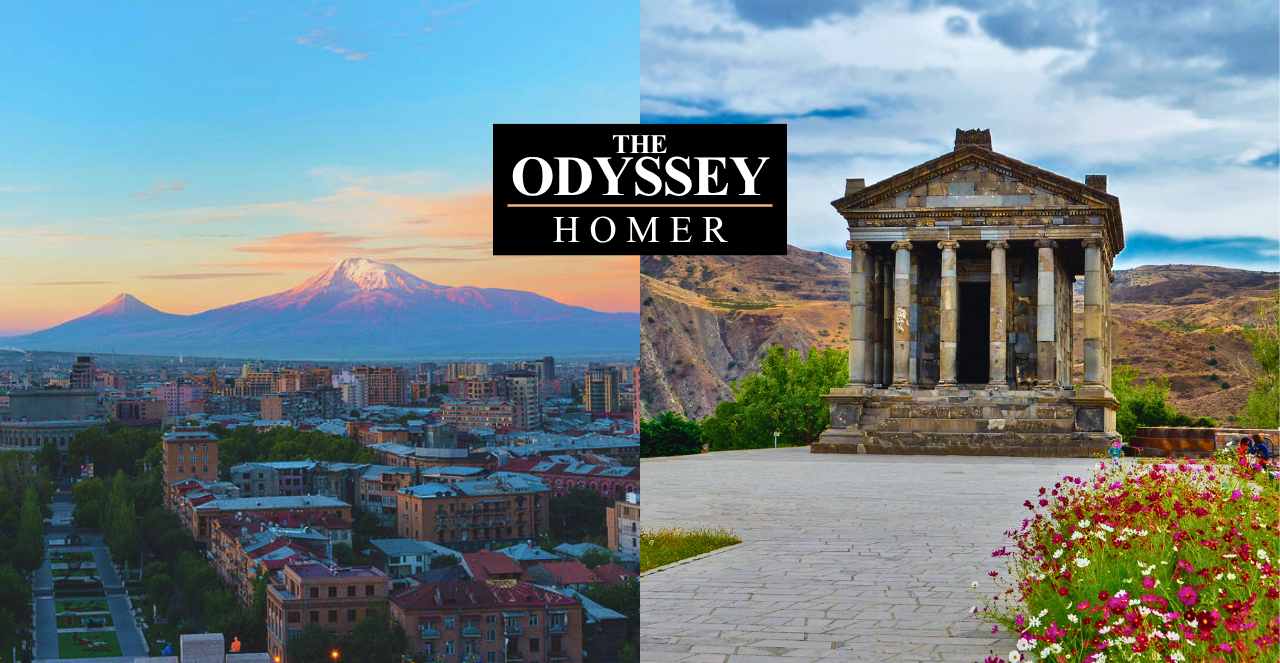

A new TV series based on Homer’s “Odyssey” is set to shoot in both Greece and Armenia in early 2027, with an Armenian-American executive producer among its leads. The show is headed by executives and directors with credits across “Stranger Things,” Paramount+’s “Halo,” “Black Sails,” and “Wu Assassins,” Deadline reports.
Titled “Odysseus,” after the story’s main character, the new series promises a more grounded, historically realistic version of Homer’s 3,000-year-old tale. Per Deadline, the show is described as “visceral and muscular,” depicting the real Bronze Age world of blood, ships, betrayal, and characters trying to survive the era that inspired the epic, while also touching on the historical processes that led to the Bronze Age collapse.
The series is unrelated to Christopher Nolan’s film — now in theaters with a star-studded cast featuring Matt Damon, Tom Holland, Anne Hathaway, Robert Pattinson, and Zendaya — but is being readied in its slipstream, following glowing reviews for the blockbuster.
The show will be a joint production between Greek distributor Tanweer Productions, which handled distribution for Nolan’s “The Odyssey” in Greece and is producing out of Athens; U.S. production company Tectonic; and USATV, an Armenian-American television company in the United States. Vaagn Sarkissian, of USATV, is an executive producer on the series.
In Greek mythology, Odysseus is the king of Ithaca and the hero of Homer’s “Odyssey.” Known above all for his cunning, he is most famous for the homecoming that stretched across ten eventful years, after a Trojan War that had already taken a decade.
After several years in development, the team aims to shoot on location across Greece and Armenia, and hopes the project can spawn an “expanded series universe.”
Karl Gajdusek, an executive producer on the first season of “Stranger Things,” serves as showrunner. The full executive producer roster includes Vaagn Sarkissian, Jordan Dykstra, Denisa Juhos, Gajdusek, Sean Finegan, Scott Windhauser, Noah Lang, Blake Hoss, director Roel Reiné, and Tanweer’s Dionyssis Samiotis.
Directing is Roel Reiné, whose credits include historical dramas “Washington” and “Black Sails,” as well as Paramount+’s “Halo” and Netflix’s “Wu Assassins.” The pilot was written by Finegan, Windhauser, Lang, and Hoss.
“There’s something huge about taking on this epic story in the most grounded and realpolitik way we can,” Gajdusek said. “The mythical stations of Odysseus’s journey are beautifully rendered by Homer as metaphorical journeys into self, but there’s also a real under all that. Choices. Lives and loves lost and saved… We get to take the audience backstage, meet the Bronze Age flesh and blood characters that birthed the spectacle, and live with their true story.”
“We started this journey almost a half a decade ago with a vision for bringing this story into the current zeitgeist and in a recurring fashion,” said Dykstra. “Our desire is to bring to audiences an authentic and thrilling portrayal of ancient Hellenic Greece.”
No cast, distributor, or release window has been announced for the independent European-U.S. TV series.
Homer on screen, before this
“The Odyssey” has been adapted repeatedly across nearly a century of film and television:
- “Ulysses” (1954): one of the earliest major screen versions.
- “L’Odissea” (1968): an eight-part European miniseries, widely regarded as one of the most faithful adaptations.
- “The Odyssey” (1997): NBC miniseries starring Armand Assante. Won two Emmys.
- “Odysseus” (2013): a European series that ran one season, unconnected to the new project.
- “The Odyssey” (2026): Christopher Nolan’s epic film, now in theaters.
Homer’s other epic, the “Iliad,” covers the Trojan War that precedes Odysseus’s ten-year journey home. Its best-known screen version is “Troy” (2004), Wolfgang Petersen’s film with Brad Pitt as Achilles and Sean Bean as Odysseus — a different poem, but the same war and the same cast of kings.
Armenia landing as a shooting location on an international series of this scale, with an Armenian-American company as a lead producing partner, is a meaningful marker for the country’s film infrastructure and its pitch as a production destination.