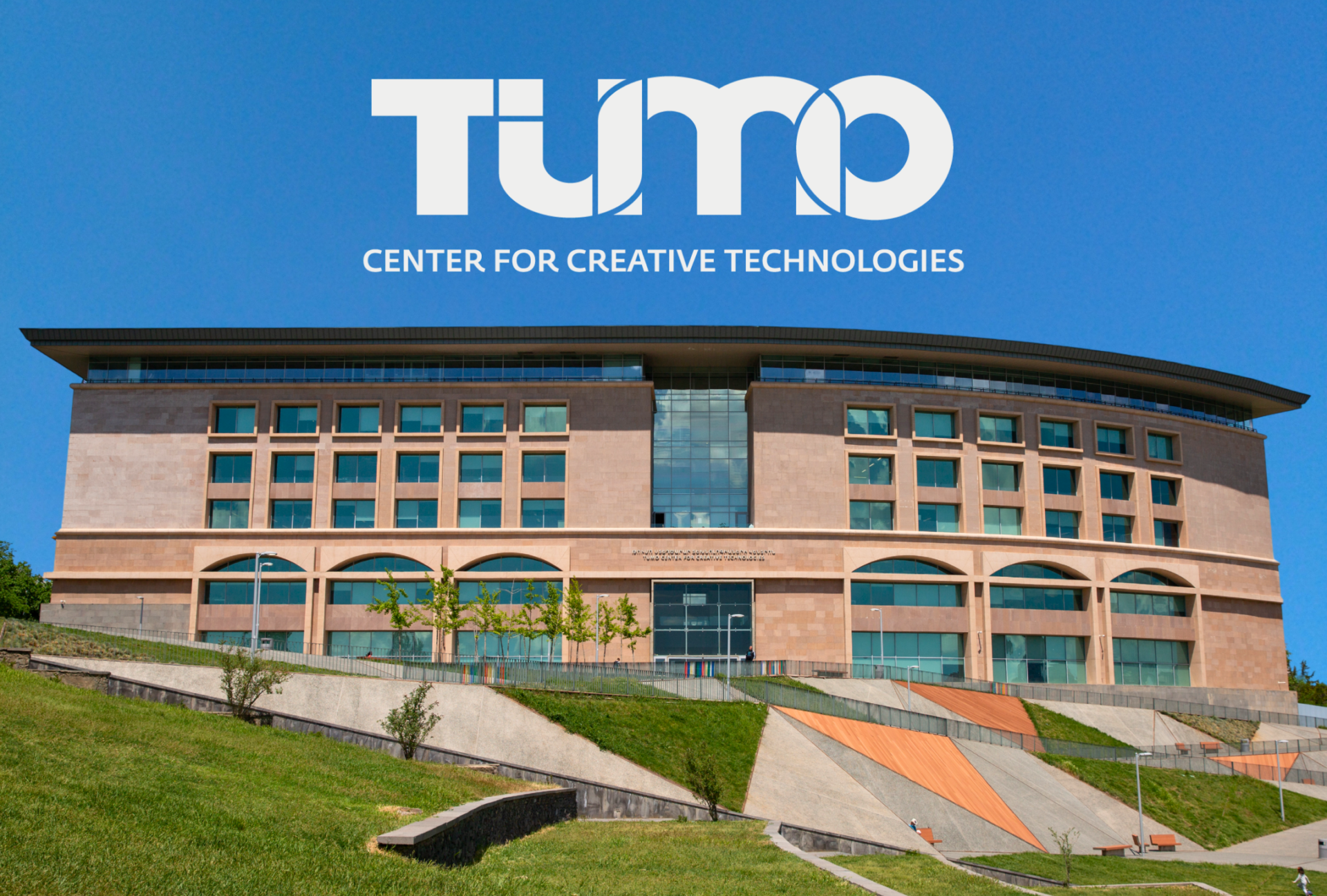

When the first TUMO center opened in Yerevan in 2011, it was an experiment in a single building: give teenagers free access to world-class technology and design education, and see what they create. 15 years later, that experiment has become one of the most recognized education models in the world, reaching more than 35,000 teens every week and counting over 100,000 alumni.
A Model That Traveled the World
What began in Armenia did not stay there. TUMO’s approach proved so effective that cities and governments abroad wanted it for their own young people. Today the network spans 14 countries, with centers in France, Germany, Portugal, Spain, Belgium, the Netherlands, Albania, Argentina, Uruguay, Kazakhstan, India, Japan, and the United States, where the first American center opened in Los Angeles.
The reach is remarkable for a program born in a country of fewer than three million people. TUMO has become a rare example of an Armenian institution exported to the world, an education model that other nations now adopt, study, and build upon.
For a global Armenian community used to seeing talent flow outward, TUMO represents something different: an idea conceived in Yerevan that the rest of the world came to learn from.
Armenia Remains the Heart of It
For all its global growth, Armenia is still where TUMO matters most and where its mission is most urgent. The country’s future increasingly depends on a technology-driven economy, and that economy depends on a generation equipped to build it. TUMO’s model, free of charge and open to any teenager, is designed to make sure that geography and income never determine who gets that chance.
That is why the program’s expansion at home is the priority. TUMO’s network in Armenia currently includes six centers and more than 40 TUMO Boxes, the compact satellite spaces that carry its model into smaller towns and rural communities. Thanks to generous philanthropists, two more centers are in development in Masis and Vanadzor. The goal is to grow that footprint to 14 centers and more than 80 TUMO Boxes, reaching 60,000 students every week, with a deliberate focus on the rural regions where after-school opportunities have long been scarce.
A Pipeline for a Nation
The stakes go beyond any single classroom. Every teen who learns to code, animate, build robots, or design at TUMO strengthens Armenia’s long-term talent pipeline, helping cultivate the engineers, founders, and creators who can build careers and power the country’s economy from within rather than seeking opportunities elsewhere.
One TUMO alumnus, Narek Galstyan, commuted 1.5 hours each way from his village of Arax to attend TUMO. He later earned a bachelor’s degree in computer science from Princeton University, studied at ETH Zürich as an exchange student, and completed a master’s degree in computer science at UC Berkeley. He now shares his knowledge with the next generation by leading labs for students at TUMO. His journey reflects the kind of long-term impact TUMO seeks to make possible for young people across Armenia.
To continue this work and inspire more young people like Narek, TUMO is inviting the Armenian community to invest in the next generation of talent. On September 20, TUMO will host its first-ever gala in Los Angeles, bringing together supporters committed to expanding access to free, innovative education and helping young Armenians build the skills and confidence to shape Armenia’s future.
Learn more about TUMO and its 15th Anniversary Gala at tumo.org/sh/gala.
Those interested in supporting its growth can explore sponsorship opportunities at tumo.org/sh/galasponsorships or by contacting foundation@tumo.org.