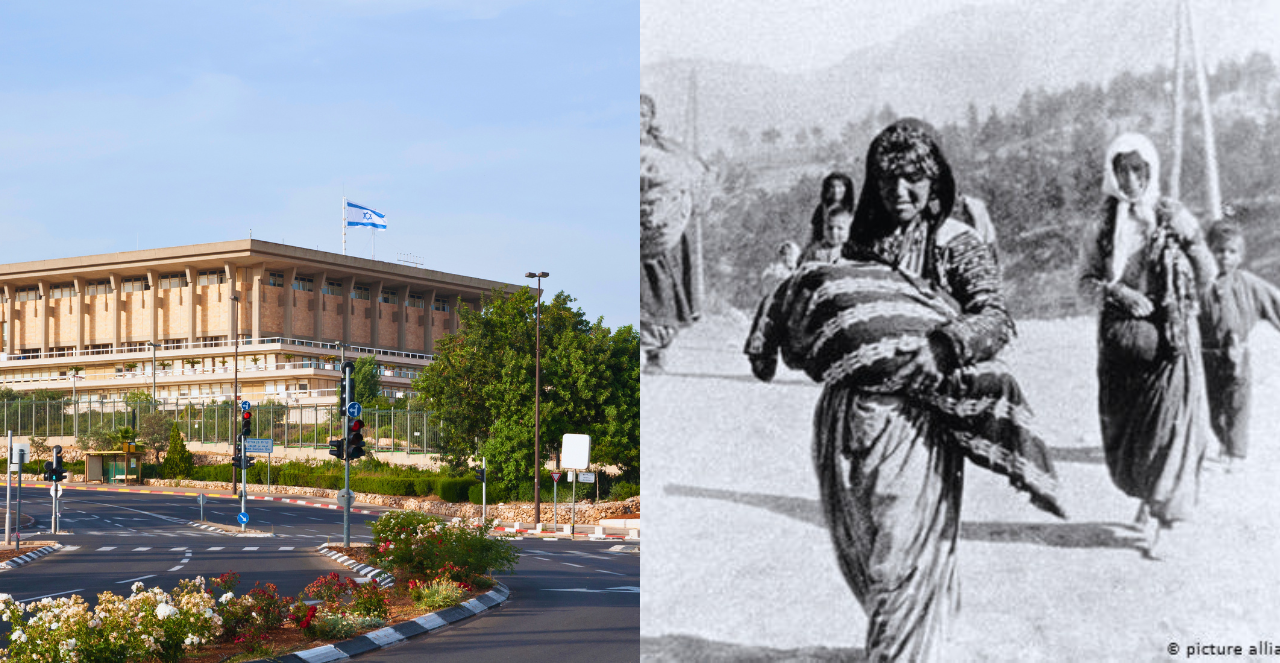

Israel has suspended the vote in its parliament, the Knesset, that would have turned its cabinet’s recognition of the Armenian Genocide into binding law, an Israeli official told the Jewish News Syndicate (JNS), freezing the measure until after the country’s October 27 elections.
The vote had been expected after Israel’s cabinet unanimously approved the recognition in late June, but because that cabinet decision was only an executive resolution, and reversible by any future government, it needed Knesset approval to become Israel’s official state position. With parliament now heading into recess, that approval won’t come before the vote.
The Knesset is scheduled to begin its summer recess at the end of this week and will not reconvene before the elections, according to JNS, leaving the recognition’s future dependent on whatever government emerges from the fall vote.
Foreign Minister Gideon Sa’ar, who brought the proposal to the cabinet, had described it as “the right decision” and “a matter of historical justice.” His office did not respond to requests for comment on the suspension, JNS reported.
Why Israel Froze the Vote
JNS reported that the freeze came during a diplomatically sensitive period and could be seen as part of an international effort to ease tensions between Israel and Turkey. It came amid renewed regional turbulence following the breakdown of a ceasefire with Iran.
It also followed a NATO summit in Turkey last week, at which Turkish President Recep Tayyip Erdogan pressed US President Donald Trump to allow Ankara to acquire American F-35 fighter jets.
The Greek outlet ProtoThema reported that the main reason for the suspension was concern that proceeding could damage Israel’s relationship with Azerbaijan. It cited commentator Svetlana Kushnir, who argued the recognition had been intended primarily as political pressure on Turkey over Erdogan’s anti-Israel rhetoric on Gaza, rather than as an act of principle.
Turkey and Azerbaijan Condemned Israel’s Recognition Decision
The suspension follows weeks of fierce objection from both Turkey and Azerbaijan. Erdogan condemned the recognition as a “slander” and declared that Turkey’s history is “free from genocide, massacres, oppression and colonialism.”
Ankara’s Foreign Ministry branded the cabinet decision “politically motivated” and accused Israel of using it to divert attention from what it called the genocide in Gaza. It called the move a “malicious attempt” that disregards legal and historical facts, and vowed to keep opposing Israel’s “expansionist and destabilising policies” in the region.
Azerbaijan’s Foreign Ministry dismissed the events of 1915 as the “so-called Armenian genocide” and called the recognition a “distortion of historical facts.” Baku said such decisions do not contribute to peace or reconciliation but instead deepen existing divisions, and demanded Israel reverse it.
Israel Armed Azerbaijan’s Ethnic Cleansing of Artsakh
Azerbaijan, the state most fiercely lobbying against the recognition, is the same one that in September 2023 used Israeli-supplied weapons to ethnically cleanse more than 120,000 Armenians from occupied Artsakh. The offensive drove out the region’s entire Armenian population within days.
The two states are bound by a deep strategic partnership. Azerbaijani crude accounted for roughly 46 percent of Israel’s oil imports in 2025, its single largest source and the highest share this decade, according to ship-tracking data.
In return, Israel has supplied roughly 70 percent of Azerbaijan’s major arms imports in the years surrounding the wars against Armenia, including the loitering munitions and drones that proved decisive on the battlefield. Azerbaijan deepened the alliance further in 2023, becoming the first Shiite-majority country to open an embassy in Israel.
Israeli officials had earlier described a crisis with Baku deeper than either government showed publicly. Azerbaijan, they said, was hoping the recognition would stall in the Knesset without ever reaching a vote, the precise outcome that has now come to pass.
Israel’s Long Pattern of Retreat
For Armenians, the freeze fits a long and painful pattern. Israel has repeatedly edged toward recognition only to retreat under pressure from Ankara and Baku, and a similar Knesset effort was canceled at this same pre-recess stage in 2018.
In 2016, the Knesset’s Education, Culture and Sports Committee recognized the genocide, but the statement carried no binding force. Prime Minister Benjamin Netanyahu has personally called the killings a genocide, yet no Israeli government or parliament had ever made recognition the state’s official position.
The cabinet’s June decision, taken as Israel’s ties with Turkey collapsed, was hailed in parts of the Armenian press as historic. But critics cautioned from the start that an executive resolution is not state recognition, and warned it could quietly expire if it was never brought to a binding vote.
With the Knesset now adjourning until after the election, the recognition of the systematic killing of 1.5 million Armenians once again rests on political convenience rather than the historical record.