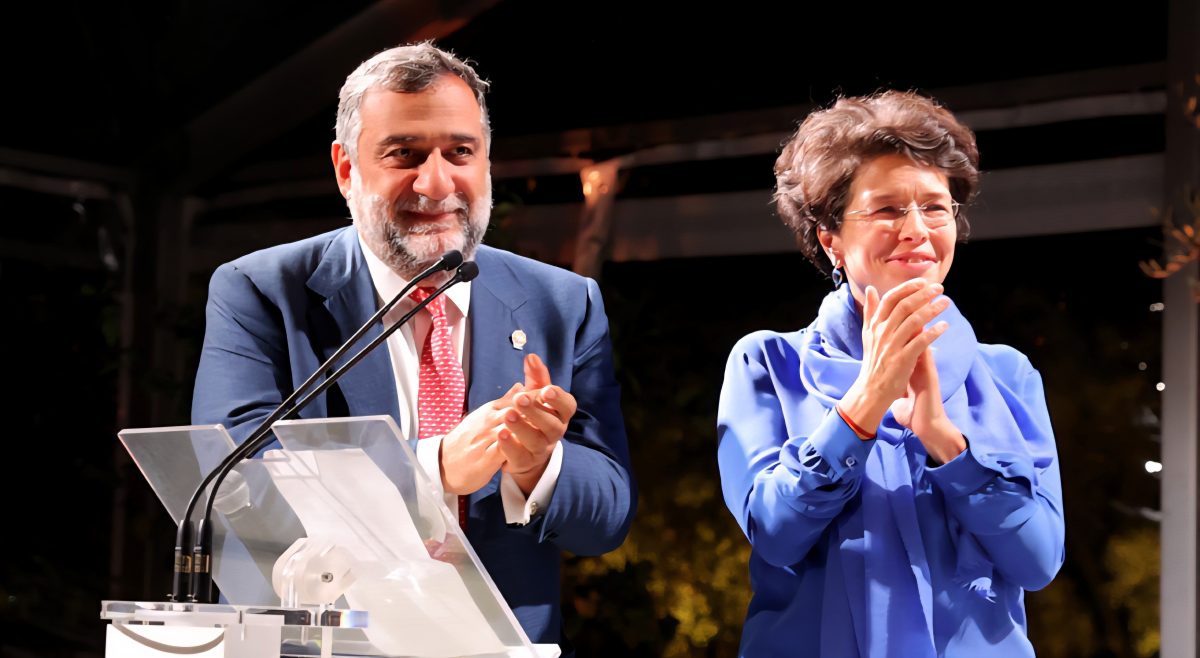

Veronika Zonabend, the wife of unjustly imprisoned Armenian businessman and philanthropist Ruben Vardanyan, has turned to official and diplomatic channels to advance her initiative to send an international women’s humanitarian delegation to Baku to visit the Armenian hostages held prisoner in Azerbaijan, in a statement published on Wednesday, July 8, 2026.
Zonabend said she has sent open letters to four senior officials whose engagement, she said, may be essential to organizing the visit and ensuring the safety of its participants. The letters are addressed to Azerbaijan’s Human Rights Commissioner Sabina Aliyeva, International Committee of the Red Cross President Mirjana Spoljaric Egger, Armenian Prime Minister Nikol Pashinyan, and European Union High Representative for Foreign Affairs and Security Policy Kaja Kallas.
Wednesday’s letters mark the next phase of an initiative Zonabend first announced on June 15. That earlier statement, made at Vardanyan’s request, set out to organize a women’s delegation aimed at restoring contact between the Armenian hostages held in Azerbaijan and their families, with plans to visit the prisoners at the Umbaki Penitentiary Complex outside Baku and to deliver letters, photographs, and family packages to hostages who have in some cases gone years without contact with their loved ones.
Zonabend had originally hoped to travel in the coming weeks, but has since made clear that the delegation cannot move forward without formal safety guarantees, which is what Wednesday’s letters are seeking to secure.
Zonabend’s husband, Ruben Vardanyan, has been imprisoned in Azerbaijan since 2023. She has said he was wrongfully convicted in sham trials that also targeted other Armenian hostages.
Vardanyan is the former State Minister of occupied Artsakh (Nagorno-Karabakh) and is currently serving a 20-year sentence handed down by a Baku military court in February on charges he rejects as politically motivated.
Zonabend said the purpose of the initiative remains exclusively humanitarian, to meet with Azerbaijan’s Human Rights Commissioner, visit the Armenian citizens held in the country, and hand over letters, photographs, and permitted personal items from their families. What has changed, she indicated, is that she now believes the effort must move through official and diplomatic channels rather than proceed as a private appeal. “This is why I believe it is important to act openly,” she said, “through official and diplomatic channels.”
“Of particular importance is the predictability and coherence of every stage of the potential visit,” she said, naming entry into Azerbaijan, access to the prisoners, and the safe return home of all participants as the three points that must be secured before the delegation can travel. The participants and their families, she said, must be able to understand that the initiative is being prepared within an official framework and with the necessary guarantees, so that the visit does not pose a risk to anyone’s life or safety.
Azerbaijani authorities have not indicated whether the visit will be approved, and Zonabend presented the initiative as a humanitarian effort in the preparatory stage.
Zonabend addressed the four letters to the following:
- Sabina Aliyeva, Human Rights Commissioner of the Republic of Azerbaijan, requesting her support in organizing the visit under the auspices of her office and in creating the conditions necessary for it to take place.
- Mirjana Spoljaric Egger, President of the International Committee of the Red Cross, requesting that the ICRC consider ways to support, advise, or participate in the visit within the scope of its mandate.
- Nikol Pashinyan, Prime Minister of the Republic of Armenia, requesting coordination and practical support from the Government of Armenia.
- Kaja Kallas, High Representative of the European Union for Foreign Affairs and Security Policy, requesting diplomatic attention and possible assistance from European institutions.
The request to Spoljaric Egger carries particular weight given that the ICRC delegation office in Baku was shut down by Azerbaijani authorities in September 2025, ending the last independent humanitarian access to the Armenian hostages.
Pashinyan’s government secured the release of four Armenian civilian prisoners from Azerbaijani custody in January 2026, and the prime minister has said publicly that his administration carries out daily work to secure the release of the remaining Armenians, though he has declined to describe those efforts, saying he will make no announcements until someone crosses into Armenian territory. His remarks come as prominent figures held in Baku, including Vardanyan and former parliament speaker Davit Ishkhanyan, have accused the government of failing to organize any coherent mechanism on behalf of the prisoners.
The Azerbaijani government has publicly ruled out the release of the former Artsakh leaders.
Zonabend has been sharply critical of the institutional vacuum surrounding the hostages, and Wednesday’s letters read as an attempt to fill it publicly. In her June 15 statement, she noted that Armenia’s Human Rights Defender had said the matter fell outside her mandate, that official Armenian delegations visiting Azerbaijan on other business had not found a way to see the prisoners or check on their health, and that the closure of the ICRC office had left families without regular independent communication with their loved ones.
For those held in prolonged detention, she wrote on Wednesday, an initiative of this kind carries profound significance, and their condition, the conditions of their detention, and their connection to their families must not be left unaddressed or left to depend solely on closed and irregular mechanisms.
“This is a matter of a fundamental human right,” she said, “to know what is happening to those we love, to be able to send them words of support, and to let them know they have not been forgotten.”
The names of the women who will form the delegation have not yet been announced. As part of the initiative, Zonabend is also collecting letters of support for the Armenian hostages from around the world, to be delivered alongside family packages. Letters may be sent in any language to contact@freearmenianprisoners.com with the subject line “Letter of Support, Armenian Detainees,” and if addressed to a specific person, that name should be included in the subject line.
There are 19 Armenian hostages currently held in Azerbaijan, seized in September 2023 when, following a nine-month blockade and a military assault on occupied Artsakh, Azerbaijani forces detained members of the region’s former military and political leadership in the days surrounding the ethnic cleansing that forced the entire Armenian population from their homeland.
Vardanyan is among them, alongside five former Artsakh leaders serving life sentences, former President Arayik Harutyunyan, former Foreign Minister Davit Babayan, former National Assembly Speaker Davit Ishkhanyan, former Defense Army commander Levon Mnatsakanyan, and former deputy commander Davit Manukyan, and former presidents Arkadi Ghukasyan and Bako Sahakyan, who received 20-year terms.
Other officials and civilians received prison terms ranging from 15 to 19 years, among them Madat Babayan, Melikset Pashayan, Garik Martirosyan, Davit Alahverdyan, Levon Balayan, Erik Ghazaryan, Gurgen Stepanyan, and Vasil Beglaryan. Amnesty International condemned the verdicts as a travesty and a mockery of justice. The verdicts have been condemned by Armenia and international human rights organizations, which have raised concerns over due process and called for the release of the Armenian hostages held in Azerbaijan.