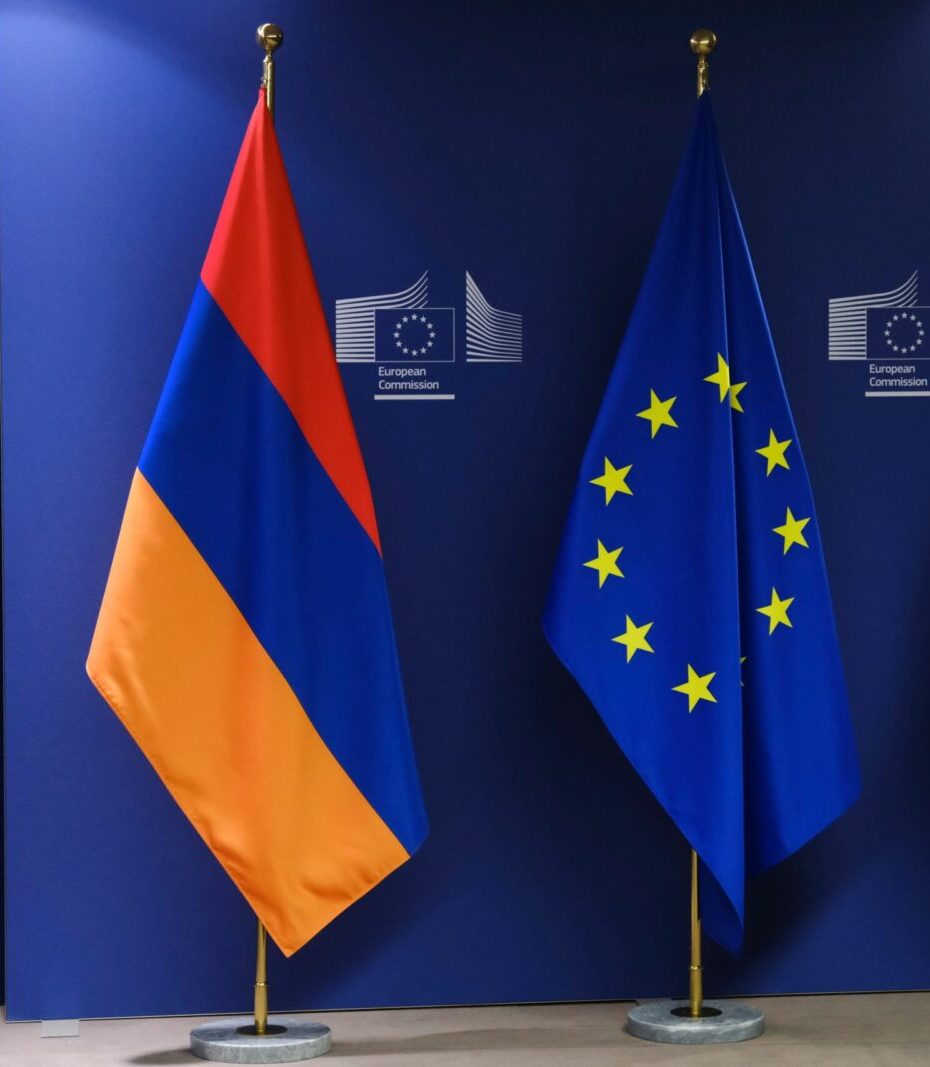
The European Union has provided Armenia with €34 million in financial assistance to help mitigate the economic impact of Russia’s trade restrictions on the country’s private sector. The funding marks the first installment of a broader support package announced by European Commission President Ursula von der Leyen.
The disbursement comes just two weeks after a phone conversation between President von der Leyen and Armenian Prime Minister Nikol Pashinyan, which the European Commission said reflects how quickly the bloc has moved to deliver on its commitments to Armenia and its people.
According to the European Commission, the financial assistance is part of a wider package that includes trade facilitation measures and solidarity initiatives designed to help Armenia diversify its economic partnerships and reduce vulnerabilities caused by external trade disruptions.
The support builds upon commitments made during the EU-Armenia Summit in May, where both sides agreed to deepen economic cooperation and expand opportunities for Armenian businesses in regional and European markets. The European Union plans to provide additional assistance to sectors most affected by the Russian trade restrictions, including agri-food production, floriculture, and other export-oriented industries.
Planned measures include trade promotion initiatives, business matchmaking events, and targeted programs aimed at improving market access for Armenian producers. These efforts are being coordinated through the EU-Armenia Task Force on Economic Resilience, which continues to meet regularly to oversee the implementation of the support package and ensure that assistance reaches the sectors that need it most.
European Commissioner for Enlargement Marta Kos emphasized the EU’s commitment to Armenia’s economic stability and democratic development. “The EU stands firmly with Armenia, a sovereign, democratic and independent country,” Kos stated. “Today’s support will help address immediate economic challenges while opening new opportunities for Armenian businesses to trade with regional and European markets. This is European solidarity in action.”
The European Commission views the assistance as both a short-term response to economic pressures and a long-term investment in Armenia’s ability to strengthen trade ties beyond traditional markets. Further discussions on the implementation of the support package are expected when Commissioner Kos visits Armenia on July 5, when she will meet with Armenian officials to review progress and explore additional opportunities to deepen EU-Armenia cooperation.
The aid lands as Russia tightens its restrictions. Effective June 12, Rosselkhoznadzor barred all quarantine products from Armenia, and their transit through Russia to other Eurasian Economic Union states, naming Jermuk mineral water, alcohol, produce, and flowers, citing “systematic detection of quarantine organisms.” The ban holds until a shipment safety-and-traceability system is in place. Russia calls the measures phytosanitary enforcement; the EU calls them economic coercion.