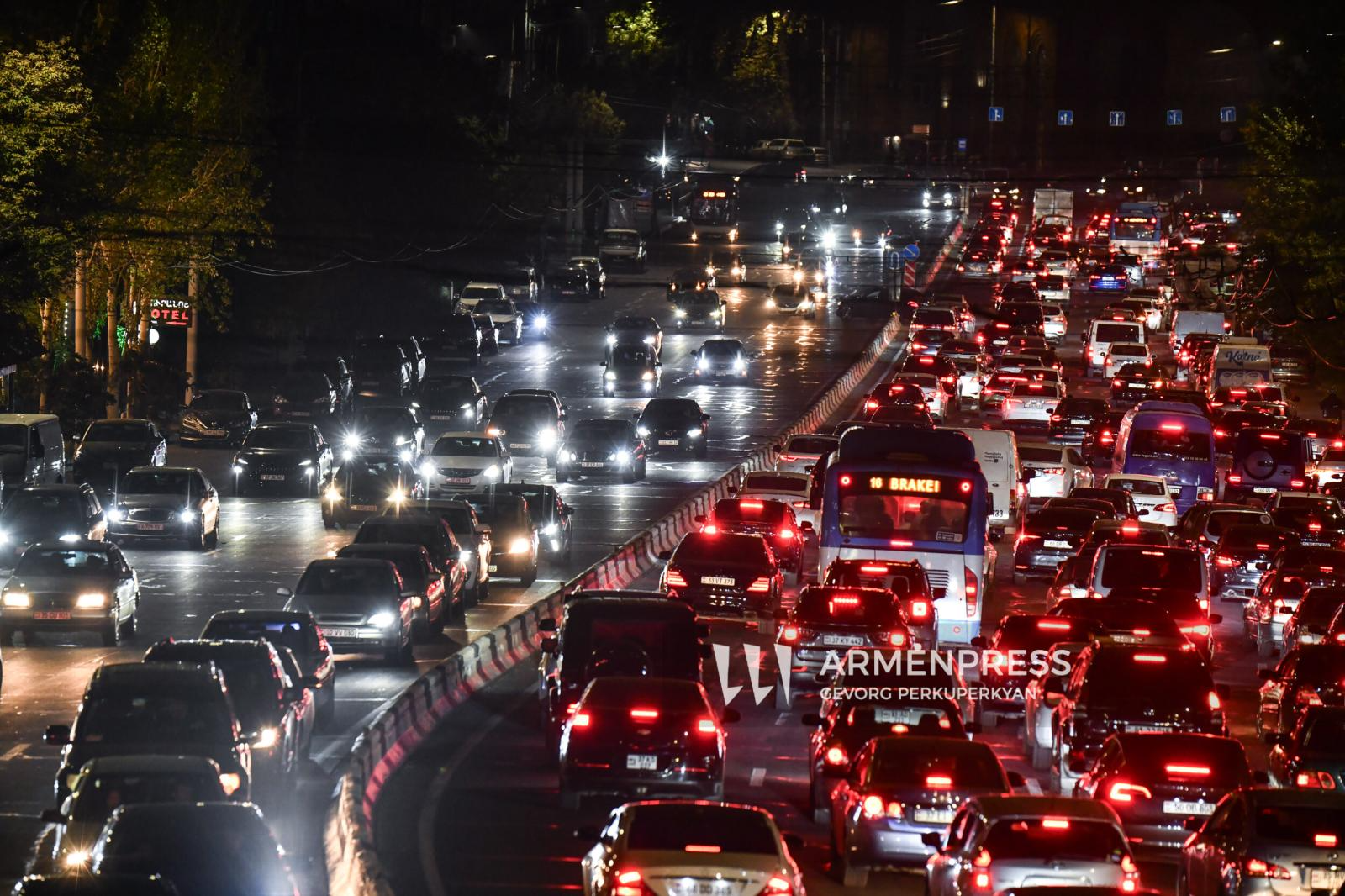

Yerevan authorities are preparing a major overhaul of how traffic moves through the capital, with plans to restrict private cars, expand dedicated lanes for public transportation, and roll out new management measures to break the city’s worsening congestion. Mayor Tigran Avinyan pointed to years of rising car ownership as the root of the problem, saying the first real changes could come as early as 2027, once preliminary results from the city’s traffic study arrive in the fall of 2026.
The push follows a period in which the city’s gridlock reached a breaking point. In October 2025, Prime Minister Nikol Pashinyan declared the situation a “real crisis,” saying he had seen the downtown traffic himself the previous evening, and ordered an emergency team drawing on the Ministry of Internal Affairs, the Ministry of Territorial Administration and Infrastructure, and Yerevan City Hall to tackle the problem.
Avinyan laid out the city’s approach to lawmakers this week during a joint session of the Armenian National Assembly’s standing committees, as part of discussions on Armenia’s 2025 state budget. He said the city is currently running a pilot program to study and manage traffic flows. As part of it, the municipality has set up a dedicated body, the Traffic Management Center, staffed with experts to introduce digital tools, analyze traffic patterns, and shape new transportation policies.
“The Traffic Management Center has started producing concrete results. It has begun measuring the flow of vehicles entering Yerevan, and based on these calculations, it will provide us this year with a program of changes outlining what needs to be done,” Avinyan said.
The mayor said the research will show how many vehicles enter the capital each day and what is needed to manage them, including where to add parking near the city’s entrances. In the meantime, drivers face a separate disruption, as the Yerevan Municipality announced that the capital’s Kievyan Bridge will be closed to traffic from June 17 to August 29 for major renovation work.
Avinyan pointed to recent economic growth as the main driver of the congestion, saying it has sharply increased the number of private cars. “The first and main reason is economic growth, and this economic growth has resulted in a huge increase in the number of passenger cars,” he said. According to figures presented by Armenia’s Minister of Internal Affairs in December last year, the number of registered vehicles in the country reached nearly 1 million.
He argued that adding more buses and expanding public transportation would not be enough on its own without limits on private cars. “Public transportation cannot operate according to schedule if we do not have restrictions on passenger cars,” he said. Avinyan added that Yerevan plans to follow the lead of European cities, where private car use is limited and public transit comes first. “Certain restrictions on private cars must definitely be introduced, and they should be replaced by dedicated public transport lanes,” he said.
Alongside the restrictions, the city is working to expand its transit alternatives, with Avinyan saying congestion would ease in part once new metro stations are built. He said the design phase for the Ajapnyak station was finally completed in 2025, clearing both the project review and the comprehensive state review, and that construction of the new station in the Ajapnyak administrative district is moving forward as part of the city’s 2026 metro expansion. The municipality will soon hold several key tenders, including one for engineering supervision that will bring in an international-level supervisor, carry out the necessary property expropriations, and launch the construction works tender.
The mayor said preliminary results from the center’s work are expected in September-October 2026, with the measures set to begin in 2027. Based on the ongoing studies, the city will then determine how to manage traffic, where to place parking, and what specific restrictions will apply to private cars.