
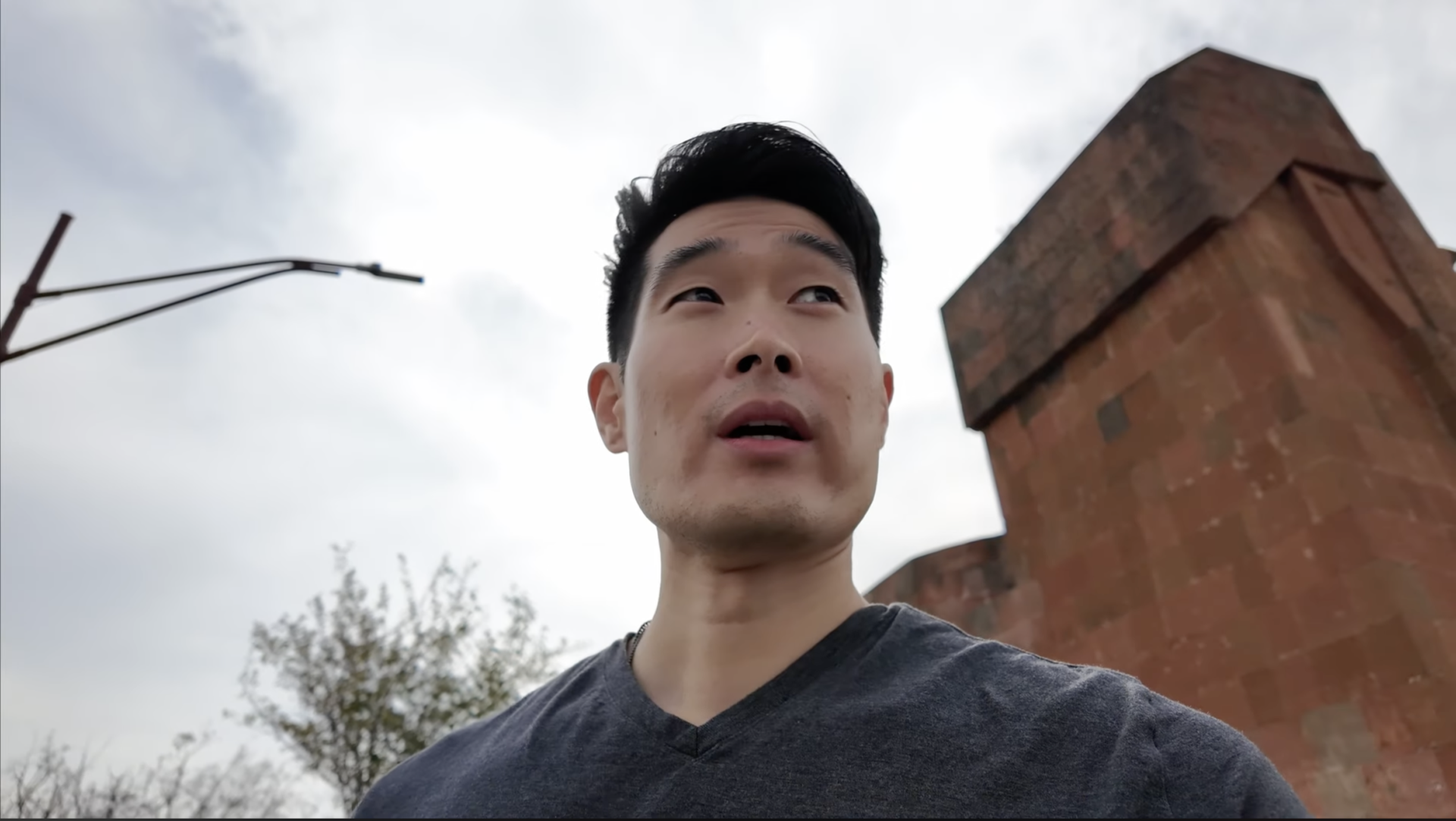

A Korean travel blogger has shared a rare recent video documenting his journey through Artsakh, offering one of the few firsthand looks into the region under Azerbaijani occupation following the 2023 ethnic cleansing of its indigenous Armenian population. Traveling through Shushi, Askeran, and Stepanakert, YoungMin Skies captures empty streets, damaged landmarks, and what he describes as a systematic effort to erase Armenian traces and reshape the identity of the occupied region.
His trip into Artsakh was part of a group tour, after attempts to obtain an individual permit proved nearly impossible. Visitors were not allowed to leave the van at any point, and access to sites was strictly controlled, shaping the narrative presented during the visit.
The blogger also drew personal parallels between his family history in North Korea and the Armenians who have been cut off from their historical lands, highlighting a shared experience of displacement and loss.
He described his drive through largely deserted territory as haunting. Upon reaching Stepanakert, the former capital, his first impressions were stark: “Tragedy, sadness. Everywhere you go, it’s just empty houses.”
At the city’s entrance, he noted the heavy presence of Azerbaijani state symbols, including flags and music blasting through the streets.
“Not enough Azerbaijani flags and blasting Azeri music. I get it, we’re in Azerbaijan,” he said.
The blogger highlighted widespread abandonment and damage across the city. Many Armenian landmarks had been destroyed, remodeled, or repurposed. Yet the iconic “We Are Our Mountains” monument, also known as “Grandma and Grandpa,” remained intact. He interpreted this as a political decision: although the authorities appear intent on erasing Armenian heritage, the monument was left as a carefully controlled symbol to show that the government dictates which elements of the past are allowed to remain.
“It is the only Armenian symbol standing here, because the government says it stays, despite wanting everything Armenian to be gone,” he said.
Repeated requests to visit Armenian cultural and religious landmarks were blocked or redirected. Notably, he was denied proper access to the Holy Mother of God Cathedral in Stepanakert, one of the city’s most significant religious and cultural sites.
“I wanted to see the main cultural icon here, which is the church, but they kept shutting us down… which made me suspicious about what they’re doing to it,” he said.
According to the blogger, the group repeatedly asked to be shown more about Armenian history in the region, but they were repeatedly told they were running late. Ultimately, they were not shown much and received little information about the Armenian presence that once shaped the city.
He also documented the destruction of former Armenian government and educational buildings. The former Artsakh parliament had reportedly been demolished and replaced with a “victory park,” while Artsakh State University had been renamed and remodeled after the war to reflect a new identity.
“It is completely unrecognizable,” he said, reflecting on the city’s cultural and administrative landmarks.
Throughout the visit, the tour consistently emphasized Azerbaijani narratives, leaving little room for independent exploration. By the end, the blogger said frustration had set in.
“Stepanakert was supposed to be the highlight… but instead, we did not step foot in the city. The controlled narrative was getting tiresome.”
Beyond the tours and cultural restrictions, the blogger also reported being scammed by local hotels. He described poor service, hidden charges, and deceptive practices, estimating that the incidents cost him around $2,400 in total damages.
He also noted the stark contrast between the region’s display of oil wealth and the lack of real substance beneath the carefully curated image.
The video is one of the rare recent firsthand accounts from an outside traveler, sharing footage and observations from Artsakh. It shows a region undergoing heavy transformation, where Armenian cultural traces are being systematically erased and the region’s identity is being tightly controlled and reshaped.


