
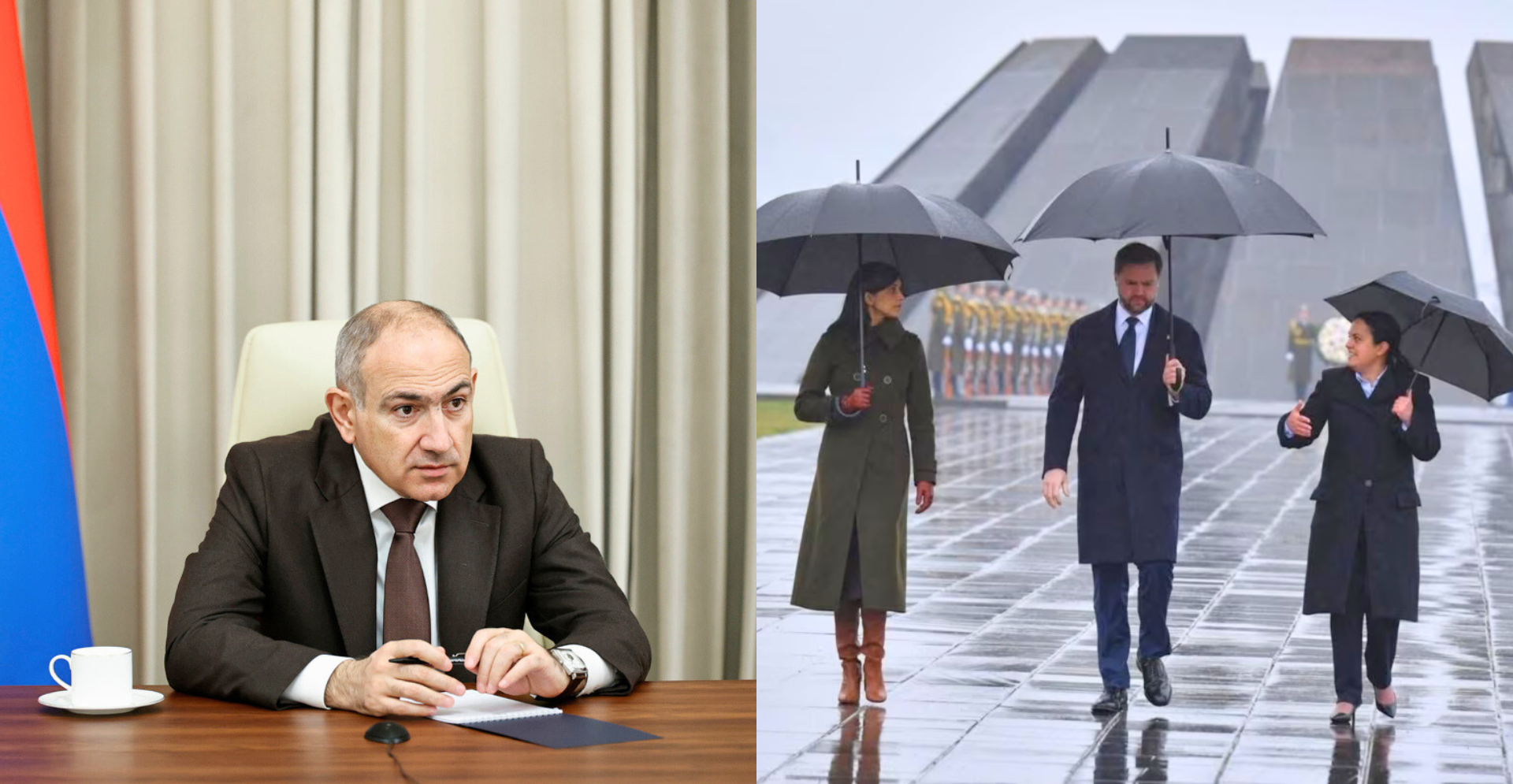

Armenian Prime Minister Nikol Pashinyan said he personally instructed Armenian Genocide Museum-Institute Director Edita Gzoyan to submit her resignation after she gave U.S. Vice President J.D. Vance a book about Artsakh during his visit to the Armenian Genocide Memorial Complex, calling it a “provocative action” that contradicted the government’s foreign policy.
The confirmation, delivered during a March 12 government briefing, directly linked Gzoyan’s removal to the museum’s handling of Vance’s visit and ended days of public speculation over the reason for her resignation.
“Yes, it was on my instructions, I asked her to write a resignation letter,” Pashinyan said during the briefing, according to multiple Armenian media reports. He said he considered it a “provocative action contradicting the government’s foreign policy” when a book about the Artsakh issue was presented to a foreign guest.
“When the country’s prime minister says that there is no Karabakh movement, what does it mean to give a foreign guest a book about the Artsakh issue? How many people in this country can conduct foreign policy? Any state official who says something that contradicts the government’s foreign policy will be removed from office. Are we a state, or some kind of amateur group?” Pashinyan said.
Gzoyan’s resignation comes about a month after the visit of U.S. Vice President J.D. Vance to the Tsitsernakaberd Armenian Genocide Memorial Complex. Coverage of the visit reported that Gzoyan presented the U.S. vice president with books on the Armenian Genocide and the Artsakh issue. News.am also reported that Vance did not enter the Armenian Genocide Museum-Institute itself during the visit.
Before Pashinyan’s public confirmation, museum staff said Gzoyan was being pressured by Armenia’s Ministry of Education, Science, Culture and Sports to resign, while all 74 employees of the institute appealed against the decision in an unprecedented show of internal opposition.
According to museum staff, Gzoyan was asked to step down shortly after accompanying Vance and his wife during their visit to the memorial complex. During the visit, she reportedly spoke to the guests about several historical episodes of anti-Armenian violence, including the Sumgait pogrom, the Baku pogrom, and the events in Ganja, as well as the Artsakh war.
Museum employees say they were initially told that Gzoyan’s departure was related to construction issues at the institute. However, staff members questioned that explanation, arguing that researchers and scholars have no direct connection to construction management.
They also pointed out that Armenia’s Minister of Education, Science, Culture and Sports, Zhanna Andreasyan, had been publicly overseeing the construction process and frequently sharing updates and photos. In earlier posts, Gzoyan often appeared alongside the minister. However, according to employees, since the visit of Vice President Vance, Gzoyan has no longer been seen accompanying the minister.
The situation has raised broader concerns within the museum community about the real reasons behind Gzoyan’s resignation and the pressure faced by cultural and academic institutions in Armenia when state officials reference Artsakh in ways deemed contrary to official foreign policy.


