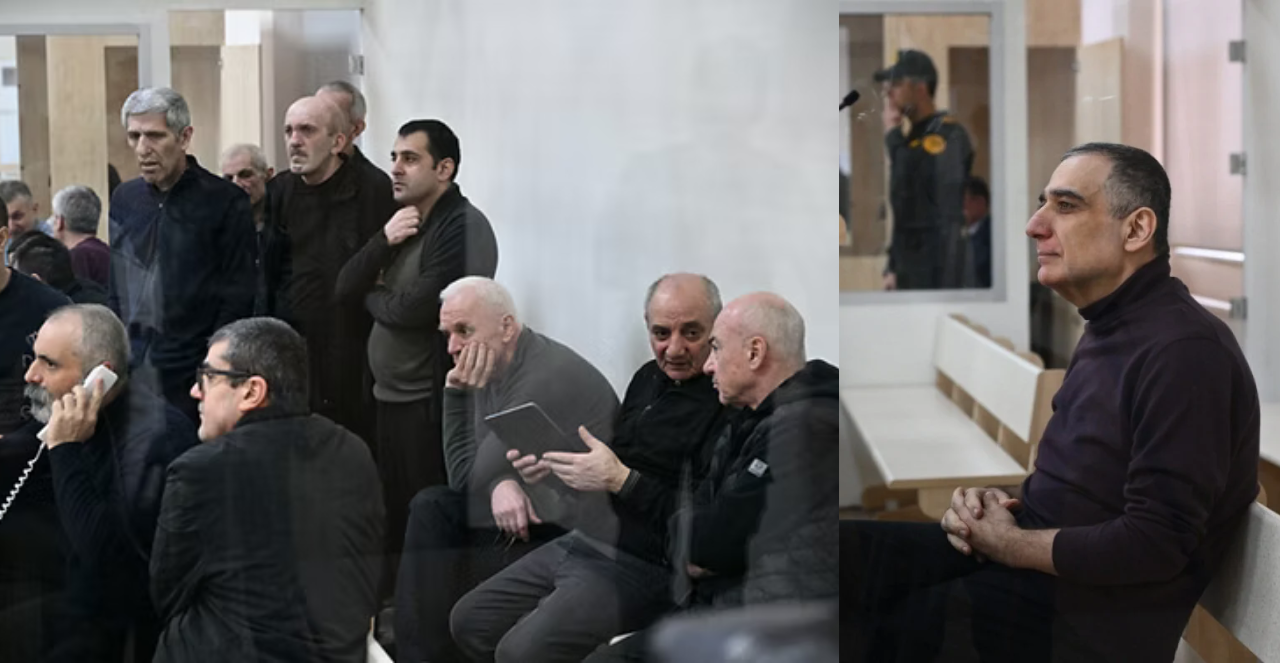

Armenian Foreign Minister Ararat Mirzoyan told the National Assembly on Wednesday, October 28, 2026, that Armenia has approached partner countries with a request to visit the 19 Armenian hostages unjustly held by Azerbaijan, and that these efforts have been unsuccessful because Azerbaijan told the third countries to stay away.
The exchange came in response to a question from Armenia Alliance opposition MP Lilit Galstyan, who asked what international law mechanisms Armenia had used to approach third countries and on what grounds those initiatives had been rejected. Galstyan referenced Mirzoyan’s earlier statement that Azerbaijan, in response to these efforts, had said “stay away from us.”
“They told the third countries to stay away,” Mirzoyan said, clarifying that Azerbaijan’s response was directed at the countries acting as intermediaries, not at Armenia.
Mirzoyan explained that international practice provides for a mechanism whereby a country with no representation in another country can ask a partner country to provide consular assistance to its citizens, including visits to places of detention. He said Armenia approached partner countries using this mechanism and the initiative was unsuccessful.
“We have appealed to them, but it has not worked. I do not want to name those countries because we will continue working with them. We have not been able to achieve results through third countries,” Mirzoyan said.
The minister said the issue of the Armenian hostages held in Azerbaijan remains a permanent item on the agenda and that he did not consider it appropriate to make public all the steps taken. “We have done things that I can talk about from this podium, and we have done things that I would not want to talk about from this podium, because I would have to name other countries and perhaps put them in a difficult position. I would not want to do that, as it would harm our international ties,” he said.
Galstyan responded by asking whether Armenia had found itself in diplomatic isolation if everyone had told it to stay away while the Pashinyan government claimed peace with Azerbaijan was already an established reality. She said she was not asking for the countries to be named, but for the international mechanisms used and the substance of the responses received, referencing international conventions and the mechanisms of the European Court of Human Rights.
“We asked the third countries, our shared partners, we told them, but they said: we have nothing to do with this issue,” Mirzoyan said. “Do you want the bitter reality? This is it. We have a path, that path goes through our dialogue with Azerbaijan.” He added that he does not like discussing the issue repeatedly because of its sensitivity. “Why do I not like to keep saying this? Because it is such a sensitive issue that either there is a result or there is not,” Mirzoyan said. “You can talk about it as much as you want, but what good are your efforts if they do not produce results? And the result is very specific and measurable: whether a person being held is released or not.”
Mirzoyan’s statement comes one week after he told reporters on October 21 that he “honestly” does not understand why Azerbaijan’s authorities refuse to release the Armenian hostages, saying “Azerbaijan’s authorities present certain rationalizations that are not very comprehensible to me.” On October 4, Armenia’s Permanent Representative to the United Nations, Paruyr Hovhannisyan, raised the 19 Armenian hostages at the UN General Assembly’s Third Committee as an urgent humanitarian issue.
The 19 Armenian hostages are held at the Umbaki Penitentiary Complex in the Qaradag district of Baku. 16 have been sentenced after sham trials in the Baku Military Court. The trials took place behind closed doors, in the absence of international observers and media. 8 are former Artsakh (Nagorno-Karabakh) political and military leaders, seized by Azerbaijani forces in September 2023 as they fled alongside more than 120,000 Armenians forcibly displaced from their ancestral homeland in Azerbaijan’s documented ethnic cleansing of occupied Artsakh.
On February 5, 2026, the Baku Military Court sentenced former Artsakh President Arayik Harutyunyan, former Foreign Minister David Babayan, former National Assembly Speaker Davit Ishkhanyan, former Defense Army commander Levon Mnatsakanyan, and former deputy commander Davit Manukyan to life imprisonment. Former Artsakh Presidents Arkadi Ghukasyan and Bako Sahakyan received 20-year terms. Former State Minister Ruben Vardanyan was tried separately and sentenced to 20 years on February 17, 2026. Civilian hostages Madat Babayan and Melikset Pashayan received 19-year terms, Garik Martirosyan received 18 years, Davit Alahverdyan and Levon Balayan received 16 years, and Erik Ghazaryan, Gurgen Stepanyan, and Vasil Beglaryan received 15 years. Amnesty International called the verdicts a travesty and a mockery of justice.
Mirzoyan’s confirmation that third-country consular visits have been refused follows a cascade of recent disclosures from inside the Umbaki prison. On October 1, former Foreign Minister David Babayan released an audio statement describing the Baku appellate court’s ruling as 99.9 percent copy-pasted from the first-instance verdict and documenting that Azerbaijan censored his counter-arguments from the appellate record. On September 16, Ruben Vardanyan recorded a public appeal to Azerbaijan’s Human Rights Commissioner Sabina Aliyeva documenting specific violations of Azerbaijan’s own legal code in the treatment of the 19 hostages, saying “However long we still spend in Umbaki, please comply with your own laws.” On September 4, attorney Siranush Sahakyan disclosed in a press briefing that Armenian Christian hostages have had their cross tattoos burned off their skin through torture and been forced to read the Quran. Sahakyan said the hostages are also held in absolute isolation from other prisoners and have arrived at proceedings with fractures from beatings.
Azerbaijan expelled the International Committee of the Red Cross in September 2025, ending the last independent access to the Armenian hostages. Former International Criminal Court prosecutor Luis Moreno Ocampo published a legal opinion in August 2023 concluding that the nine-month Azerbaijani blockade of Artsakh that preceded the September 2023 ethnic cleansing constituted genocide under the Genocide Convention. The International Court of Justice ordered Azerbaijan on November 17, 2023, by 13 votes to 2, to ensure that Armenians who left Artsakh after September 19, 2023 could return in a safe, unimpeded, and expeditious manner. Azerbaijan has never complied.