
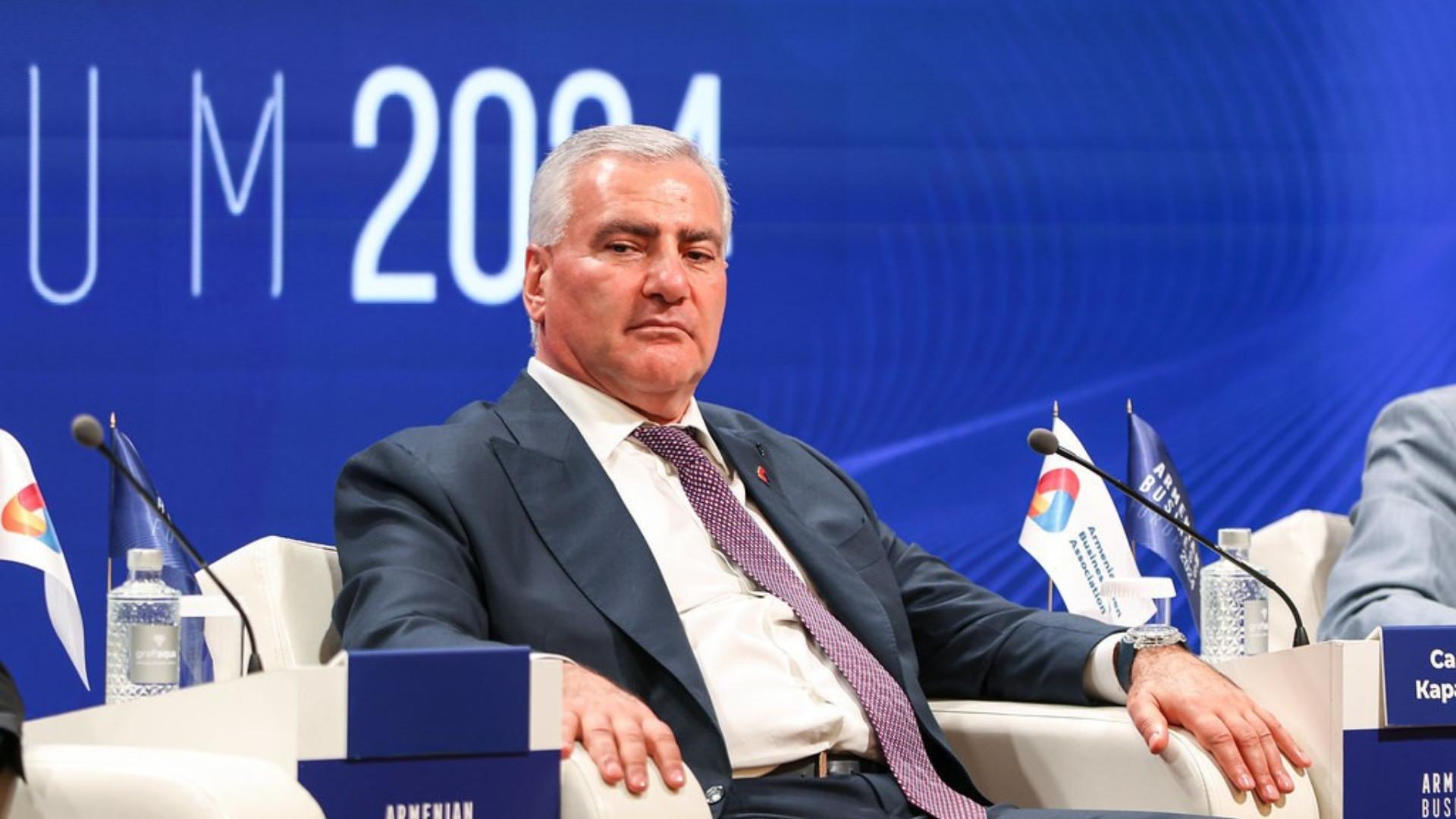

The Appellate Anti-Corruption Court has annulled the house arrest of billionaire businessman and philanthropist Samvel Karapetyan, reinstating his detention for a period of two months. The ruling follows an appeal by the prosecutor’s office against the December 30 decision that had allowed Karapetyan to serve house arrest with a record-high bail of 4 billion drams. After 17 days under house arrest, Samvel Karapetyan is required to return to a detention facility.
Karapetyan, owner of Tashir Group, had been detained since June 18, 2025, on charges of publicly calling for the seizure of power and committing economic crimes. On December 30, his prison detention was replaced with house arrest, but he remained under this measure for only 17 days.
Lawyer Aram Vardevanyan explained that, under the Criminal Procedure Code, a motion to extend a preventive measure must be submitted at least five days before its expiration. Since Karapetyan’s house arrest was set to expire on January 18, the legal five-day deadline ended on January 13. The investigative body only filed a motion to extend house arrest within this period, meaning there is currently no legal mechanism to apply a stricter preventive measure than house arrest.
“From January 13 onward, there is no legal framework to apply a stricter preventive measure than house arrest. If the five-day deadline is missed, no such motion can be submitted,” Vardevanyan said.
Despite these procedural details, Karapetyan will be returned to detention. However, his transfer to a detention facility will only occur after addressing urgent medical issues. The businessman is currently hospitalized with bilateral pneumonia and COVID-19, conditions his lawyers attribute to neglect and inadequate medical care while in prison. Lawyer Ruben Hakobyan confirmed that Karapetyan contracted these illnesses during his initial time in detention.
Garnik Danielyan, an opposition MP, called the case “politically motivated” and argued that the head of the current regime would not tolerate the replacement of detention with house arrest.
Danielyan added that, ahead of the parliamentary elections in June, the intensification of repressive measures is predictable and reflects a system in which law and justice are subordinate to the “hysterical orders of a single individual.”
Karapetyan’s legal team continues to maintain that the case represents political persecution. Both charges, calling for the seizure of power and economic crimes, will be examined together in a single case, which the lawyers describe as absurd.
Karapetyan was arrested shortly after he publicly expressed support for the Armenian Apostolic Church, during a period when the government was engaged in a confrontational campaign against the church leadership, including calls for the Catholicos’s removal. The timing of his detention drew criticism from opposition figures and civil society, raising questions about the political motivations behind the criminal case.


