
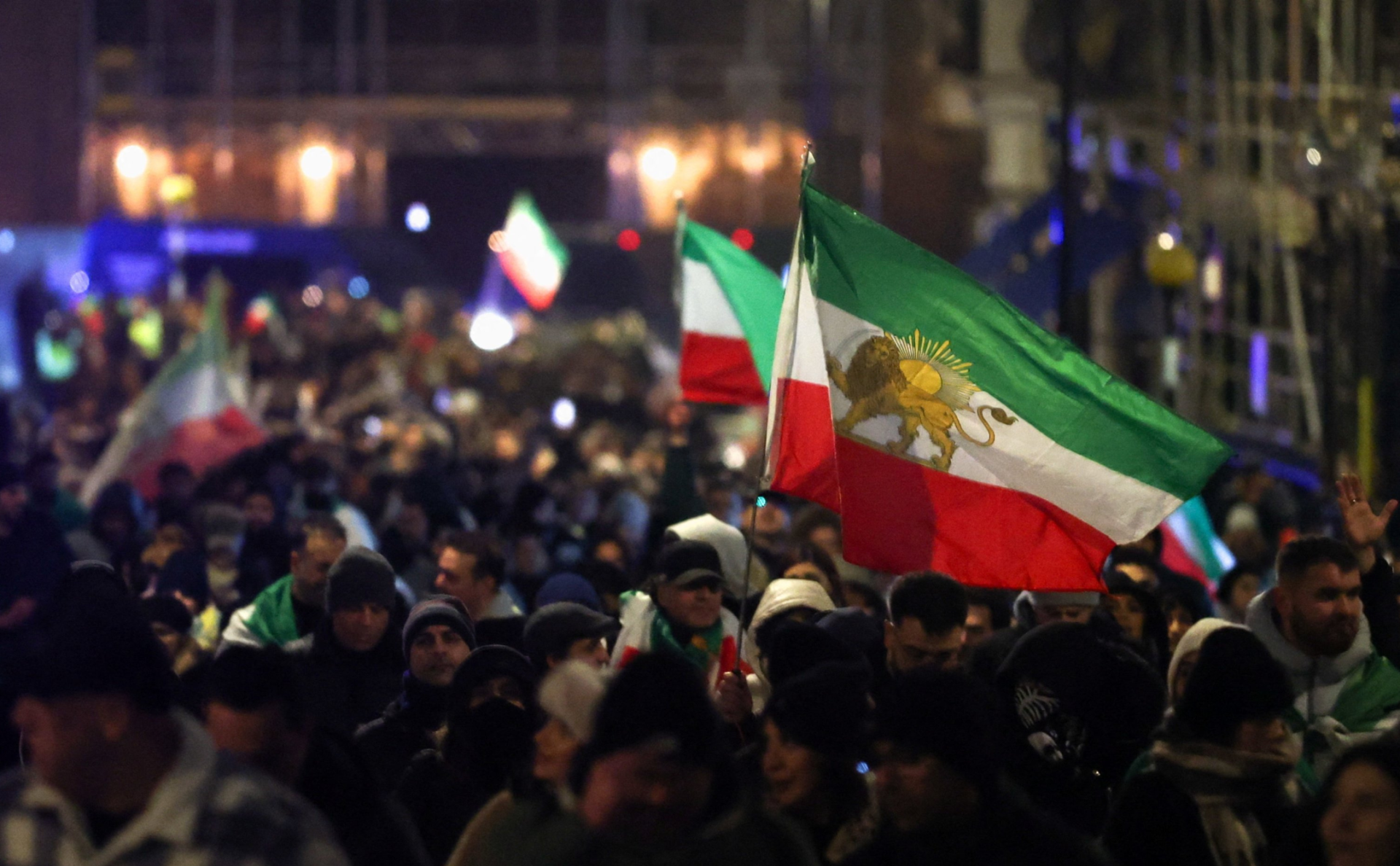

Armenian authorities say they are facing difficulties in establishing contact with Armenians living in Iran amid anti-government protests, which have already claimed more than 500 lives.
A communications blackout imposed by authorities has now lasted over three and a half days.
Diaspora Affairs High Commissioner Zareh Sinanyan said that since Friday, when demonstrations intensified, communication with the Armenian community in Iran has been largely cut off, a situation he described as deeply concerning.
“Since Friday, when the protests escalated, we have had no information from Iran. Even now, we are unable to contact our compatriots there, which is very worrying for us,” Sinanyan told Armenpress, adding that efforts to restore communication are ongoing.
He recalled the June 2025 escalation between Iran and Israel, when Armenian authorities were able to receive information through Armenians crossing the Meghri border checkpoint between Armenia and Iran.
“At that time, we received information from our compatriots crossing the border. It appears we may need to start relying on similar channels again, as this information blackout is alarming,” Sinanyan noted.
No Evacuation or Mission Planned Yet
Sinanyan stressed that Armenia currently lacks sufficient verified information to organize an evacuation of Armenians from Iran or to send a professional assessment team.
“At this stage, it is unrealistic to send any group, because the situation on the ground remains unclear. We do not yet understand what is happening, particularly in Armenian-populated cities,” he said.
He added that evacuation measures would be considered only if reliable information emerges indicating an immediate threat to the community.
On Sunday, reports emerged that an Armenian man was killed during the ongoing protests in Iran. The victim was identified as Ejmin Masihi, a resident of Tehran’s Majidieh district. According to the information available, the news was relayed by an Iranian lecturer from the vocational school where Masihi had studied and was later shared by political analyst Tigran Davoudyan. So far, there have been no reports of other ethnic Armenian victims.
Iran is home to one of the oldest Armenian communities in the Middle East, with estimates of the population generally ranging from 60,000–80,000 in recent years, most of whom live in major cities such as Tehran, Isfahan, and Tabriz.
Protests Challenge Iran’s Leadership
The protests in Iran began in late December 2025, triggered by the sharp depreciation of the Iranian rial, soaring inflation, and worsening living conditions. What initially started as economic demonstrations evolved into broader anti-government protests in several cities, some of which turned violent.
According to the U.S.-based Human Rights Activists News Agency, by Monday at least 538 people have been killed, including 490 protesters, while more than 10,600 people have been arrested. Internet access across the country has been heavily restricted, complicating efforts to verify information and maintain contact with communities, including ethnic and religious minorities.
Against this backdrop, U.S. President Donald Trump said the United States may meet Iranian officials and is in contact with opposition figures, while weighing a range of strong responses, including military options, to Tehran’s crackdown.
Iranian Foreign Minister Abbas Araqchi, speaking to foreign ambassadors in Tehran, said the country was prepared for both confrontation and diplomacy.
“We are ready for war, but also for dialogue,” Araqchi said, insisting that the situation in Iran is now “under total control.”
Iranian authorities have accused the United States and Israel of fomenting unrest, accusations both countries deny.


