
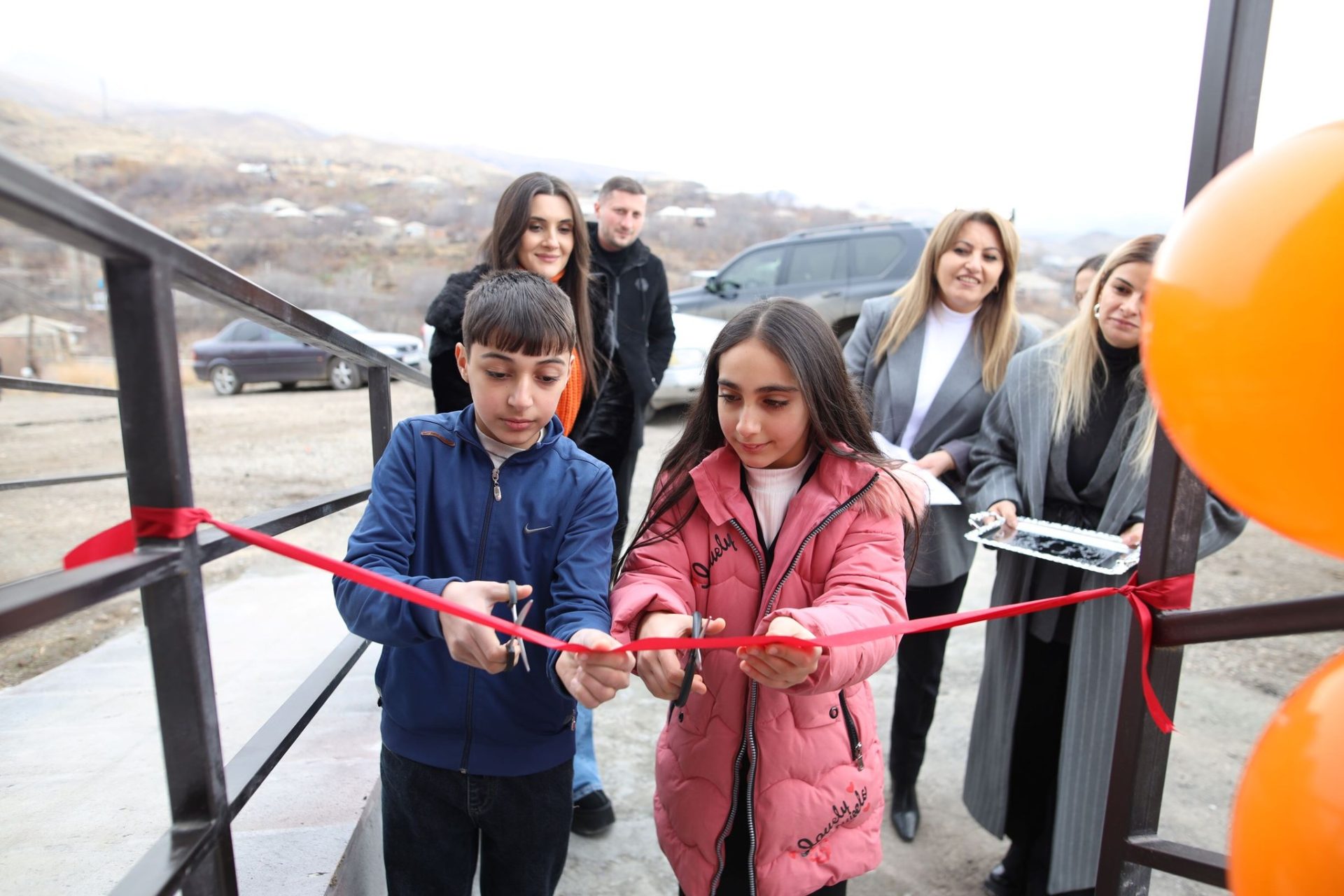

UNICEF has reopened two child-friendly spaces in the Armenian communities of Malishka in Vayots Dzor and Bardzravan in Syunik, creating safe and inclusive environments for children aged 5 to 15, including refugee children from Artsakh. The centers were officially reopened on December 20 with financial support from the Government of Japan and the Japan International Cooperation Agency (JICA), in collaboration with local partners and municipalities.
Malishka is home to more than 350 children, including 48 refugee children from Artsakh, while Bardzravan serves 19 children, 12 of whom are refugees from Artsakh. Both communities will now offer structured activities that promote social interaction and emotional well-being.
The decision to renovate and refurbish the two centers was made in close cooperation with local self-governing authorities following a comprehensive needs assessment that reflected the urgent need for safe, structured environments for children. Both communities previously lacked after-school daycare or recreational spaces offering psychosocial support. The new centers will provide community engagement opportunities and regular sessions for children and their caregivers. Both centers will function as community-based services for children and adolescents, as the municipalities have committed to sustaining the cost of utilities and salaries in their budgets.
“At UNICEF, we believe that every child deserves access to safe, welcoming, and supportive spaces within their own community. Spaces like these allow children to come together to read, play, express themselves, and work on joint activities that build personal resilience, self-confidence, creativity, social networks, and a sense of belonging,” explained Silvia Mestroni, UNICEF Deputy Representative in Armenia.
“These spaces are especially important in communities that have hosted refugee children and adolescents who have experienced displacement, loss, and psychosocial stress. Child-friendly spaces, like the one in Malishka, play a vital role in supporting both refugee children and children from host communities by providing inclusive, safe environments where they can integrate and grow together while accessing psychosocial and other services,” noted Mr. Junji Wakui, Resident Representative of the Japan International Cooperation Agency.
“The establishment of the new child-friendly spaces demonstrates that when communities, partners, and civil society come together, it becomes possible to bring lasting change to community life. The child-friendly spaces in Malishka and Bardzravan were created precisely through this effective cooperation, a partnership that has already become a long-standing tradition between UNICEF, the municipalities, and People in Need. We extend our gratitude to the municipalities of Yeghegnadzor and Goris for their active engagement and internal support throughout the process. We believe that these spaces will have a positive and lasting impact on children’s development and the empowerment of their communities,” added Varduhi Dadunts, Country Director at People in Need Armenia.
UNICEF has been developing a strong network of multidisciplinary services across Armenia to support children’s well-being. With continued support from Japan, UNICEF plans to open another child-friendly center in 2026.
About UNICEF
UNICEF promotes the rights and well-being of every child in everything it does. Together with its partners, UNICEF works in 190 countries and territories to translate that commitment into practical action, focusing special effort on reaching the most vulnerable and excluded children, to the benefit of all children, everywhere.
For more information about UNICEF and its work for children, visit www.unicef.org.


