
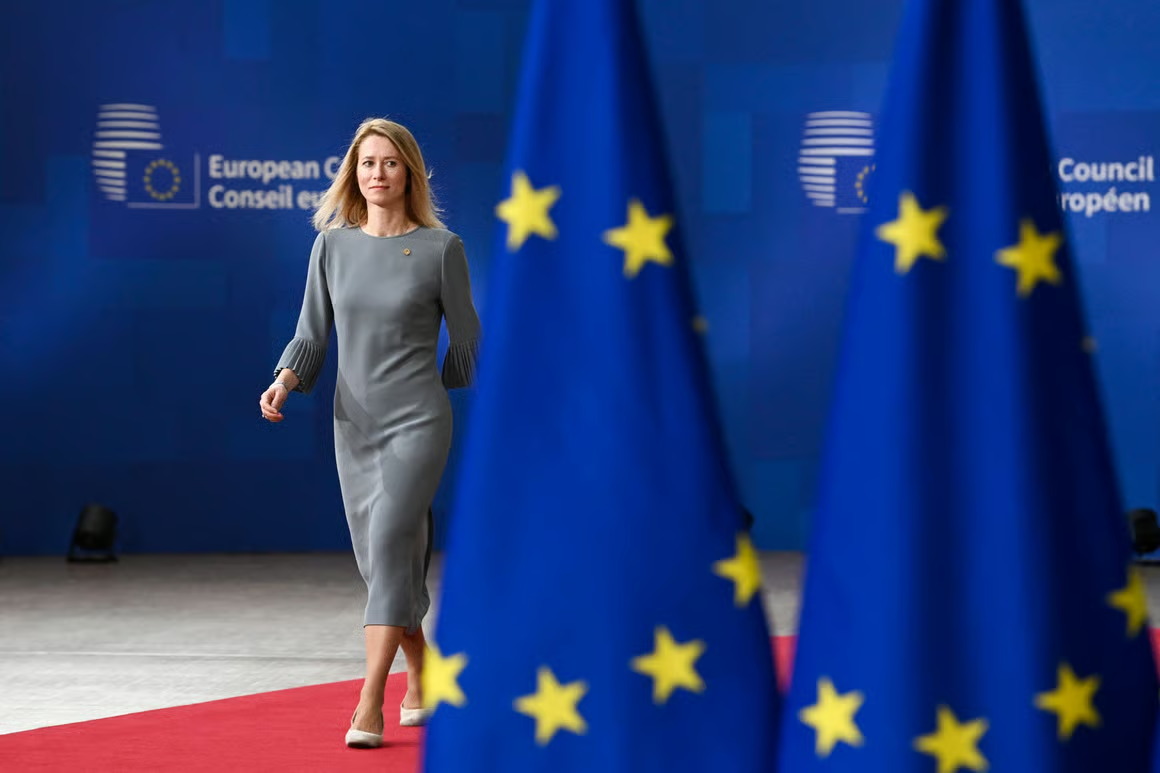

The European Union will deploy a Hybrid Rapid Response Team to Armenia ahead of the country’s June 7, 2026 parliamentary elections, following a request from Yerevan and amid mounting concerns over foreign interference, disinformation, and other hybrid threats targeting the vote, EU foreign policy chief Kaja Kallas announced on March 16 after a meeting of the EU Foreign Affairs Council in Brussels.
“Following the request from Armenia, the EU will deploy a Hybrid Rapid Response Team to help counter the threats ahead of the country’s elections. Supporting democratic resilience in our neighbourhood remains essential. We will not leave Armenia to face foreign interference alone. Democracies under pressure can count on Europe,” Kallas said.
The team is expected to provide advisory support to the offices of the Prime Minister and the Security Council, particularly in developing crisis management plans and future response protocols. Other state bodies, including the Central Election Commission, the Interior Ministry, and tax authorities, will also receive assistance.
Under the plan, a team of 9 to 14 experts will be deployed to Armenia in late March or early April for a period of 10 to 15 working days. The experts will assist Armenian institutions in addressing hybrid threats, including Foreign Information Manipulation and Interference (FIMI), as well as cybersecurity risks.
An internal EU document cited by Radio Free Europe/Radio Liberty’s Armenian Service suggests that Armenia is facing “intense hybrid activities,” with concerns that such efforts could escalate further in the run-up to the June vote. The document notes that Armenia formally appealed for EU support in November, followed by an EU assessment mission in January that identified vulnerabilities to hybrid threats.
Radio Free Europe/Radio Liberty’s Armenian Service had previously reported that the EU was considering such a move after receiving a formal request from Yerevan, outlined in a letter by Armenia’s foreign minister. The EU had already signaled its intention in December to allocate €12 million (approximately $13.8 million) to help Armenia counter disinformation, particularly narratives linked to Russia, ahead of the elections. The funding, announced by Commissioner Martha Kos during the briefing following the 6th meeting of the Armenia-EU Partnership Council on December 2, will support efforts to strengthen Armenia’s capacity to counter hybrid threats, including cyberattacks, and establish early-warning and rapid-response systems against foreign information manipulation.
Armenian officials have framed the cooperation as part of ongoing efforts to strengthen resilience. Foreign Ministry spokesperson Ani Badalyan emphasized that Armenia-EU collaboration on countering hybrid threats is not new but has been developing across multiple sectors.
At the same time, Armenia’s Foreign Intelligence Service has warned of potential external pressure linked to the elections. According to the agency, various actors allegedly connected to a foreign country’s special services have attempted to influence individuals of Armenian origin and Armenian citizens engaged in business abroad, urging them to support certain political forces participating in the elections.
The EU initiative has drawn criticism from opposition groups within Armenia, who argue that such involvement could constitute interference in domestic political affairs. Russia has also voiced strong objections, with Maria Zakharova claiming that the EU is preparing to replicate what she described as the “Moldovan scenario” in Armenia, a reference to the EU’s deployment of a similar mission to Moldova during its parliamentary elections last year.
During those elections, Moldovan authorities barred two opposition parties described as pro-Russian and reportedly restricted access to Russian or pro-Russian websites accused of spreading disinformation.
Armenian officials have rejected such comparisons, insisting that the EU’s role is limited to technical support aimed at ensuring transparent and secure elections, not influencing their outcome.


