
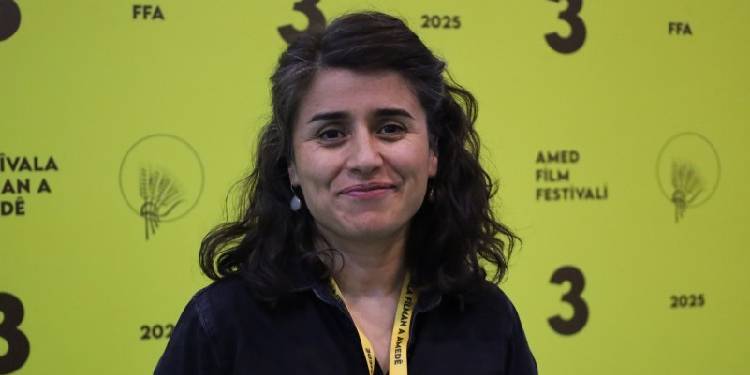

A Kurdish filmmaker has gone on trial in Turkey on charges of “publicly insulting the Turkish nation and state institutions” after organizing a screening in Diyarbak?r of Aurora’s Sunrise, the acclaimed animated documentary about the Armenian Genocide. The court has already adjourned the case and set the next hearing for April 6 at 10:15 a.m.
The Diyarbak?r Chief Public Prosecutor’s Office filed charges against Rojhilat Aksoy under Article 301 of the Turkish Penal Code following the screening of the animated documentary Aurora’s Sunrise on December 17, 2024.
At the time, Aksoy served as vice president of the Middle East Cinema Academy Association and had submitted the petition requesting permission to screen the film at the Sezai Karakoç Culture Center in Diyarbak?r.
Because Aksoy’s name appeared on the official application for the screening, prosecutors argued that she should be punished for “publicly insulting the Turkish nation, the Republic of Turkey, the Grand National Assembly of Turkey, the Government of the Republic of Turkey and the judicial organs of the state.”
The case is being heard at the Diyarbak?r 22nd Criminal Court of First Instance. The court adjourned the proceedings and scheduled the second hearing for April 6 at 10:15 a.m.
The indictment prepared after the investigation cited several scenes and lines of dialogue from the film as evidence.
According to prosecutors, the documentary portrays the events of 1915 as genocide, depicts Armenian resistance as “the justified struggle of freedom fighters,” and shows Armenians living in the region being forced to change their names and religion while being subjected to inhumane treatment.
The prosecutor’s office also objected to depictions suggesting that Armenian men conscripted into the Ottoman army never returned, arguing that such claims contradict historical reality and therefore constitute a crime.
Another scene cited in the indictment describes bodies found in a river and soldiers separating children from their mothers. Prosecutors alleged that the film falsely attributes such acts to Turkish soldiers and argued that the animation describes “a non-existent event as if it had occurred.”
Aksoy rejected the accusations during the hearing, stating in her defense that the film falls within the scope of freedom of expression and that she does not accept the charges against her.
Turkish courts have previously ruled that the use of the term “Armenian genocide” can fall within the scope of freedom of expression. On July 2, 2024, journalists Haluk Kalafat and Elif Akgül were acquitted of similar charges of “publicly insulting the Turkish nation” over articles published on the Bianet news website.
Directed by Armenian filmmaker Inna Sahakyan, the animated documentary tells the story of the Armenian Genocide through the perspective of Aurora Mardiganian, also known as Arshaluys Mardiganyan, who survived the Armenian Genocide as a teenager. Arshaluys witnessed the killing of her father and one of her brothers and was forced, along with her mother and sisters, to join the mass deportations of Armenian women to the deserts of Syria.
The film combines animation with historical material, including surviving fragments of the 1919 silent film Auction of Souls, in which Mardiganian portrayed herself shortly after arriving in the United States. It also incorporates archival footage from the 1910s and 1920s, as well as Mardiganian’s recorded testimony from the 1980s.
Aurora’s Sunrise premiered at the Annecy International Animation Film Festival in June 2022 and was later submitted by Armenia as its official entry for Best International Feature Film at the 2023 Academy Awards. It has since received numerous awards at festivals across Europe and the United States.
On Saturday, the film’s producer, Bars Media, issued a statement expressing concern over the prosecution.
“We are deeply concerned by the recent legal charges against filmmaker Rojhilat Aksoy for organizing a screening of our film Aurora’s Sunrise in Diyarbak?r, Turkey,” the company said.
Bars Media emphasized that Aksoy “is in no way affiliated with the production of the film” and is facing what it called “groundless prosecution” under Article 301 of the Turkish Penal Code.
Bars Media described the documentary as a factual film based on the testimony of Aurora Mardiganian, blending animation with rare archival footage from Auction of Souls and interviews with Mardiganian herself.
According to the statement, the film was created to foster dialogue and to highlight resilience and compassion even in the darkest periods of history. While portraying documented crimes, the producers noted that the film also depicts acts of kindness by Turks and Kurds who helped save Mardiganian’s life.
“Art and history should be met with critical engagement, not with the threat of prison,” the statement said. Bars Media added that it stands in solidarity with Aksoy ahead of the next hearing on April 6 and called on the international film community and human rights organizations to support her and the right to tell stories about shared history.


