
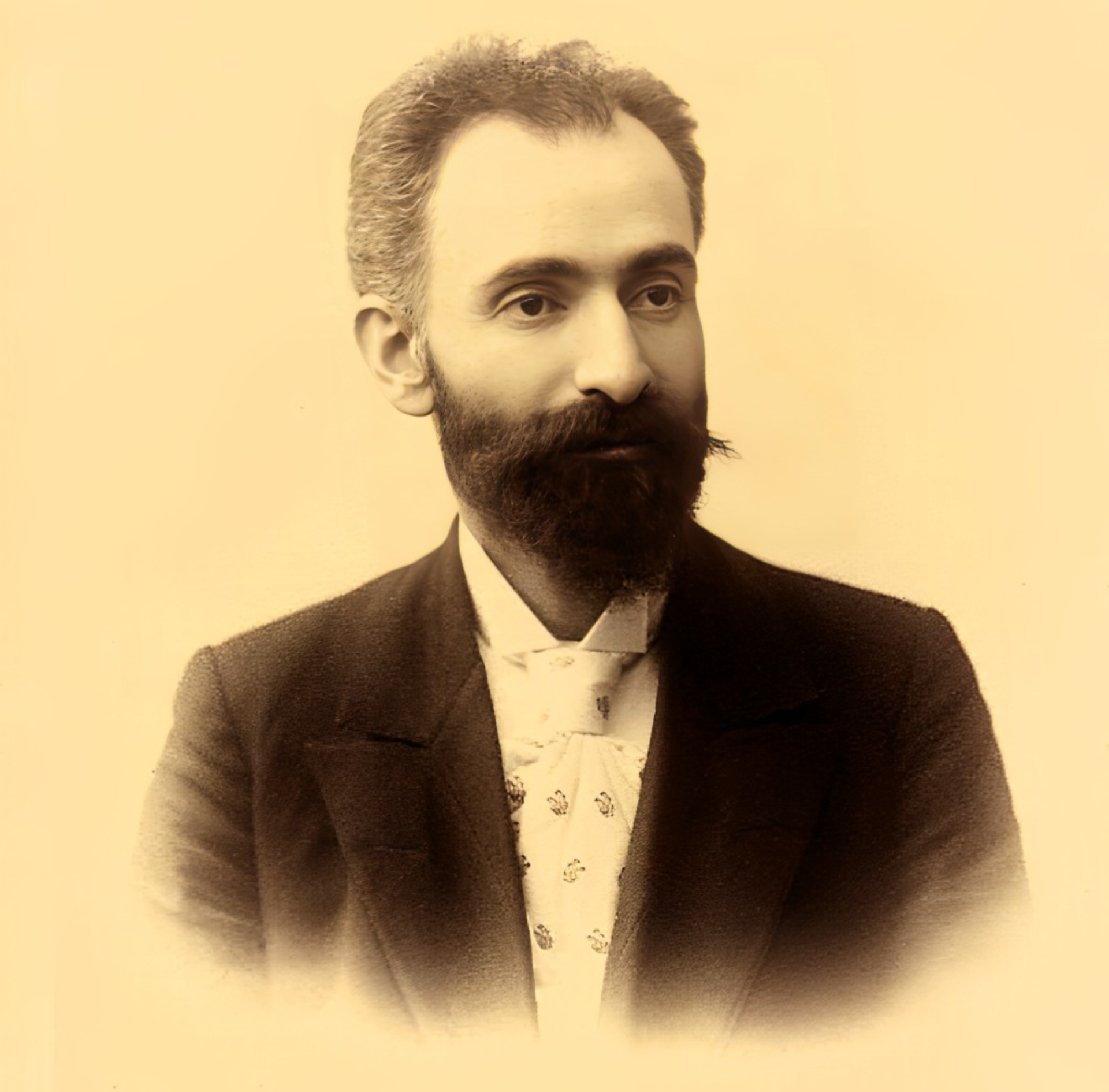

Today marks 157 years since Hovhannes Tumanyan’s birth. Tumanyan was not only Armenia’s most famous poet and storyteller, renowned for his poem “David of Sassoun,” the poetic narrative “Anoush,” and beloved fables such as “The Dog and the Cat,” but also a deeply dedicated humanist whose love for his nation shone during the darkest times in its history.
Today, we present some of the lesser-known aspects of his life, a life filled with unwavering care, love, and support for his people. Despite living in Tbilisi, the bustling cultural and political center of the region at the time, Tumanyan returned to Armenia in 1915, dedicating himself to helping thousands of refugees and orphaned children who had survived the Armenian Genocide.
In July of 1915, Tumanyan and his daughter Nvard were already in Etchmiadzin, where crowds of survivors had gathered.
He organized shelter, food, and care for the refugees, particularly thousands of orphans. Under his direct supervision, fundraising campaigns were launched, a hospital with 500 beds was opened, and an orphanage designed to accommodate around 3,000 children was established.
Tumanyan personally gathered orphaned children from the outskirts of Etchmiadzin, meticulously maintaining lists of sick and healthy children, and paying special attention to the ill. Many of the children even called him “father.” In his memoirs, Tumanyan wrote:
“Some of the children became so close to me that even after eating, they would hold onto my clothes (although they were dressed, sheltered, and fed), ‘Father, I am an orphan, I am poor, without father or mother…’ When I said we would make new clothes for them, they would lift their heads from here and there – ‘Father, please make a red dress for me…’”
Even after leaving Etchmiadzin, Tumanyan continued his care for orphans. He took in dozens of children from orphanages in Alexandropol and elsewhere into his own home.
Among them was Lusntag, a survivor of the genocide, who later became the mother of Karen Demirchyan, the leader of Soviet Armenia from 1974-1988.
In 1915, Tumanyan also wrote the poem “Hayrenikis Het” (With My Homeland). In the midst of despair, when curses sounded from everyone’s lips and gloom prevailed, Tumanyan wrote:
“And poets, who have not defiled their lips with a curse, will praise your new life with new songs, new words.”
Even in the darkest times, his words reflected hope, resilience, and love for his homeland and people.
In his honor, Armenia celebrates “Give a Book Day,” a tradition established in 2008, inspiring everyone to share the joy of reading and keep the literary spirit alive.


