
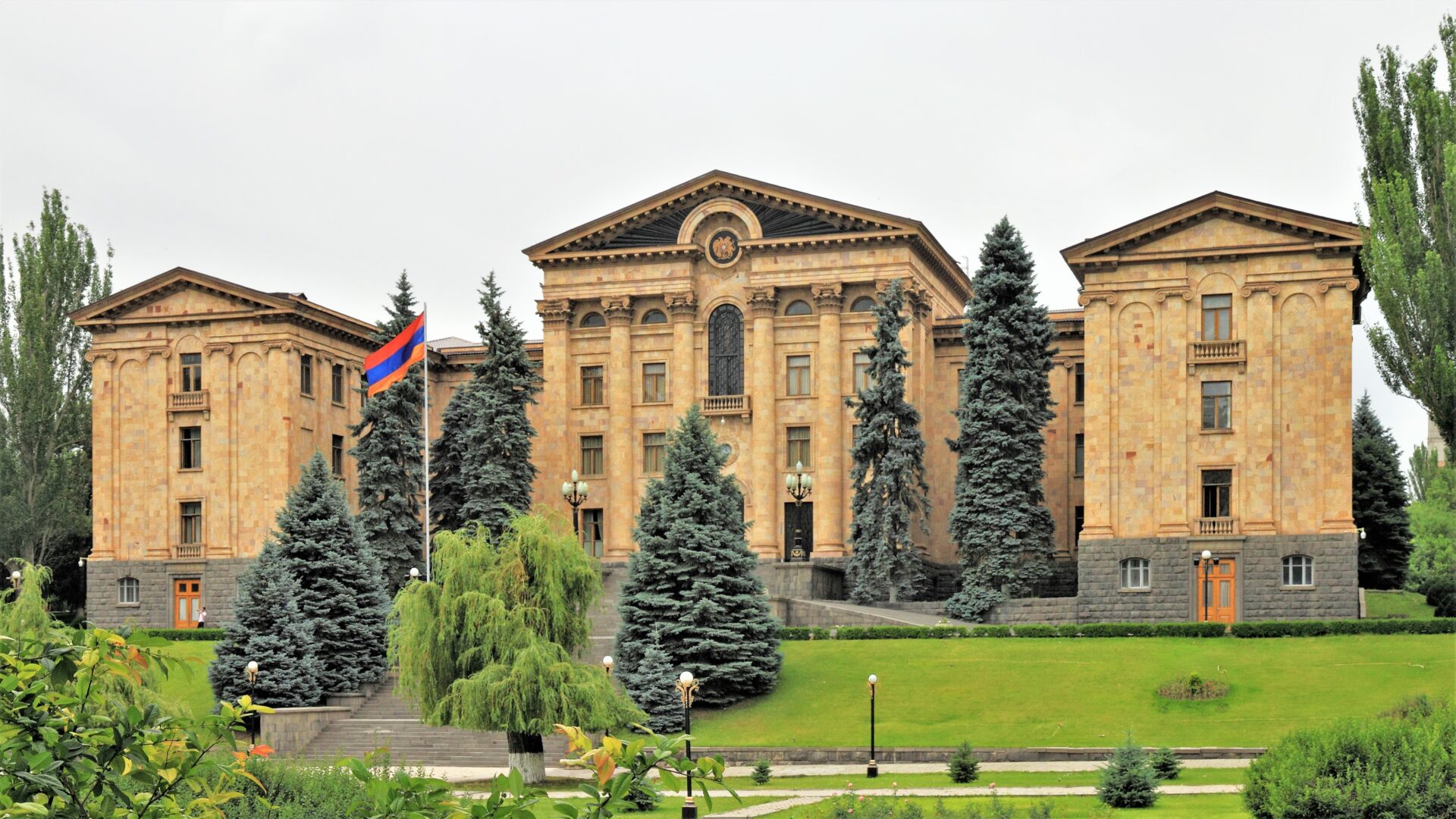

Last week, Transparency International published its 2025 Corruption Perceptions Index (CPI), in which Armenia scored 46, reflecting perceived levels of public-sector corruption.The index rates countries on a scale from 0 to 100, where 0 indicates a highly corrupt public sector and 100 represents a very clean one. Armenia’s score of 46, a one-point decline from last year, ranks the country 65th out of 182 countries.
Stagnation More Concerning Than the Drop
Speaking at a presentation of the findings in Yerevan organized by Transparency International Armenia on Tuesday, Varuzhan Hoktanian, an expert at the organization’s Anti-Corruption Center, said the one-point decrease was less significant than the broader lack of progress.
“The index has essentially remained the same,” Hoktanian said. “This change can be considered a statistical margin of error rather than a clear trend. The stagnation is more alarming than the one-point decline.”
Hoktanian also stressed that when a country’s score falls below 50, corruption becomes a serious systemic governance problem, affecting the effectiveness and stability of state institutions. He emphasized that the CPI results are based on assessments by experts and the business sector, not the broader public.
From Post-Revolution Rise to Gradual Backslide
Following the 2018 Velvet Revolution and the change of power that brought Prime Minister Nikol Pashinyan to office, Armenia saw a dramatic improvement in its corruption perception score.
The CPI rose from 35 in 2018 to 49 in 2020 and 2021, marking one of the most notable governance improvements in the country’s recent history.
However, momentum has since slowed. The score declined to 47 in the following two years and has now dropped to 46 in 2025, reflecting stalled reform implementation rather than continued progress.
Under Armenia’s 2023–2026 anti-corruption strategy, the government set a target CPI score of 55 by the end of the period. Hoktanian noted that even during the post-2018 reform surge, the pace of improvement was insufficient to realistically reach that goal.
Laws in Place, Enforcement as the Key Challenge
In its country assessment, Transparency International stated that Armenia “has adopted anti-corruption legislation and strategies aligned with international standards.” However, it stressed that “further progress now hinges on strengthening independence and effectiveness of the judiciary and prosecution, alongside sustained enforcement of adopted reforms.”
This echoes concerns raised in a November report by Transparency International, which found that while Armenia experienced significant democratic and anti-corruption reforms in the two years following the 2018 political transition, progress has since stalled due to limited implementation of those measures.
Regional Context
Armenia’s performance comes amid broader challenges in Eastern Europe and Central Asia, where the regional CPI average remains low at 35 out of 100. Across the region, weak democratic institutions, fragile rule of law, and external pressures have allowed corruption to persist, undermining public trust and sustainable development.
In neighboring Georgia, the CPI score fell from 53 in 2024 to 50 this year, ranking 56th out of 182 countries. Transparency International cited democratic backsliding, politically motivated prosecutions, restrictions on media, laws targeting NGOs, and elite capture as reasons for the decline.
Azerbaijan, meanwhile, improved its score from 22 to 30 in 2025, despite a year marked by a sweeping crackdown on dissent. According to Human Rights Watch, Azerbaijani authorities continued to arbitrarily arrest and prosecute critics, including political activist Bakhtiyar Hajiyev, who was sentenced to 10 years in prison, and his colleague Rail Abbasov, who received six and a half years. Journalists from independent outlets such as Abzas Media and Toplum TV have also been detained on charges widely criticized as politically motivated.


