
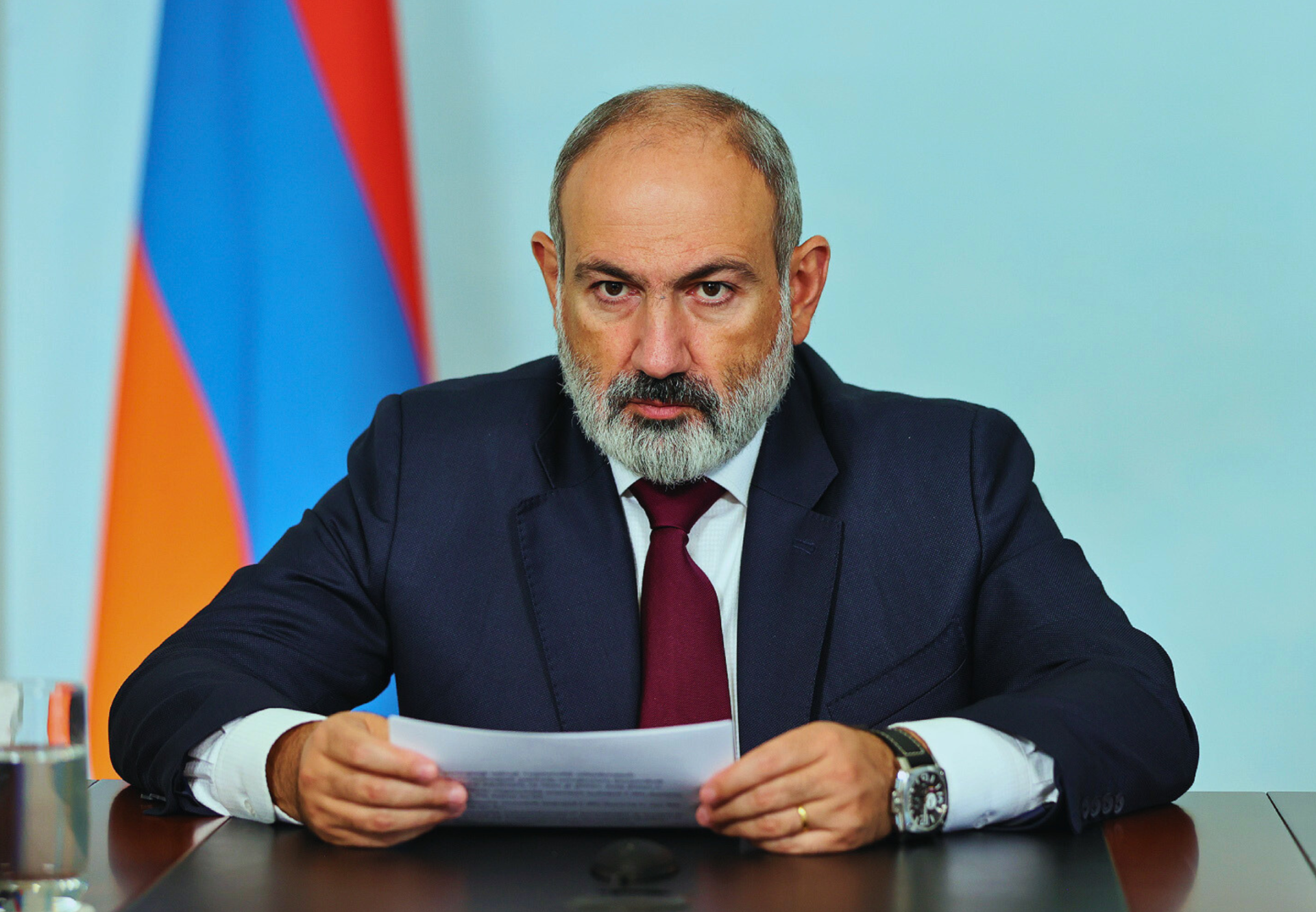

Armenian Prime Minister Nikol Pashinyan has stated that the Armenian government will not act against the Russian Federation in its foreign policy, in a move viewed as a reassurance to Moscow amid shifting regional dynamics, following the historical visit of U.S. Vice President J.D. Vence to the country and ongoing Armenia–U.S. cooperation on nuclear energy.
Days after Rosatom’s CEO reiterated the Russian company’s willingness to assist Armenia in building new nuclear capacity, Armenia and the United States completed negotiations on a cooperation agreement that will enable U.S. firms to pursue nuclear power projects in the country.
“We share the following idea everywhere, with all our partners, that harming Russia and Russia’s interests has not been, is not, and will not be on our agenda. That is excluded. No one will be able to drag us into this, even if they try. So far, there have been no such attempts,” Pashinyan said in an interview with Armenia’s Public Television.
Pashinyan said he had conveyed to Moscow that Armenia’s foreign policy decisions are guided exclusively by its national interests. “We informed our Russian partners that we will act in the interests of the Republic of Armenia,” he said, adding that personal diplomacy also plays a role. “I have very direct and warm relations with Russian President Vladimir Putin and Prime Minister Mikhail Mishustin.”
The prime minister noted that concerns in Moscow intensified after August 8, when Armenia signed a document on the TRIPP project in Washington, a move widely interpreted as part of Yerevan’s deepening engagement with Western partners.
According to Pashinyan, however, the document reflects principles Armenia has consistently proposed to Russia over the past five years. “We wanted five words: territorial integrity, sovereignty, jurisdiction, reciprocity, and inviolability of borders,” he said. “We said, ‘Put these five words on paper, and I am ready to sign that paper at any time.’”
At the same time, Pashinyan highlighted ongoing economic discussions with Azerbaijan, signaling continued efforts toward regional connectivity and normalization.
The railway connection between Armenia and Azerbaijan via Georgia is open and operating without obstacles, but Armenian businesses have yet to fully take advantage of the opportunity, he said.
Pashinyan also addressed the issue of Armenian captives held in Baku, urging restraint in public expectations regarding sensitive negotiations.
“I ask that you expect as few details as possible from me on that issue, but the matter has been on the agenda, and it has been discussed,” he said.
He added that “there is no negotiation, direct or indirect, connected to the Armenia–Azerbaijan process during which the issue of Armenian detainees is not raised”.
Currently, 19 Armenian prisoners remain unlawfully held in Azerbaijan. The group includes former political and military leaders of Artsakh (Nagorno Karabakh), such as former presidents Arayik Harutyunyan, Bako Sahakyan, and Arkady Ghukasyan; former Foreign Minister Davit Babayan; former Defense Minister Levon Mnatsakanyan; and former State Minister Ruben Vardanyan.
Last Thursday, the Armenian captives in Baku were sentenced to long-term imprisonment, in some cases to life sentences.
Addressing the broader issue of unblocking communication routes, Pashinyan stressed that there is a mutual understanding between Yerevan and Baku that the relevant border sections must first be delimited and demarcated before infrastructure projects can proceed.
The prime minister noted that border delimitation and the implementation of the TRIPP project carry additional nuances, as the Armenia–Azerbaijan interstate border is extensive and the overall process will take considerable time under normal circumstances.
He said the commissions responsible for delimiting the border are currently working remotely, drafting various documents and protocols.
“In fact, daily work is being carried out. Border delimitation is a very detailed and complex process that is ongoing and will continue,” Pashinyan emphasized.
Explaining how communication routes would be handled in the context of demarcation, he said both sides share an understanding on the procedural approach.
“There is an understanding that in such cases the delimitation process should be organized somewhat differently. In sections where a railway, pipeline, or power line is to pass, let us assume that an area 500 meters wide is required. We must first carry out delimitation and demarcation over at least 1.5 kilometers, so that neither party has any doubts, define the border with millimeter-level accuracy, and only then address issues related to the communication lines,” Pashinyan said.
Pashinyan further argued that the delimitation and demarcation process will ultimately put an end to the occupation of Armenia’s sovereign territories by Azerbaijan.
The prime minister reaffirmed that issues related to the withdrawal of Azerbaijani troops from the internationally recognized territory of the Republic of Armenia will be resolved within this framework, noting that the two sides have already signed a document of the highest legal force.
“Let us once and for all settle the issue related to the occupied territories. We already have a document of the highest legal force in both countries. Therefore, within the delimitation process, these issues will be resolved,” Pashinyan said.
In 2023, the Armenian National Security Service reported that, according to Armenian calculations, Azerbaijani forces had advanced 100 to 300 meters beyond the border at five specific points.
“We will consistently follow the path of delimitation and accurately record the sovereign territories of Armenia and Azerbaijan based on the 1991 Almaty Declaration,” Pashinyan said.


