
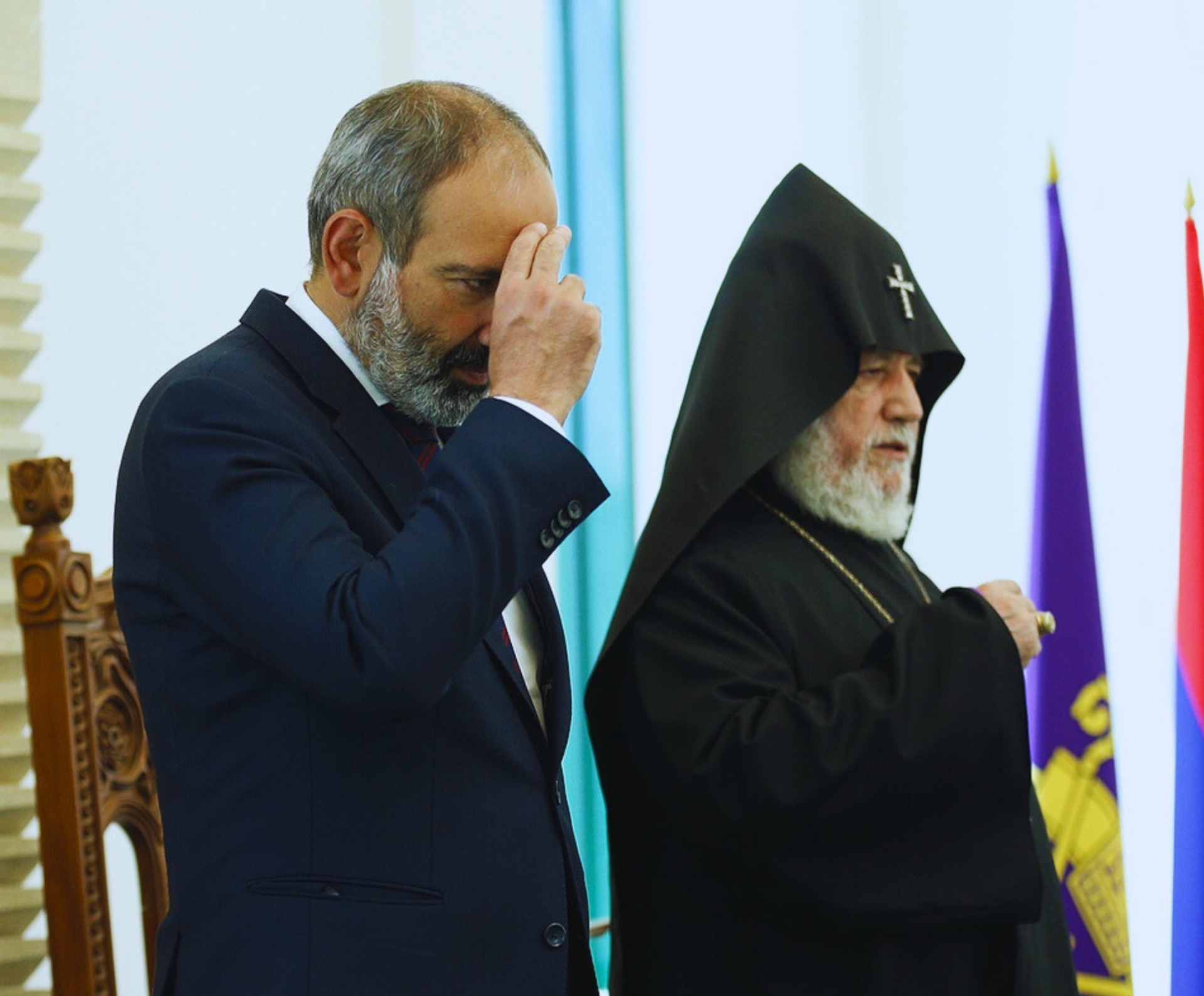

European institutions have largely refrained from intervening in the growing confrontation between Armenia’s government and the Armenian Apostolic Church.
Today, however, the Parliamentary Assembly of the Council of Europe (PACE) addressed the issue in a report adopted as part of its monitoring of Armenia for January–December 2025. In the report, PACE expressed deep concern over tensions between Prime Minister Nikol Pashinyan and the head of the Armenian Apostolic Church, as well as reports that several clergymen may have attempted to seize power.
The Assembly also regretted the excessive polarization and stigmatisation of political opponents in Armenia. While noting that three consecutive elections since 2018 have been free of irregularities, it reiterated the need to strengthen regulations on the misuse of public resources and the financing of political parties.
The remarks come amid an escalating church–state dispute that in recent weeks has expanded into legal battles over clerical appointments and internal church governance.
The dispute has increasingly moved from political rhetoric into the courts. In recent weeks, several cases linked to clerical appointments have been filed in civil courts, raising concerns about the boundaries between state authority and the Armenian Apostolic Church’s constitutionally protected autonomy.
Amid the growing pressure, the Mother See of Holy Etchmiadzin announced it would convene an emergency bishops’ conference abroad from February 16–19 in Sankt Pölten, Austria.
The gathering, originally scheduled to take place in Etchmiadzin in December, was postponed following what the Church described as “repressions against clergy,” including the December arrest of Archbishop Arshak Khachatrian, head of the Mother See Chancellery, on drug-related charges he has rejected as politically motivated.
The conference is expected to bring together all 56 bishops and archbishops of the Armenian Apostolic Church to discuss the challenges facing the institution. Among those invited are ten senior clerics who have publicly aligned themselves with Prime Minister Nikol Pashinyan’s campaign to reform the Church and have openly challenged the authority of Catholicos Karekin II.
One of them, Archbishop Mkrtich Abrahamian, has said he has not yet decided whether he will attend the meeting. The Primate of the Western Diocese of North America, Archbishop Hovnan Derderian, outspoken critic of the Catholicos, will participate in the Bishops’ conference to be held in Austria, according to a statement issued by the Western Diocese of the United States.
The ten clerics are part of the Council of Reform of the Armenian Apostolic Church, an initiative formed with the backing of Prime Minister Pashinyan and calling, among other demands, for the resignation of Catholicos Karekin II.
The Council has urged the cancellation of the planned bishops’ conference, accusing the Church leadership of attempting to consolidate power abroad. Earlier this month, Pashinyan hosted the ten clerics behind the initiative at his residence.
The legal confrontation deepened on January 15, when Gevorg Saroyan, the former head of the Masyatsotn Diocese and one of the clerics supporting the reform initiative, filed a lawsuit against the Armenian Apostolic Church after being dismissed by the Catholicos on January 10. Saroyan has asked a civil court to overturn the dismissal and reinstate him as diocesan primate, denying allegations that he pressured priests to support the reform campaign.
An Armavir district court subsequently issued an interim injunction ordering Saroyan’s reinstatement pending the outcome of the case, a decision the Mother See and several legal experts have criticized as exceeding the judiciary’s authority to intervene in the Church’s internal affairs.
The Mother See has also accused local officials and government loyalists of pressuring priests in several regions to pledge allegiance to Saroyan, warning that clergy who remain loyal to the Catholicos could face removal from their parishes.
Separately, the Church has filed lawsuits against defrocked priest Stepan Asatryan, known as Father Aram, who was stripped of his clerical rank in October 2025 but has continued to conduct services while openly challenging the Catholicos and aligning himself with the government’s reform agenda.
One of the cases concerns the return of an apartment in Yerevan previously provided to Asatryan. Despite his defrocking, Asatryan continues to hold liturgies at Hovhannavank monastery, which Prime Minister Pashinyan visited in late November in a public show of support.


