
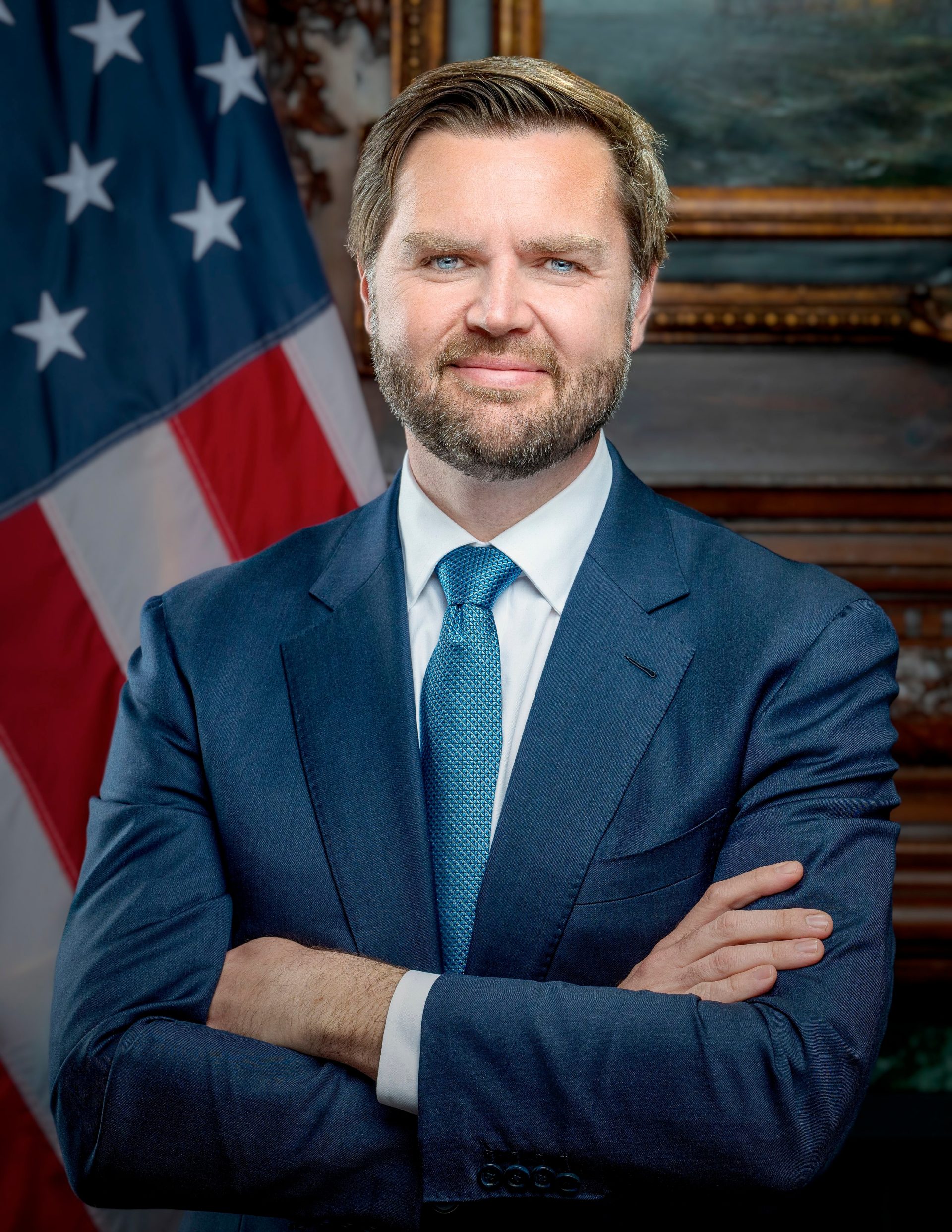

U.S. Vice President J.D. Vance will visit Armenia and Azerbaijan in February to build on Washington-backed peace efforts between the two countries, President Donald Trump announced on Saturday.
In a post on his Truth Social platform, Trump thanked Azerbaijani President Ilham Aliyev and Armenian Prime Minister Nikol Pashinyan for upholding what he described as a peace agreement signed in August 2025, an agreement Trump has repeatedly cited as one of several conflicts he claims to have ended during his presidency.
“In February, Vice President Vance will travel to both countries to build on our peace efforts, and advance the Trump Route for International Peace and Prosperity,” Trump wrote.
The Trump Route for International Peace and Prosperity, or TRIPP, is a U.S.-backed framework intended to link mainland Azerbaijan with its exclave of Nakhichevan across southern Armenia and to function as a key regional transportation corridor.
Trump said Washington would strengthen its strategic partnership with Azerbaijan, pursue what he described as a “beautiful agreement for peaceful nuclear cooperation” with Armenia, and promote deals benefiting U.S. semiconductor companies. He also said the United States would move forward with the sale of U.S.-made defense equipment, including body armor and boats, to Azerbaijan.
No further details have been provided regarding the scope or timeline of the proposed agreements.
Political analyst Suren Sargsyan said the inclusion of Azerbaijan in Vance’s itinerary, as well as the announcement of potential U.S. arms sales to Azerbaijan, appeared to be the result of recent high-level contacts between Washington and Baku.
In a post on Facebook, Sargsyan wrote that Vance’s visit to Armenia had been expected for weeks, while a stop in Azerbaijan only emerged after President Ilham Aliyev’s meeting with Trump.
“As I noted in late December, Vance was planning to visit Armenia. Until yesterday’s Trump–Aliyev meeting, there was no discussion of a visit to Baku. However, today Trump has already announced that the vice president will also travel to Baku,” Sargsyan wrote.
He added that the arms deal with Azerbaijan mentioned by Trump was a direct outcome of Aliyev’s meeting with Trump on the sidelines of the World Economic Forum in Davos last Thursday.
Trump–Aliyev Meeting In Davos
According to Aliyev’s press service, Azerbaijani President Ilham Aliyev and U.S. President Donald Trump met on the sidelines of the World Economic Forum in Davos, Switzerland, where both leaders expressed satisfaction with the development of relations between Baku and Washington across multiple sectors.
Aliyev highlighted what he described as Trump’s significant contribution to advancing peace efforts between Armenia and Azerbaijan, referring to talks held in Washington on Aug. 8, 2025.
The Azerbaijani president also spoke about steps toward the normalization of Armenian–Azerbaijani relations. In a statement, his press service said that “peace has already been established in the region”, pointing to what it described as emerging trade relations between the two countries, including exports of oil products from Azerbaijan to Armenia and the delivery of grain imported to Armenia through Azerbaijani territory.
Arms Sales and U.S. Policy Shift
A decision to sell U.S. defense equipment to Azerbaijan marks a significant shift in long-standing American policy.
In 1992, at the height of the First Artsakh (Nagorno-Karabakh) War, the U.S. Congress amended the Freedom Support Act by introducing Section 907, which prohibited direct U.S. government assistance to Azerbaijan. The amendment followed lobbying by Armenian-American groups, who cited Azerbaijan’s blockade of Armenians in Artsakh.
While U.S. presidents have been granted the authority to temporarily waive Section 907 since 2001, the restriction has never been fully repealed. As part of the August 2025 Washington meeting between Trump, Aliyev, and Pashinyan, Trump authorized another temporary waiver, though fully lifting the restriction would require congressional approval.
Georgia Sidelined As U.S. Returns To The South Caucasus After Two Decades
The upcoming trip will mark the highest-level U.S. visit to the South Caucasus in two decades. The last time a U.S. leader visited the region was in May 2005, when then-President George W. Bush traveled to Tbilisi, Georgia, during a tour of Eastern Europe.
This time, however, Georgia has been excluded from the itinerary. Vance’s decision to visit Armenia and Azerbaijan, but not Georgia, has drawn attention in the region.
Once Washington’s closest ally in the South Caucasus, Georgia’s relations with the United States have deteriorated in recent years amid democratic backsliding under the ruling Georgian Dream party. While Georgian officials have expressed hope that ties could improve under the Trump administration, there has so far been no visible reset.
Georgian Prime Minister Irakli Kobakhidze dismissed speculation that Georgia was deliberately excluded, saying the visit was “specifically dedicated to the so-called TRIPP route”, making Armenia and Azerbaijan the natural destinations.
He also said the visit was focused on what he referred to as the “Zangezur issue”, terminology often viewed as problematic in Armenia, as it frames the country’s Syunik region as “west Zangezur”.
Background To The U.S.-Backed Process
The renewed diplomatic push builds on documents signed in Washington on Aug. 8, 2025, under U.S. auspices, which outlined principles for normalizing relations between Armenia and Azerbaijan and formalized Washington’s role in supporting the peace process. While Trump has repeatedly referred to the agreement as a signed peace treaty, it was initialled rather than formally concluded.


