
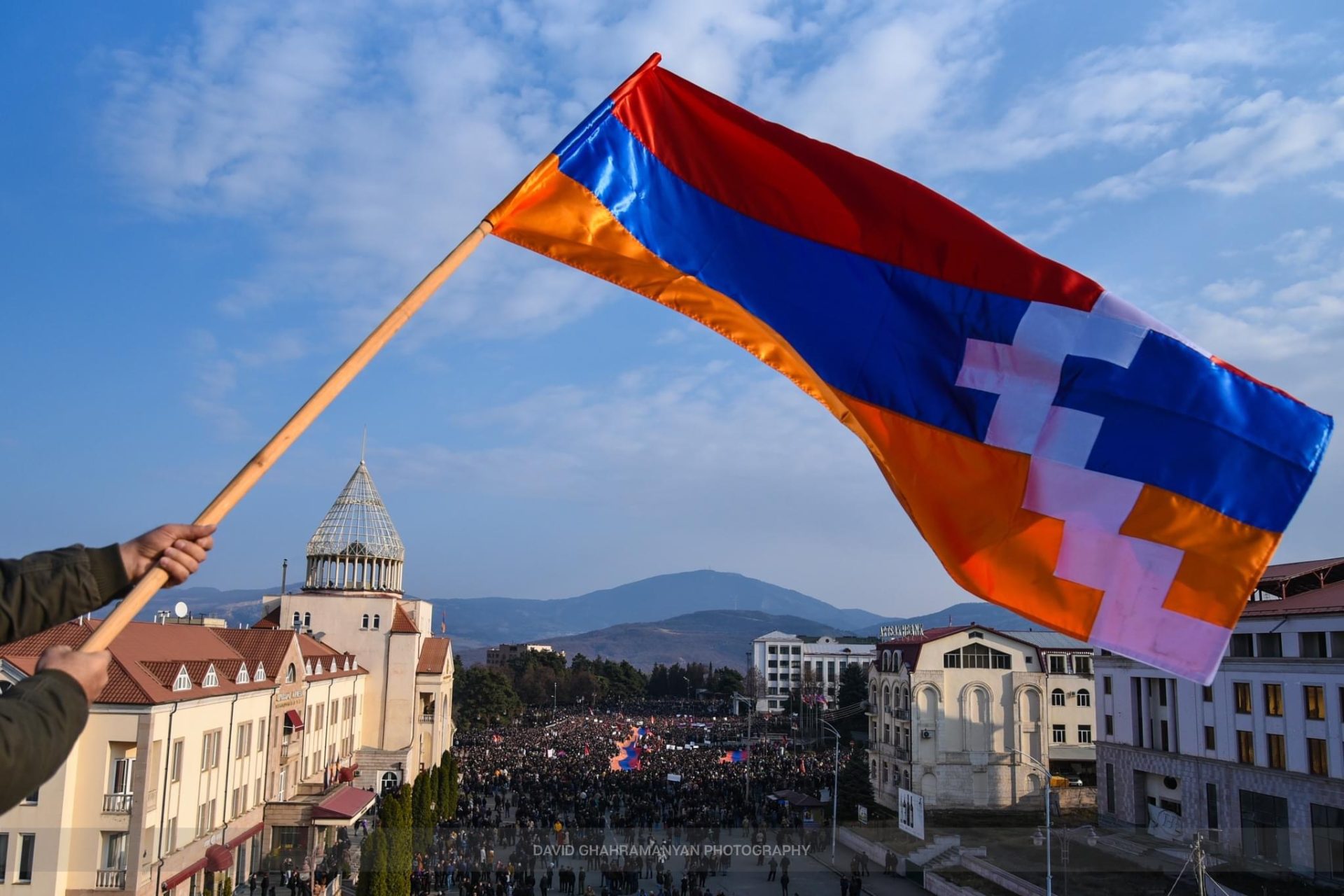

Eleven Artsakh (Nagorno-Karabakh) residents who remained in the region after Azerbaijan’s September 2023 military offensive and subsequent ethnic cleansing of Armenians have now arrived in Armenia, after submitting written requests to Azerbaijani and Armenian authorities, Armenian officials said Friday. Labor and Social Affairs Minister Arsen Torosyan reported the group includes 10 Armenians and one Armenian citizen of Russian ethnicity, while Health Minister Anahit Avanesyan said all underwent medical checks upon arrival, with one person hospitalized in Goris for additional tests as the other 10 were assessed to be in satisfactory condition.
“Dear compatriots, I inform you that 10 Armenians and one Armenian citizen of Russian ethnicity who have so far been living in the Republic of Azerbaijan (Karabakh) submitted requests to the relevant authorities of Azerbaijan and Armenia asking to be relocated to the Republic of Armenia. Based on these requests, the mentioned individuals have been transferred to the Republic of Armenia,” Torosyan wrote.
According to APA, an Azerbaijani state-affiliated news agency, the transfer of Armenians living in “Karabakh” to Armenia was facilitated based on their written requests and expressed wishes.
Torosyan later told reporters that Armenian authorities will address all of the group’s needs, including healthcare and social support, and urged the public to respect their privacy given the circumstances under which they left Artsakh.
Torosyan did not provide details on the identities of those who moved or where they are currently living. He also did not specify how many residents of Armenian origin remain in Artsakh. Torosyan’s wording, referring to Artsakh as part of the “Republic of Azerbaijan,” sparked criticism on social media, particularly on Facebook, where many Armenian users described the phrasing as anti-Armenian and accused the minister of adopting Azerbaijani rhetoric.
Following Azerbaijan’s 2023 offensive, which came after an eight-month blockade, around 100,000 people, nearly the entire Armenian population of Artsakh fled to Armenia.
In the years since, estimates suggested that a dozen Armenians, most of them elderly, remained behind.
In October 2023, Artak Beglaryan, the former state minister of Artsakh, wrote on X that over 15 identified Armenians had remained under Azerbaijani rule. He added that the total number could not exceed 40, including those considered missing. Beglaryan left Artsakh along with the last remaining officials of the unrecognized republic, including President Samvel Shahramanyan, marking the end of the region’s Armenian administration.
In 2024, Gegham Stepanyan, the former Ombudsman of Artsakh, said the confirmed number of Armenians still in the region stood at 14. That figure was echoed in 2025 by Sergei Ogoltsov, an English teacher and writer who spent eight months in Stepanakert after the exodus, and told CivilNet that there were “14 Armenians” remaining in the region.
In December 2025, 58-year-old Artsakh Armenian Karen Avanesyan, who reportedly has mental health issues, was sentenced by an Azerbaijani court to 16 years in prison on charges of “terrorism.” Prior to that, in March 2025, two ethnic Armenians testified during the trial of the region’s former State Minister Ruben Vardanyan, both of whom had previously appeared in Azerbaijani propaganda videos.
Another Artsakh Armenian, Vera Aghasyan, passed away in the region on October 20, 2024.
Earlier this month, Azerbaijan released four Artsakh civilians who had been serving prison sentences and transferred them to Armenia. On the same day, Armenia handed over two Syrian mercenaries, captured during the 2020 Artsakh war, to Turkey, from where they are expected to be sent to Syria to continue serving their life sentences.


