

By Zartonk Journalist Arpine Hovhannisian
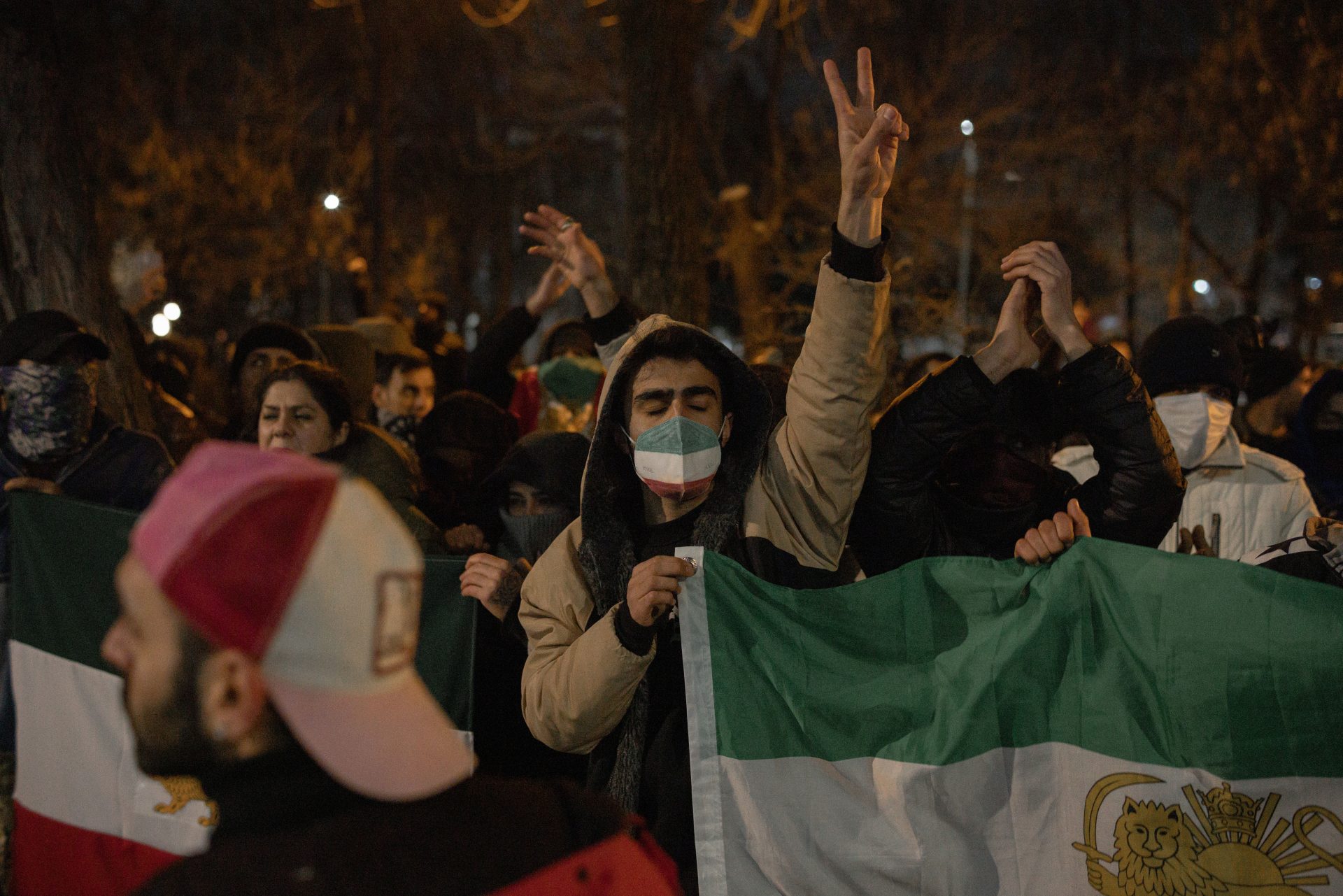
Days after sharp criticism by Iran’s ambassador to Armenia, Iranian nationals residing in the country held protests in Yerevan. Police on Saturday banned a planned march from the area near the Iranian Embassy to the Blue Mosque on Mashtots Avenue. Seven protesters were briefly detained during the march but were released a few hours later.
On Wednesday, following several protests in front of the Iranian embassy, Ambassador Khalil Shirgholami criticized the Armenian authorities, saying Tehran had the impression that Armenia was becoming a center for actions directed against Iran. Some of the protesters linked the recent police ban on the march to the ambassador’s remarks.
On Thursday, Prime Minister Nikol Pashinyan responded to the diplomat’s statements, assuring that Armenia would not pose a threat to Iran. At the same time, he rejected claims that the ban contradicted Armenia’s post-2018 political reality, insisting that no rallies have been prohibited in the country since the Velvet Revolution.
“In Armenia, generally speaking, since 2018 no rally has ever been banned anywhere, and we cannot act differently in a single, isolated case, because that is already the reality,” Pashinyan said, stressing that no special exceptions would be made, including in relation to Iran.
Mehrdad Rouien, a 35-year-old Iranian national residing in Armenia and working as a photographer, told Zartonk Media that although the group had received permission from the Yerevan municipality on Saturday (see the photo of the municipality document below) is to hold a rally from the embassy to the Blue Mosque, the police did not allow them to proceed.
“We got permission legally to hold a rally on Saturday. We made banners and invited people to join, but unfortunately, the moment we wanted to start walking, the police changed their mind,” Rouien said.
Commenting on the police actions, Ministry of Internal Affairs spokesperson Narek V. Sargsyan told RFE/RL’s Armenian Service: “The march is not authorized, and therefore the holding of the march was prohibited, and during the assembly, seven individuals were subjected to administrative detention under Article 182 of the Code on Administrative Offenses (failure to comply with a lawful order of a police officer).”
Explaining the detention of the protesters, Rouien said that some demonstrators were determined to march regardless of the ban: “We are going to walk no matter what. If our people are dying in Iran, who cares if we get arrested here?” he quoted the protesters as saying.
He added that the group has been gathering for seven consecutive days and plans to continue until their compatriots in Iran are able to protest freely. According to Rouien, the protesters decided to officially request permission to march from the Iranian Embassy to the Blue Mosque in central Yerevan in order to draw greater public attention to the situation in Iran.
“We plan to continue the rallies as long as people are fighting inside Iran. We will be out to be their voice,” Rouien said.
The demonstrations were held in Yerevan in solidarity with protesters in Iran, where nationwide unrest has continued amid reports of killings, mass arrests, and severe repression by security forces.
The protests in Iran began on December 28 over economic grievances but have since evolved into calls for an end to the rule of the country’s supreme leader. Iranian authorities have described the demonstrations as “riots” backed by Iran’s enemies.
An Iranian official told Reuters that at least 5,000 people, including about 500 security personnel, had been killed in nationwide protests.
Two sources, including one inside Iran, told CBS News on Tuesday that the death toll may be at least 12,000 and possibly as high as 20,000.


