
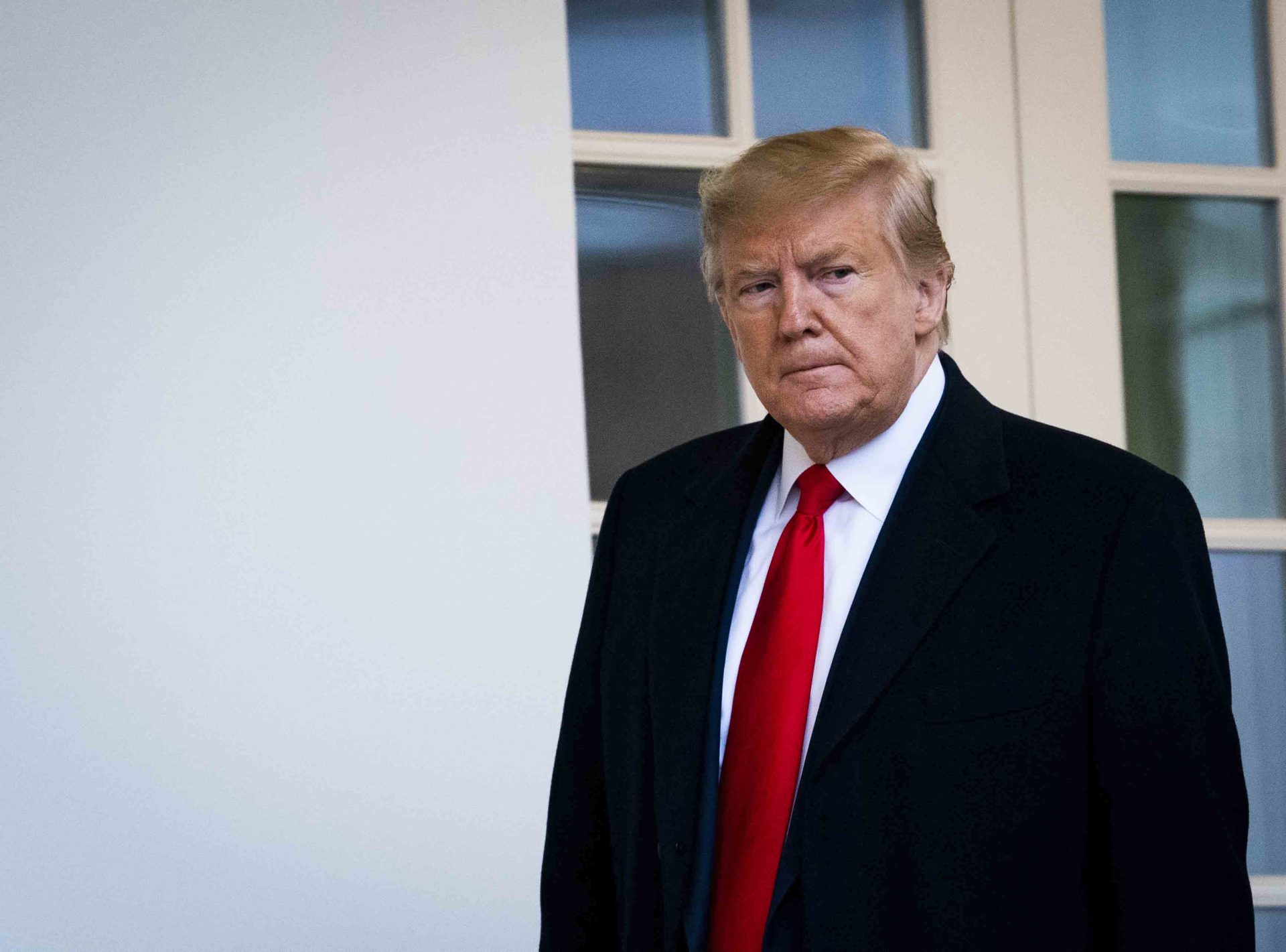

US President Donald Trump announced on Monday that Washington would impose a new 25% tariff on any country doing business with Iran, amid ongoing, widespread anti-government protests in the country.
“Effective immediately, any Country doing business with Iran will pay a 25% tariff on any and all business being done with the United States,” Trump wrote on Truth Social, adding that the decision was “final and conclusive.”
Trump’s decision on tariffs comes amid widespread anti-government protests in Iran that have continued since late December 2025, with limited information emerging due to internet and mobile network shutdowns. The crackdown on demonstrators has resulted in at least 2,000 deaths, according to Reuters.
Trump also addressed Iranians directly, urging them to continue protesting. In a post on Truth Social on Tuesday, he wrote: “Iranian Patriots, keep protesting – take over your institutions!!! … help is on its way.” He added that he had cancelled all meetings with Iranian officials until the “senseless killing” of protesters stops, signaling the clearest indication yet that the US president may be preparing for military action against Tehran.
In April 2025, under the International Emergency Economic Powers Act, Washington had imposed a 10% tariff on goods imported from Armenia, Azerbaijan, and Georgia as part of a broader package of tariffs affecting nearly every country worldwide.
Iran is Armenia’s fourth-largest trading partner, according to data from the Statistical Committee of the Republic of Armenia. In 2025, Armenia exported $83 million worth of goods to Iran, while imports from Iran totaled $615 million, largely consisting of iron, natural gas, and petroleum products. By comparison, Armenia’s trade volume with the United States was smaller during the same period, with exports amounting to $46 million and imports totaling $268 million.
Energy cooperation also plays a central role in Armenia–Iran relations. The two countries signed a 20-year gas-for-electricity swap agreement in 2004, which became operational in 2009. Under the arrangement, Armenia imports natural gas from Iran, converts it into electricity at a local thermal power plant, and supplies electricity back to Iran, while retaining the surplus electricity generated from each cubic meter of gas.
The cooperation is enabled by the Iran–Armenia gas pipeline, which spans 140 kilometres. The Iranian section runs from Tabriz, the capital of East Azerbaijan province, to the Iran–Armenia border, while the Armenian section stretches from the Meghri region to Kajaran in Armenia’s southern Syunik province.
Although the Armenian government has not yet responded to the possibility of new tariffs, economists are urging officials to act quickly to make clear to the US that relations with Iran, including trade, are vital for Armenia and must be taken into account by the US.
“The Armenian side can negotiate to present Armenia’s vital interests; otherwise, Armenia will indeed face a fairly serious problem,” economist Suren Parsyan told Radio Free Europe/Radio Liberty’s Armenian Service.
Read the full article in the post above and on ZartonkMedia.com.


