
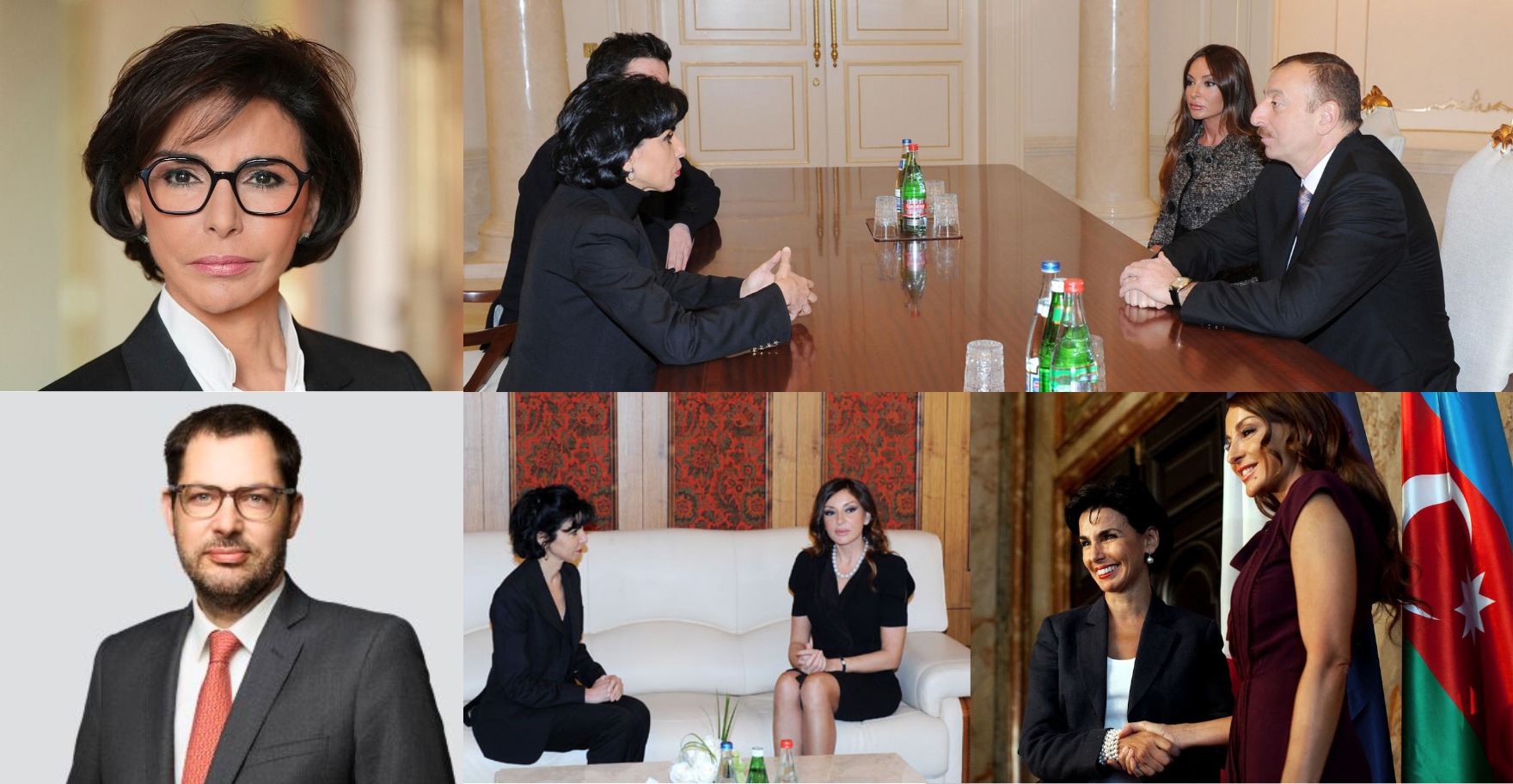

French-Armenian lawyer and pro-Armenian activist François Devedjian has won a major victory against pro-Azerbaijani-linked France’s Culture Minister and Paris mayoral hopeful Rachida Dati’s attempt to have him disbarred, after he was cleared in the disciplinary case she brought against him when Pierre Hoffman, President of the Paris Bar Association, issued a decisive ruling dismissing Dati’s complaint in a December 23 decision finding Devedjian’s statements remained within the bounds of lawyers’ protected freedom of expression, reports French-Armenian journalist Liana Margaryan.
The politically motivated disciplinary attack followed Devedjian’s public exposure of Dati’s corrupt ties to Baku’s authoritarian Aliyev regime and his reminders that she faces trial in 2026 in the Renault–Nissan scandal, one of France’s most high-profile political corruption cases. The decision delivers a major setback to Dati’s political ambitions as a candidate for Mayor of Paris.
What Dati Accused Devedjian Of
Dati’s complaint centered primarily on two points raised in Devedjian’s public remarks and social media posts: that Dati maintains links with the authoritarian Azerbaijani regime, and that she is currently facing criminal proceedings before the criminal court on charges of corruption and passive influence peddling, as well as receiving the proceeds of abuse of power and breach of trust.
The Bar President: Devedjian’s Remarks Fell Within Protected Expression
In his ruling, Hoffman stated that “the statements at issue do not appear to have exceeded Mr. François Devedjian’s freedom of expression, in light of the professional rules applicable to lawyers.”
In a key part of the decision, the Paris Bar President noted that a review of national press articles referenced by Devedjian’s disputed posts showed that the factual basis supporting his claims was sufficient, and that those facts were not contested.
The ruling also emphasized that Devedjian’s statements contained no vulgarity, no insult, and no personal hostility unrelated to a matter of general public interest. The Bar President further noted that the publications did not include contempt, invective, or attacks lacking factual content.
Crucially, the decision states that Devedjian did not present Dati as guilty in his posts. Rather, his statements simply recalled that she is the subject of ongoing criminal proceedings relating to the charges referenced.
Complaint Dismissed
Based on these findings, the President of the Paris Bar concluded that there were no grounds to launch disciplinary proceedings against François Devedjian and formally dismissed the complaint filed on behalf of Rachida Dati. The decision represents a clear defeat for Dati’s attempt to use disciplinary mechanisms to silence a prominent Armenian voice in French public life.
Context: A Politically Charged Complaint
The case ignited political controversy and outrage within France’s Armenian community, where many saw it as a direct attempt to intimidate and silence a pro-Armenian advocate who has consistently exposed pro-Azerbaijani influence in French politics.
Dati has long been criticized for her corrupt and close ties to Azerbaijan.
Dati’s attempt to target Devedjian was seen by many as part of a broader pattern of intimidation aimed at suppressing criticism and blocking public scrutiny.
Observers noted that the complaint appeared to have been triggered by Devedjian’s repeated public criticism of Dati’s relationship with Azerbaijan and his public reminders of her referral for trial in the Renault–Nissan case, raising deeper questions about democracy, free speech, and whether France will tolerate attempts to punish citizens for speaking factual truths about sitting officials.
Political Background: Corruption Cases, Career, and Ties to Baku
Rachida Dati has been the subject of growing scrutiny in France as she positions herself for the 2026 Paris mayoral race, according to reports by Le Monde and RFI.
She first rose to national prominence in the late 2000s as Minister of Justice under President Nicolas Sarkozy, later serving as mayor of Paris’s 7th arrondissement, an upscale district that helped cement her reputation as a combative and ambitious political figure known for her sharp instincts and forceful style.
Her career, however, has also been marked by controversy. She faces ongoing legal proceedings over concealed consulting payments linked to the Renault–Nissan corporate scandal, with prosecutors pursuing charges that include corruption and influence peddling.
Her political network and reported ties to Azerbaijan have drawn growing scrutiny, particularly as she now targets figures like François Devedjian.
François Devedjian has been outspoken in highlighting the ethnic cleansing and mass displacement of Armenians in Artsakh (Nagorno-Karabakh), especially following Azerbaijan’s 2023 campaign that forced the depopulation of the region. He has consistently urged France to uphold its moral responsibility toward truth and justice. His activism, often expressed through social media, calls out French officials perceived as enabling or overlooking Azerbaijan’s aggression.
Why This Matters
The ruling reinforces the principle that freedom of expression must be protected, especially on matters of public interest, and that attempts to suppress dissent through intimidation should not be tolerated. In Paris, as elsewhere, the decision sends a strong message: lawyers, like all citizens, retain the right to speak about public affairs, particularly when their statements are grounded in fact and expressed without insult.
Background: A Politically Charged Complaint Amid Dati’s Azerbaijan Controversy
As Zartonk Media previously reported on November 6, Rachida Dati, long criticized for her proximity to Azerbaijan and the Aliyev regime, filed a disciplinary complaint seeking to disbar François Devedjian shortly after he publicly highlighted her ties to Baku and reminded the public that she is facing a major corruption and influence-peddling case, with a trial expected in 2026 in connection with the Renault–Nissan scandal. The complaint sparked outrage across France’s Armenian community, where many viewed it as a “SLAPP”-style move designed to intimidate and silence a vocal Armenian advocate.
Devedjian, the son of the late French statesman and staunch Armenian Cause defender Patrick Devedjian, responded at the time with a message that quickly resonated across the Armenian community: “France is not Azerbaijan, and its citizens, including lawyers, still have the right to speak out.”
Devedjian’s statement now appears to have been affirmed by the Paris Bar’s decision.


