
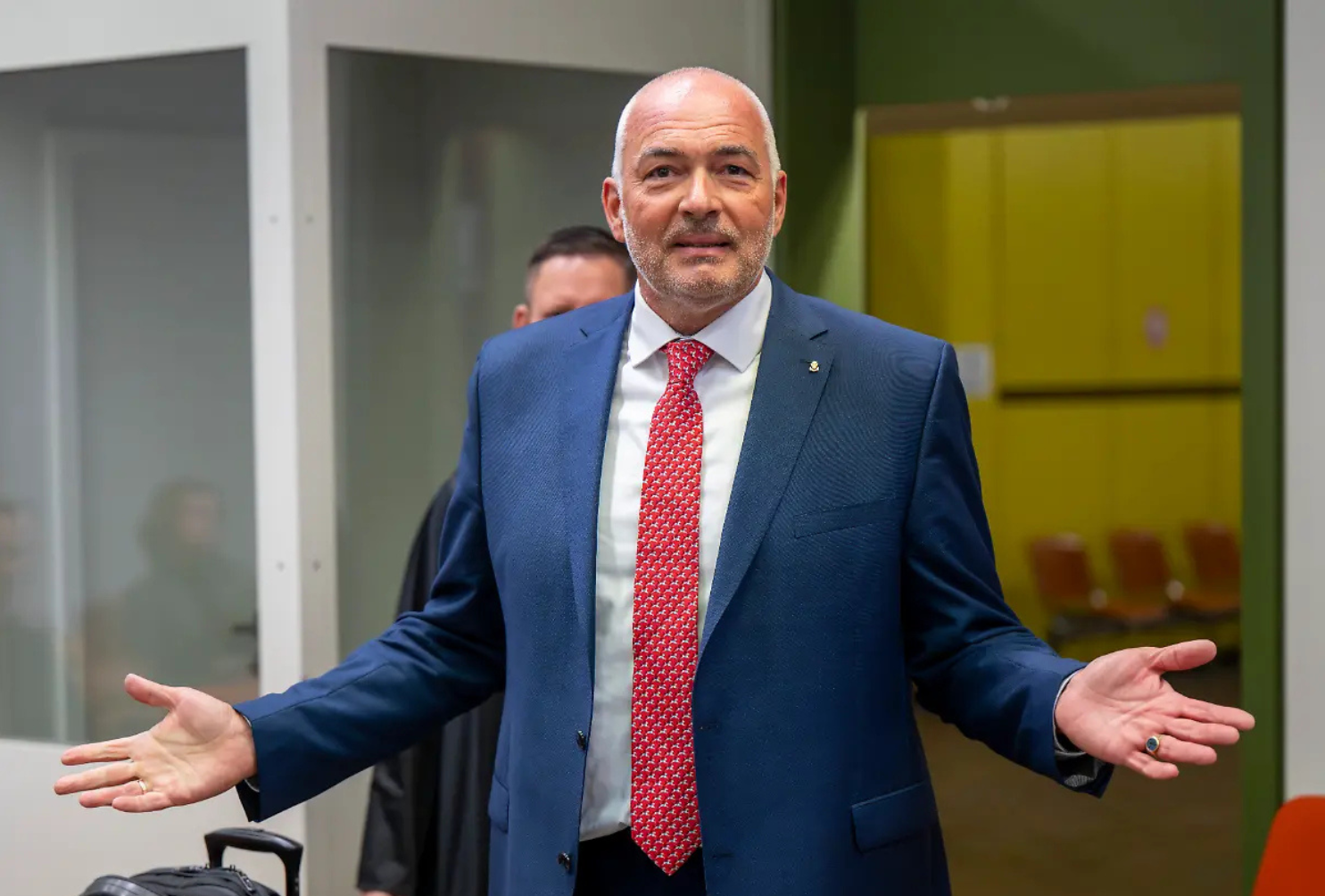

German authorities have arrested former CDU Bundestag member Axel Fischer after the Munich Higher Regional Court issued an arrest warrant in a corruption and bribery case linked to Azerbaijan’s influence operation inside the Parliamentary Assembly of the Council of Europe (PACE), where Fischer served from 2010 to 2018. Police detained Fischer at a clinic in Bad Säckingen, Baden-Württemberg, after he repeatedly failed to appear in court, and transported him under medical supervision roughly 350 kilometers to Munich as proceedings resumed, reports NTV and EurAsia Daily.
Prosecutors say Fischer accepted cash payments in exchange for pro-Azerbaijan speeches and leaked documents, accusations he denies. Investigators also point to a broader “Azerbaijani laundromat” network involving former CSU MP Eduard Lintner. The case carries added urgency because one key charge against Fischer could become time-barred as early as mid-January.
Presiding judge Jochen Bösl said the court would have preferred to avoid escalation but argued Fischer’s repeated absences left no alternative. “We would have liked to avoid this escalation,” Bösl said. “From our point of view, he brought it upon himself.” Fischer’s lawyers filed a complaint against the arrest warrant, which will now be reviewed by another chamber of the court.
Fischer had repeatedly failed to appear in court and most recently entered a clinic in Bad Säckingen. Court-appointed experts determined that he was fit to stand trial. Despite this assessment, Fischer again failed to appear before the court, prompting judges to issue an arrest warrant. He was transported under medical supervision on the approximately 350-kilometer journey to Munich. The trial was scheduled to resume at around 3 p.m. that afternoon.
Fischer, 55, who represented the Karlsruhe-Land constituency, is accused of acting in the interests of Azerbaijan while serving as a member of PACE from 2010 to 2018. Prosecutors say he delivered pro-Azerbaijan speeches and passed on confidential documents at an early stage in exchange for money. Investigators believe Azerbaijan sought for years, and successfully, to influence PACE decisions through financial payments to European politicians.
Fischer denies the accusations. “I am innocent,” he previously stated in court. He said he received no financial or other benefits for pro-Azerbaijan voting behavior or any other conduct and insisted that he always voted freely and never “sold” his vote.
According to EurAsia Daily, Fischer is not the only former German lawmaker implicated. Two former Bundestag deputies from the CDU/CSU bloc, Axel Fischer and Eduard Lintner, are accused of corruption tied to lobbying Azerbaijan’s interests within PACE. Investigators view their actions as part of a broader scheme known as the “Azerbaijani laundromat,” in which Azerbaijan is accused of systematically bribing European politicians to soften criticism of its authorities and block human rights-related resolutions.
Zartonk Media previously reported that another implicated politician, former CDU lawmaker Karin Strenz, also faced suspicion but passed away in 2021.
Prosecutors say Fischer received a bribe totaling 21.8 thousand euros in 2016. Lintner, meanwhile, is charged with bribing elected officials. Investigators say that in 2016 he received several million euros through a network of 19 fictitious companies, with the funds intended for distribution to other PACE deputies to influence their decisions in favor of Azerbaijan.
Lintner claims that after leaving parliament he engaged in what he describes as legitimate lobbying. He acknowledges receiving money from Baku to promote the position that Artsakh (Nagorno-Karabakh) belongs to Azerbaijan but denies transferring funds to other parliamentarians.
Attention has also focused on the possibility that if the proceedings continue to be delayed, one of the key charges against Fischer could expire under the statute of limitations as early as mid-January. If the trial is further delayed, Fischer could no longer be convicted on that count.
Background: Azerbaijan’s Influence Campaign and the “Azerbaijani Laundromat”
German prosecutors say the case against former CDU lawmaker Axel Fischer is part of a wider effort by Azerbaijan to buy political influence in Europe, particularly inside PACE, the continent’s key institution tasked with promoting democracy and human rights.
Zartonk Media previously reported that the investigation into Fischer intensified in March 2021, when Germany’s Bundestag unanimously revoked his parliamentary immunity. That decision enabled authorities to conduct searches and seizures related to bribery accusations tied to Azerbaijan-linked lobbying activities.
According to prosecutors and investigations previously covered by Zartonk, Azerbaijan relied on intermediaries and shell companies to funnel cash payments to European politicians over several years, seeking votes, speeches, and political positions favorable to Baku. Prosecutors say Fischer used his position in PACE between 2010 and 2018 to advance Azerbaijan’s interests by delivering positive speeches and passing on confidential documents early in exchange for money.
The broader scheme is commonly known as the “Azerbaijani Laundromat,” a Europe-wide corruption and influence operation exposed in 2017 by the Organized Crime and Corruption Reporting Project (OCCRP) and its media partners. Zartonk previously reported that the operation involved a secret $2.9 billion slush fund used to buy political influence, launder money, and shield Azerbaijan’s government from scrutiny over human rights abuses.
The case has direct relevance for Armenians and Artsakh (Nagorno-Karabakh). Zartonk Media previously reported that prosecutors believe payments to Fischer included pro-Azerbaijan votes during key PACE decisions related to the Armenia–Azerbaijan conflict, including a 2016 vote on Artsakh, a period when Fischer served as PACE’s parliamentary rapporteur for Armenia.
In July 2025, Zartonk reported that former German MP Eduard Lintner was convicted by the Higher Regional Court of Munich for accepting bribes from Azerbaijan’s government in connection with the same Laundromat scandal, marking one of the rare legal consequences tied to the network.
Prosecutors say the influence campaign targeted Europe’s main human rights institution, raising serious concerns about foreign interference in democratic decision-making. The allegations center on a long-running system of cash-for-favors designed to silence scrutiny of Azerbaijan’s human rights record while shaping European policy. For Armenians, the case carries particular weight because prosecutors say Azerbaijan’s influence efforts extended to votes and decisions involving Artsakh.
Timeline: How the Azerbaijan Bribery Case Reached This Point
March 4, 2021
Germany’s Bundestag unanimously revokes Axel Fischer’s parliamentary immunity, allowing investigators to pursue bribery accusations tied to Azerbaijan-linked lobbying.
March 2021
German prosecutors conduct searches in Baden-Württemberg and Berlin, including Fischer’s Bundestag office and residential premises. The operation involves around 60 investigators.
January 30, 2024
German prosecutors charge multiple individuals, including Fischer and Eduard Lintner, alleging corruption and bribery linked to lobbying for Azerbaijan inside PACE.
May 15, 2025
Eduard Lintner admits in court to handling payments from Azerbaijan, while disputing that they constituted bribes.
July 31, 2025
Lintner is convicted by the Higher Regional Court of Munich for accepting bribes from Azerbaijan’s government in the Azerbaijani Laundromat scandal and receives a nine-month suspended prison sentence.
Now
Axel Fischer is arrested after repeatedly failing to appear in court. Prosecutors say he acted in Azerbaijan’s interests within PACE in exchange for money, with the trial continuing under heightened scrutiny.


