
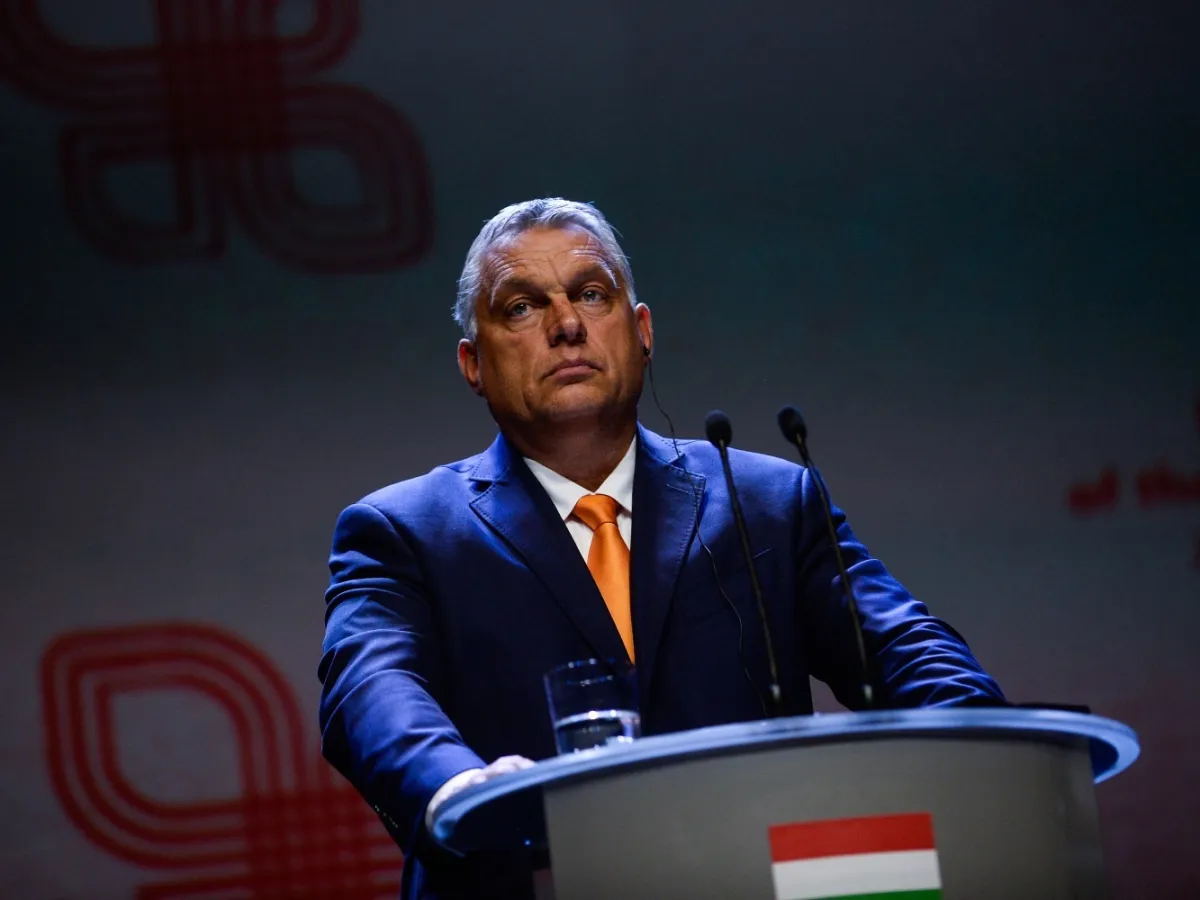

Hungary has lifted its veto on a €20 million European Union military assistance package for Armenia under the European Peace Facility, ending months of deadlock and clearing the way for formal approval expected in January. The aid package, proposed in March 2025, secured political consensus among EU member states this week, according to Armenia’s Foreign Ministry and Radio Free Europe/Radio Liberty Europe Editor Rikard Jozwiak.
The development was confirmed by Jozwiak, who said Hungary lifted its veto on the €20 million EPF assistance measure this week after previously blocking the proposal. He added that while Armenia’s package has now moved forward, Hungary continues to block a separate EU military assistance package for Ukraine.
A day earlier, Armenian Foreign Ministry spokesperson Ani Badalyan said that the EU had reached a “consensus” on providing support to Armenia, likely in the form of non-lethal defense aid, through the bloc’s European Peace Facility (EPF).
The EPF, created in 2021, is an EU fund used to provide military aid outside the bloc and has primarily sent assistance to Ukraine since its inception. The European Union first provided military assistance to Armenia through the European Peace Facility in 2024, marking a historic shift in EU-Armenia security cooperation. That initial €10 million package was aimed at strengthening the logistical and medical capacities of the Armenian Armed Forces and allowed for the establishment of a fully deployable field modular camp, including medical facilities and related support infrastructure for a battalion-sized unit.
In March 2025, Armenia submitted a second request for additional EPF support. However, Hungary blocked the decision at the time, preventing unanimous approval by the EU’s decision-making Council, where consent from all 27 member states is required.
Hungarian Foreign Minister Péter Szijjártó publicly justified the veto by stating that while Hungary does not oppose Armenia receiving assistance, Azerbaijan should receive equivalent support as well. He also argued that the European Union should take into account what he described as regional instability prior to Armenia and Azerbaijan initialing a peace agreement earlier this year.
Hungary has previously delayed EU military assistance to Armenia on similar grounds. In 2024, Budapest blocked the initial €10 million EPF package for months before ultimately lifting its objection following an EU pledge to fund de-mining activities in Azerbaijan through a separate mechanism.
Unlike most EU member states, Hungary has openly supported Azerbaijan in the Artsakh (Nagorno-Karabakh) conflict. The Hungarian Foreign Ministry reaffirmed that position days after the outbreak of the 2020 Armenian-Azerbaijani war.
Relations between Armenia and Hungary have been tense for much of the past decade. In 2012, Armenia suspended diplomatic ties after Hungary released Azerbaijani officer Ramil Safarov, who had killed Armenian lieutenant Gurgen Margaryan with an axe during a NATO training program in Budapest in 2004. Diplomatic relations between the two countries were only restored in late 2022.
According to an official EU press release, the European Peace Facility assistance aims to enhance the logistical capacities of the Armenian Armed Forces, improve the protection of civilians during crises and emergencies, strengthen Armenia’s resilience, and accelerate interoperability in the event of possible future participation in international or EU-led military missions and operations.
Once formally approved in January, the €20 million assistance package will represent a significant expansion of the European Union’s security support to Armenia, following years of limited engagement in the defense sphere.


